
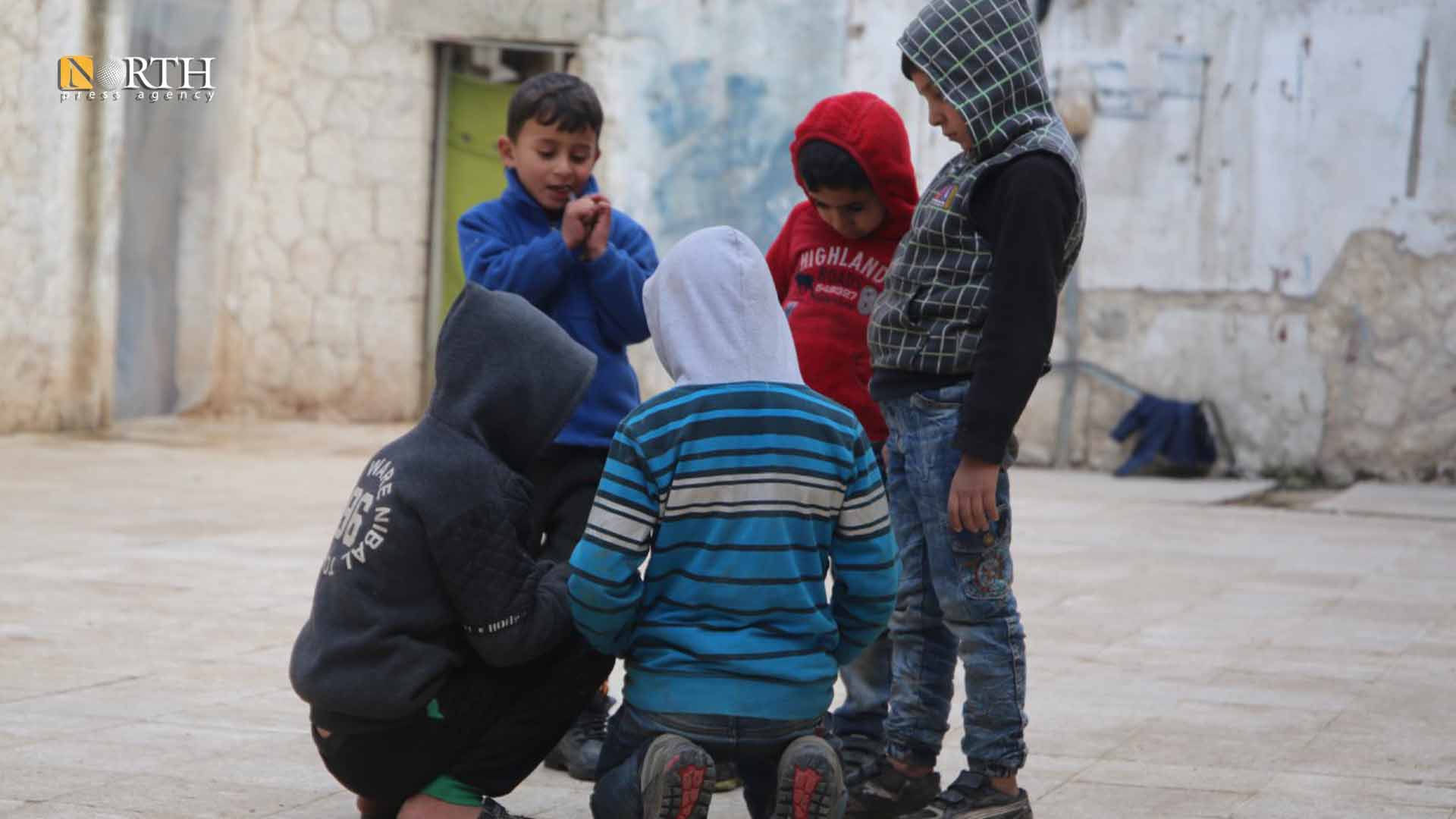
IDLIB, Syria (North Press) – Ten-year-old child Husam al-Shardob, an IDP residing in a camp in the city of Atme, northwest Syria, has been suffering from psychological disorders since he was wounded in a shelling a year and a half ago and miraculously escaped death, but the moment of his older brother’s death never leaves his mind.
In 2019, a shell fell on al-Shardob’s house in the city of Ma’arat al-Nu’man, wounding him and killing his older brother in addition to destroying their house.
Most of the child’s dreams have turned into nightmares; he wakes up several times a night in a state of extreme terror, screaming for his brother who died in front of his eyes, according to his parents.
As a result of experiencing shelling, displacement, and other circumstances including domestic violence and child labor during a decade of war in Syria, psychological disorders have increased among children of Idlib, as in most Syrian children. The numbers of children who show psychological and social distress have doubled after more than ten years of war.
The reported numbers of children displaying symptoms of psychosocial distress doubled in 2020, as continued exposure to violence and trauma has had a significant impact on children’s mental health, with short and long-term implications, the United Nations Children’s Fund (UNICEF) said in a report in March.
The war in Syria has left the lives and futures of a generation of children hanging by a thread, with more than 35% of them knowing nothing but war since birth, according to the report.
Al-Shardob’s mother describes her son’ condition, saying, “He is always sad, and lives in complete solitude.”
The mother pointed out that she took her son to a health care center in Atme where they gave him psychiatric medication, which do not improve his condition.
Victim of pressures
Images of war atrocities are still stuck in the mind of eight-year-old Lina al-Ali, an IDP from Saraqeb residing in Idlib. “When she hears a loud sound, she starts crying and screaming loudly,” according to her mother.
The girl severely panics every time she hears the roar of a plane flying over the area, the mother told North Press.
She stresses that her daughter suddenly began acting strangely and developed anxiety, which prompted her to buy a sedative from a pharmacist. “Her condition slightly improved for a while, and then she returned to her previous condition.”
The war’s impacts did not just leave psychological scars on children, but also affected their behavior, as some of them tend to be more aggressive. Syrian children can often be shown playing war games with toy weapons.
The mother explained that her 12-year-old son was also “affected by the war, shown through his propensity for violence and the violence he shows while playing with his peers.”
The performance of war has become a common childhood game, with children desiring toy pistols or other weapons over most others. “He often assaults and beats his peers and younger brothers,” the mother added.
Raising children in an environment which suffers of lack of job opportunities and sources of income can lead to higher school dropout rates, an increase in domestic violence, and underage marriage, all of which further contribute to the development of psychological disorders increase.
Most of those children whose houses were shelled, who lost their loved ones, and who were wounded develop psychological stress, according to Muhammad al-Ghajar (pseudonym), a psychiatrist in Sarmada.
“They experience a series of psychological symptoms associated with fear of bombings, such as depression, anxiety, behavioral disorders, involuntary urination, nervous mood, isolation from others, and others,” the doctor said.
Due to lack of awareness, some parents react harshly towards their children who suffer from psychological disorders by taking them to frauds, which worsens the problem, he warned.
Treatment of such diseases lies in subjecting the children to awareness sessions regarding psychological trauma and how to cope with it, and visiting specialist doctors for psychological rehabilitation, with the need to secure a natural environment for children and focus on learning and practical activities in order to reintegrate them into society again, according to the doctor.