

QAMISHLI, Syria (North Press) – A few days have remained and the year 2021 will pass. This heavy year burdened the Syrians with worsening economic crises, especially in areas run by the Syrian government which did not benefit from the return of some Arab countries to reactivate its relations with Damascus and the talk about returning it to the Arab League after al-Assad won the presidential elections.
The Arab visits and contacts were accompanied by three rounds of Astana Peace Talks, all of which have failed. The guarantors of Astana (Russia, Turkey and Iran) have been trying to increase their influence in Syria, amid the Syrian opposition’s return to Qatar in an effort to form a new body after its continuous failures over a decade of the Syrian war.
In its report, North Press lists the most prominent economic crises and political turmoil that occurred in Syria during 2021.
In Mid-December, the People’s Assembly of the Syrian government approved the draft state budget law for the fiscal year 2022, amounting to 13 trillion and 325 billion Syrian pounds (SYP).
Press reports said, when the government sets a budget to above 10 trillion Syrian pounds, this means that the value of the Syrian pound will hit 5,000 SYP against the US dollar in 2022.
The behavior of the government regarding the financial policy in general, indicates that it intends not to engage in the economic life at all, especially after it decided to sell 38 institutions, in a step seen by many economists as the most dangerous on the country’s sovereignty.
Syria ranks the bottom of the list of countries with the lowest income level and the highest poverty levels, as the average monthly salary of a government employee is 90,000 SYP ( about $25).
At the beginning of the year, a UN report revealed that basic foods to feed a Syrian family for a month – bread, rice, lentils, oil and sugar- now cost at least 120,000 SYP which far exceeds the average salaries.
The prices of various foodstuffs and consumer goods in the Syrian markets, in addition to the almost absent fuel, within the government-controlled areas, have witnessed a record increase at an accelerating rate of 10.5% per week for most commodities since the beginning of last November.
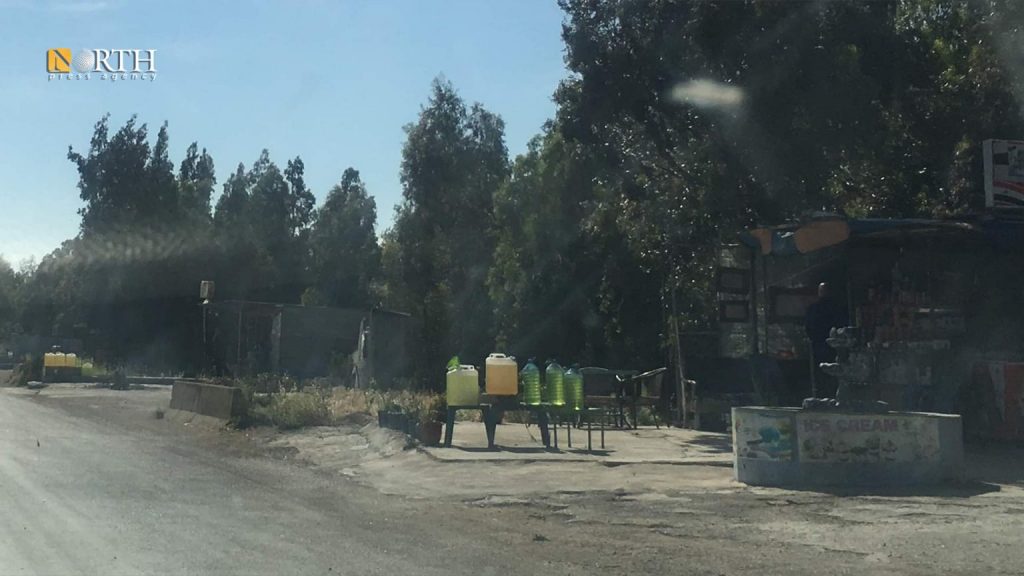
12.4 million Syrians – nearly 60% of the population – are now food insecure, according to alarming new national data from the UN World Food Programme (WFP). In just over one year, an additional 4.5 million Syrians have become food insecure.
In mid-November, the Syrian Prime Minister, Hussein Arnous, admitted what he described as the “difficult living situation” experienced by the population, and the large gap between salaries and daily needs. Arnous, however, did not provide any solutions to the problem.
The member of the People’s Assembly, Abdurrahman al-Khatib, called on the government to link public sector salaries to the dollar exchange rate, describing the government’s justifications as “unconvincing”.
Attempts to improve the economy
Russia and Iran, the two main military allies and enablers of the Syrian regime, are engaged in competition over access to the Syrian economy through agreements and understandings they conclude with the Syrian government, to enhance their influence in preparation for a long-term stay.
The Syrian government has restored its relations with Jordan, focusing mostly on the economic aspect. The director of Jordan’s General Intelligence, Major General Ahmad Husni, said last October that there is a new approach for the return of his country’s relations with the Syrian government.
The US State Department welcomed Jordan’s announcement of the resumption of commercial flights with Syria.
In June, the Syrian Ministers of Oil and Electricity discussed in Amman, the Jordanian capital, ways to enhance cooperation between the two countries in various fields , including energy, as part of the first visit of a Syrian government delegation to Amman since the outbreak of the war in Syria in 2011.
Two months ago, the Jordanian Ministry of Energy said it was agreed to supply Lebanon with electricity via Syria.
On September 8, a meeting was held in Amman, which included the Ministers of Energy of Jordan, Syria, Lebanon and Egypt, during which they discussed the issue of Egyptian gas supplies to Lebanon, via Jordan and Syria.
The return of economic relations culminated in a contact between Syrian President Bashar al-Assad and Jordanian King Abdullah II, following the King of Jordan’s visit to Russia and the US.
On November 9, Syrian President Bashar al-Assad received the UAE Foreign Minister Abdullah bin Zayed and they both discussed bilateral relations between the two brotherly countries.
Algeria has stressed, on more than one occasion, the need for Syria to return to the Arab League, especially after the normalization of relations with Damascus by some capitals of Arab countries.
Iraq also has had a significant role in Syria, focusing mostly on the economic aspect, in addition to the political relations and common interests between the two countries.
Three rounds of Astana have failed
Three rounds of Astana did not achieve any real results or understandings on the ground in Syria, and the UN Special Envoy for Syria Geir Pedersen described one of them as “big disappointment“.
Most of the Astana rounds were reduced to the Syrian opposition’s accusations against Russia of conspiring for the benefit of the “Syrian regime”. Ayman al-Asimi, head of the opposition delegation to the talks on the 17th Astana, said “the Russians are only interested in easing sanctions on the regime so that the regime does not cost them any additional sums.”
In a telephone conversation two days ago, the Russian Minister of Foreign Affairs Sergey Lavrov discussed the need to move forward in settling the Syrian war with the Syrian Minister of Foreign Affairs and Expatriates Faisal Mekdad.
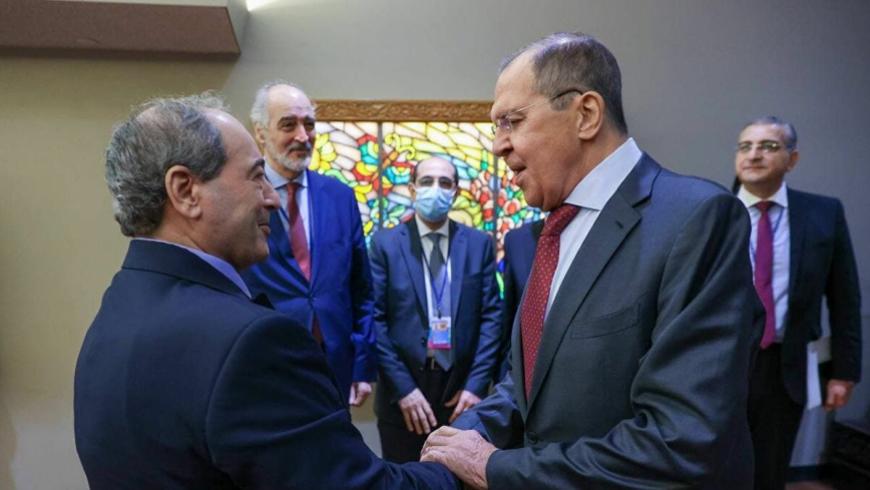
If somebody pursues the aim of creating a new constitution for the sake of changing the powers of the Syrian president and thereby trying to change power in Damascus, this road leads nowhere, Russian President’s Special Envoy for Syria Alexander Lavrentiev said on December 27.
For its part, the Syrian National Coalition (SNC) made its response saying that the statements of Russia’s special presidential envoy for Syria are a rejected intervention in the choices of the Syrians and in the track of the political process.
This comes amid a tense political atmosphere in the Syrian Negotiating Committee, which was formed at the Second Riyadh Conference in November 2017.
Opposition sources confirmed that Russian media circulated news of holding a conference that would bring together the Syrian opposition in Qatar next February, to come up with a unified vision for restructuring the opposition, as they put it.
Speaking to North Press, Mouaz al-Khatib, former president of the SNC and one of the people invited to the symposium, said that he had “no information on the theme of the symposium”.
Former Syrian Prime Minister Riyad Farid Hijab, who defected from the Syrian government in 2012, is leading a movement of Syrian opposition powers to hold a seminar in the Qatari capital, Doha, next February, to discuss paths to a political solution to the Syrian crisis.
According to press reports, citing political analysts as saying Turkey and Qatar have not yet reached an agreement on restoring their relations with Assad, especially in light of Turkey’s continuing violations against the regions of Syria.
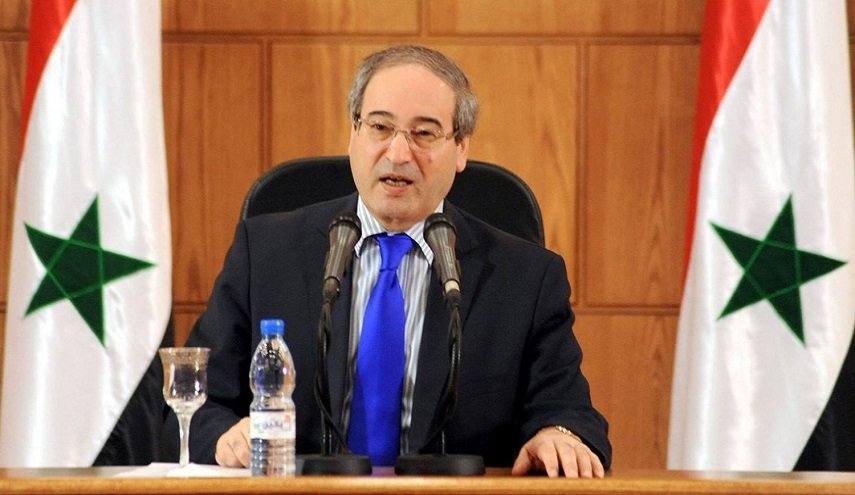
Turkey is protecting terrorist groups in northwest Syria, Syrian Minister of Foreign Affairs and Expatriates, Faisal Mekdad said on December 27.
“Turkey occupies parts of the Syrian lands, and it is Turkificating these parts and protecting terrorist groups in violation of the Astana understandings,” Mekdad noted.
Turkey has also escalated its targeting of areas in northeast Syria, despite the ceasefire agreement it signed with Russia and the United States in 2019.
The Autonomous Administration of North and East Syria (AANES) called on the actors in Syria to clarify their position on the Turkish escalation and targeting the population in northeast Syria.
SDC-Syrian government dialogue
Due to the continuous Turkish threats to northeast Syria, and the assaults on the region, Russia sponsored a dialogue between the Syrian government and the Syrian Democratic Council (SDC) alongside the Autonomous Administration.
On December 22, Lavrov called on the SDC to “determine its attitude towards the dialogue with the Syrian government”.
Lavrov said the US military presence in Syria will come to an end sooner or later.
The Kurds themselves, in particular their political wings represented by the Democratic Union Party (PYD) and the Syrian Democratic Council (SDC), must decide their attitude,” he added.
Lavrov pointed out that the Kurds should “take a principled position,” stressing Russia’s readiness to help them in this regard, especially that “officials from northeast Syria occasionally visit Moscow, including the recent visit of the president of the SDC Executive Committee, Ilham Ahmad.
Regarding Turkish positions, Lavrov pointed out that the situation is also very complicated, as Turkey considers the Kurdish “People’s Protection Units(YPG)”, allied with the US, a terrorist group linked to the PKK.
He said Russia reassures Turkey that it does not want to fuel any negative conflicts with respect to Ankara, but rather seeks to help implement the request to guarantee the sovereignty of the Syrian territories.
In a telephone conversation on December 27, the Russian Minister of Foreign Affairs Sergey Lavrov discussed the need to move forward in settling the Syrian war with the Syrian Minister of Foreign Affairs and Expatriates Faisal Mekqdad, Moscow announced.
Lavrov and Mekdad discussed in the call, which was “at the request” of the Syrian minister, “developments of the situation in Syria and focused on the need to move forward in a comprehensive political settlement,” Russian RT TV channel reported the Russian Foreign Ministry’ statement.
Last week, UN Special Envoy for Syria Geir Pedersen outlined ‘possibilities for progress’ in Syria next year, saying that all parties face a strategic stalemate.
Reporting by Mu’az al-Hamad