
Raqqa – North-Press Agency
Ahmad al-Hassan
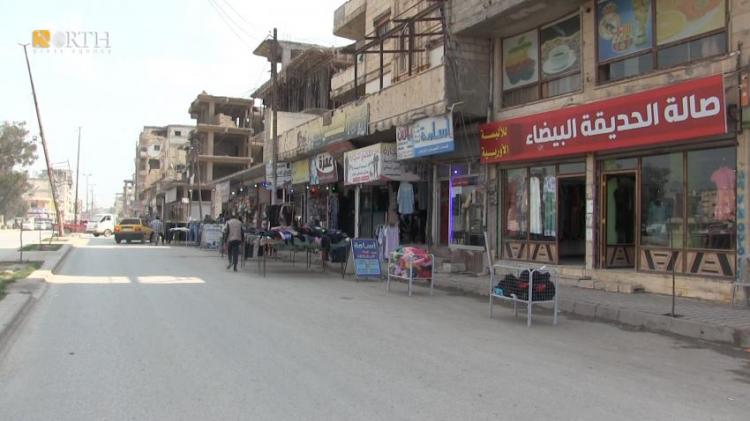
In the past few days, residents of Raqqa have slowed their purchases of secondhand clothes, fearing transmission of coronavirus through imported clothes, at a time when the World Health Organization (WHO) has said that the possibility of contamination of commercial goods is small.
Although there is no medical report or authorization from any international health agency on the possibility of the transmission of the virus through cross-border cargo shipments, which take a long time to transport, many people from Raqqa are suspicious and fearful of secondhand clothes; some believe that secondhand clothes contain the virus, as they said to North-Press.
Ibrahim al-Ibrahim, a resident of Raqqa, said that, secondhand clothes have become a danger, after they were previously a benefit for those who were fleeing the high prices. Another resident, Adnan Saleh, who is also from Raqqa, said that he is not convinced that there is a risk of transmission via secondhand clothes, because the lifespan of the virus does not exceed a single day.
According to WHO, it is safe to receive packages even from areas that have reported cases of COVID-19, because the risk of contamination of commercial goods by an infected person is slim.
For previous years, secondhand clothes were the first choice for the majority of the population, due to their low prices, and they constituted a source of income for many people in Raqqa. This rumor has made shop owners fear the loss of their jobs, which are their only source of income.
It is certainly unknown how long coronavirus stays on surfaces, but studies indicate that coronaviruses (including preliminary information about the COVID-19 virus) may remain alive on surfaces for a few hours or several days, and this may vary with different conditions (such as surface type, temperature and environmental humidity), according to information published by the WHO on its official website.
In the case that a surface is thought to be contaminated, WHO recommends cleaning it with a regular antiseptic to kill the virus and to protect yourself and others, in addition to cleaning your hands by rubbing them with an alcohol disinfectant or by washing them with soap and water, and avoid touching your eyes, mouth and nose.