
Coronavirus prevention procedures in Roj camp in Derik amid residents demand for repatriation
Derik – North-Press Agency
Solnar Muhammad
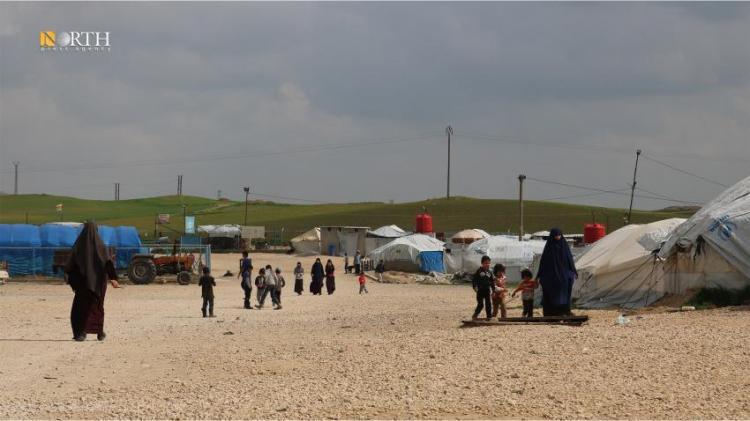
On Tuesday, the administration of Roj camp near the town of Derik, north of Hasakah, banned visits as part of precautionary procedures to prevent the spread of coronavirus.
An official at Roj camp, Nora Abdo, told North-Press that though they used to allocate one day per week for visits to and from the camp, they have decided to suspend the entry of visitors and reduce the exit of the displaced people, except for emergency cases and shopping, in order to prevent the spread of coronavirus.
Nora Abdo added that they also prevented activities and community gatherings and closed schools until further notice to prevent the spread of the disease, but that these procedures are "insufficient to combat the epidemic." She indicated that the fight against coronavirus needs urgent support and intervention by humanitarian organizations and the World Health Organization (WHO).
She explained that they also called for sterilization of the camp as a precautionary procedure, "and the municipalities of the Autonomous Administration will do that," but she added that the chemicals available in the municipalities "are not sufficient, and European countries should intervene to help the camps in northeastern Syria."
There are 521 families in Roj camp, consisting of 429 foreign families, 78 Iraqi families, and 14 Syrian families.
A female ISIS member of German nationality, who did not reveal her name, said that she "is not only afraid for her children, but for all people in the camp after the spread of the coronavirus epidemic all over the world, according to what you see on TV."
She pointed out that the camp lacks medication, "People who have symptoms similar to those of coronavirus cannot even take a paracetamol pill."
The woman asked the governments of their countries to take them back. "The situation is scary because we live in the same place and we are unable to do anything about the disease. Because we live in the camp, our governments are obligated to take us back, they are in charge of this … it is better to transfer us to our countries."
For her part, another ISIS woman, a mother of three who did not reveal her name, said that she is afraid that coronavirus will reach the camp; she does not know anything about the virus, "in light of the presence of one bathroom for all the displaced and their overcrowding in a small market."
If the virus spreads to villages and cities, residents can reach hospitals, "but displaced people cannot," she added.
On Monday, the Health Board in northeastern Syria, in cooperation with the People's Municipality in the town of Derik, began a campaign to sterilize all public facilities and institutions in the town.
Rojin Ahmad, a spokesperson for the Health Board in al-Jazira region, told North-Press that they will start a second sterilization campaign after the completion of the first one, provided that it includes the main gathering places, such as public streets.