
Activist demands international conferences on violations in Syria’s Sere Kaniye
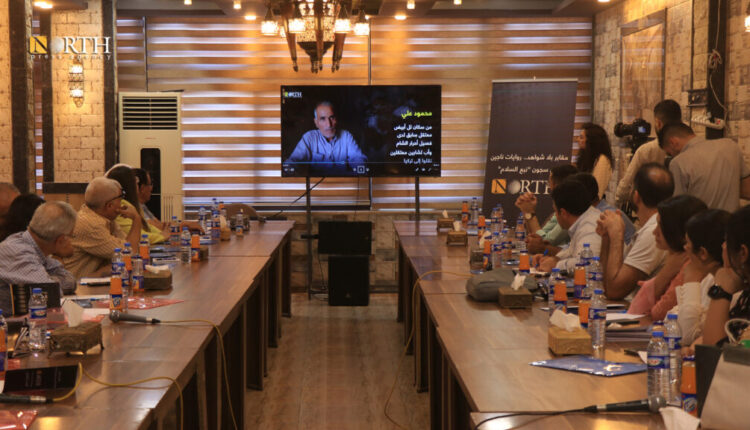
QAMISHLI, Syria (North Press) – Executive Director of Association for Victims of Forced Displacement (DAR), Muhyiddin Isso, called on Tuesday for holding international conferences to shed light on the human rights violations committed by Turkey and its affiliated factions in the city of Sere Kaniye (Ras al-Ain), northeastern Syria.
Isso’s remarks were made in an exclusive interview to North Press during his participation in a dialogue session that discussed the state of human rights and violations in Sere Kaniye. The dialogue session was organized by North Press, presenting a comprehensive report on those violations titled “Atrocities committed by SNA in Turkish-occupied areas in north Syria”.
“The city witnesses all kinds violations and crimes,” he said stressing that Sere Kaniye witnesses “a media blackout”, as Turkey prevents the press from entering it, and also the work of civil society organizations in the city is prevented.
Sere Kaniye has been under the occupation of the Turkish forces and has been controlled by the SNA factions since 2019 following the so-called “Peace Spring” military operation that aimed to push away the Syrian Democratic Forces (SDF) under the pretext of protecting the Turkish national security.
Isso touched on cases of enforced disappearance and forcible displacement of most of the city’s population, seizing their properties, building settlements, and changing its demography.
The session based on a report that outlines stories of survivors and victims who were killed and tortured, and unveils the number of covert and overt prisons in Sere Kaniye, in addition satellite images showing the locations of some prisons. It also reveals the liability of the SNA towards those prisons and the civilians detained there.
He said that Turkey, its affiliated SNA factions, and the countries sponsored them are the primary responsible for the violations committed in Sere Kaniye and Tel Abyad.
Isso pointed out that civil society organizations could play an important role in conveying the suffering of Sere Kaniye’s residents to the international community and human rights centers.
Isso, who is also a member of the Relations Committee of the Sere Kaniye Displaced Committee, called for expanding the role of civil society organizations and media institutions to show the facts for the public opinion and “clarify violations and crimes that are indeed committed systemically, and are considered as crimes of genocide and against humanity according to international and humanitarian law.”