
Iran fills the gap to achieve its interests in the region: politicians
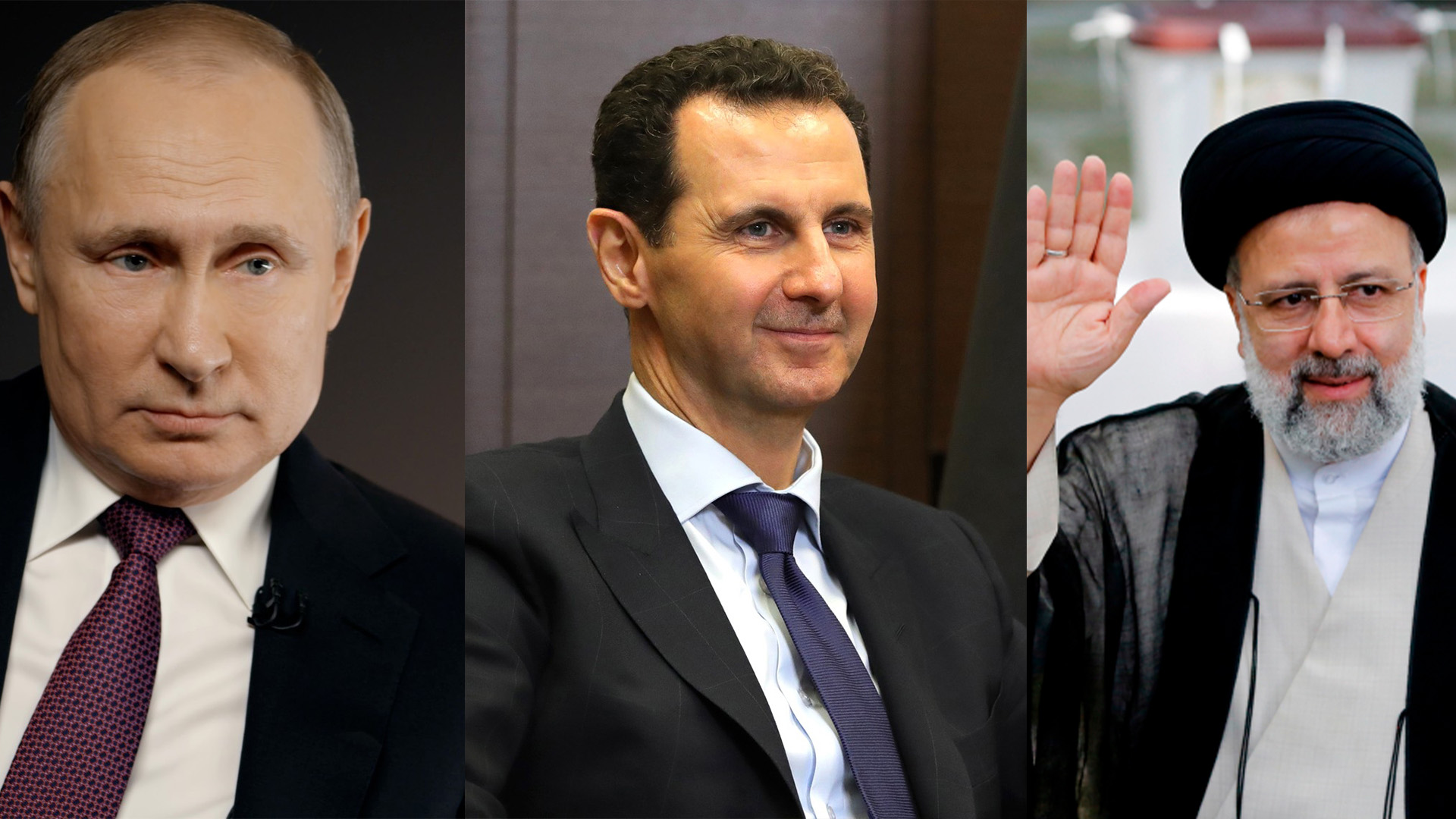
DAMASCUS, Syria (North Press) – There are many contradictory parties present on the Syrian arena. There is a Russian-Iranian competition for more control over Syrian territory, and there is also a Russian-American competition to obtain greater influence in Syria.
Field events have subsided, except for its launch center in Daraa Governorate, southern Syria.
Hassan al-Ali, 60, a pseudonym for a specialist in international politics residing in Damascus, who refused to give his real name for security reasons, believed that Iranian influence in Syria is caused by the latter’s need for Iran.
“The observer of the relationship with Iran finds that it was balanced until 2013, but the war on Syria and the standing of most Arab and world countries against the Syrian state called for Iran, and Iran benefited from that to strengthen its presence and influence there,” he told North Press.
The Syrian government had “very limited” options, and Iran’s presence is “necessary,” according to a-Ali.
“But the strange thing is that attention is drawn to those who fight terrorism that threatens the security of citizens, while the countries that supported and financed terrorism are ignored,” he added.
Expressing his rejection of the presence of any foreign forces on Syrian territory, al-Ali indicated that religious ideologies cause him a problem, as “they do not resemble me and do not fit with my culture and civilization.”
“Unfortunately, the sponsor of these ideologies is the West, and we are all aware of Brzezinski and Kissinger’s theories of reviving religious fundamentalism to flood the region with Fourth-generation warfare (4GW) that eat countries from within.”
On the events in Daraa, the politician said that there is a change in the Jordanian position, “and this made it possible to end the armed presence in Daraa.”
“The Russian position is different from the Iranian one. Russia has no interest in aggravating the relationship with Israel, nor the Arab countries. It also coordinates with the United States on many issues,” he noted.
“As for the Iranian position, it seeks to gain more power cards through Iran’s approach to the border with Israel, and this does not harm Syria, which considers Israel an occupier of Palestine and the Golan Heights and does not abide by the international legitimacy resolutions that demand it end its occupation of these lands,” al-Ali stated.
He expressed his belief that Syria has an interest in Iran being on its side in any battle against Israel, since most of the Arab countries retreated from considering Israel as their enemy.
He pointed out that the battle with Israel is an axis battle imposed by the absence of international legitimacy, and “it is a situation imposed by necessity.”
He sees that Russia does not want to drown in the Syrian quagmire as in Afghanistan. It has maintained communication and coordination with all regional and international parties, in a manner that also preserves its strategic interests.
While Iran wants to gain more power cards to achieve its regional interests, and it is succeeding because of the desire of the United States to make it a regional power to blackmail this region and make the sectarian confrontation more likely, according to al-Ali.
“This possibility is also increasing, with the beginning of the crystallization of the other pole of the Sunni with the Taliban’s control in Afghanistan, which I see as an American arrangement par excellence.”
However, Hassan Abdel Azim, the president of the Syrian National Coordination (SNC), believes that “the Syrian regime and its allies are mobilizing vehicles and armored vehicles with the aim of field resolution.”
In an exclusive interview with North Press, he expressed his belief that the decisiveness is impossible despite the support of the Islamic Revolutionary Guard Corps (IRGC) and its militias, the absence of the Russian support, and the presence of the Fifth Corps and the Eighth Brigade from the sons of Daraa and the surrounding areas.”
Earlier today, Muhammad Dershawi, a political researcher residing in Duhok in Kurdistan Region of Iraq (KRG), said that Tehran’s concerns over Syria are behind Iranian interference in Syria, and that Iran needs to maintain a presence in Syria and Iraq in order to maintain dominance over the “Shiite Crescent” – the region of the Middle East with significant population of Shiite Muslims.
“Iranian interference is not something new or secret, as Iranian officials have stressed and bragged that they have seized several capitals, including Damascus, in the middle east,” he told North Press.