
Syria’s Damascus witnesses unfair water rationing every summer
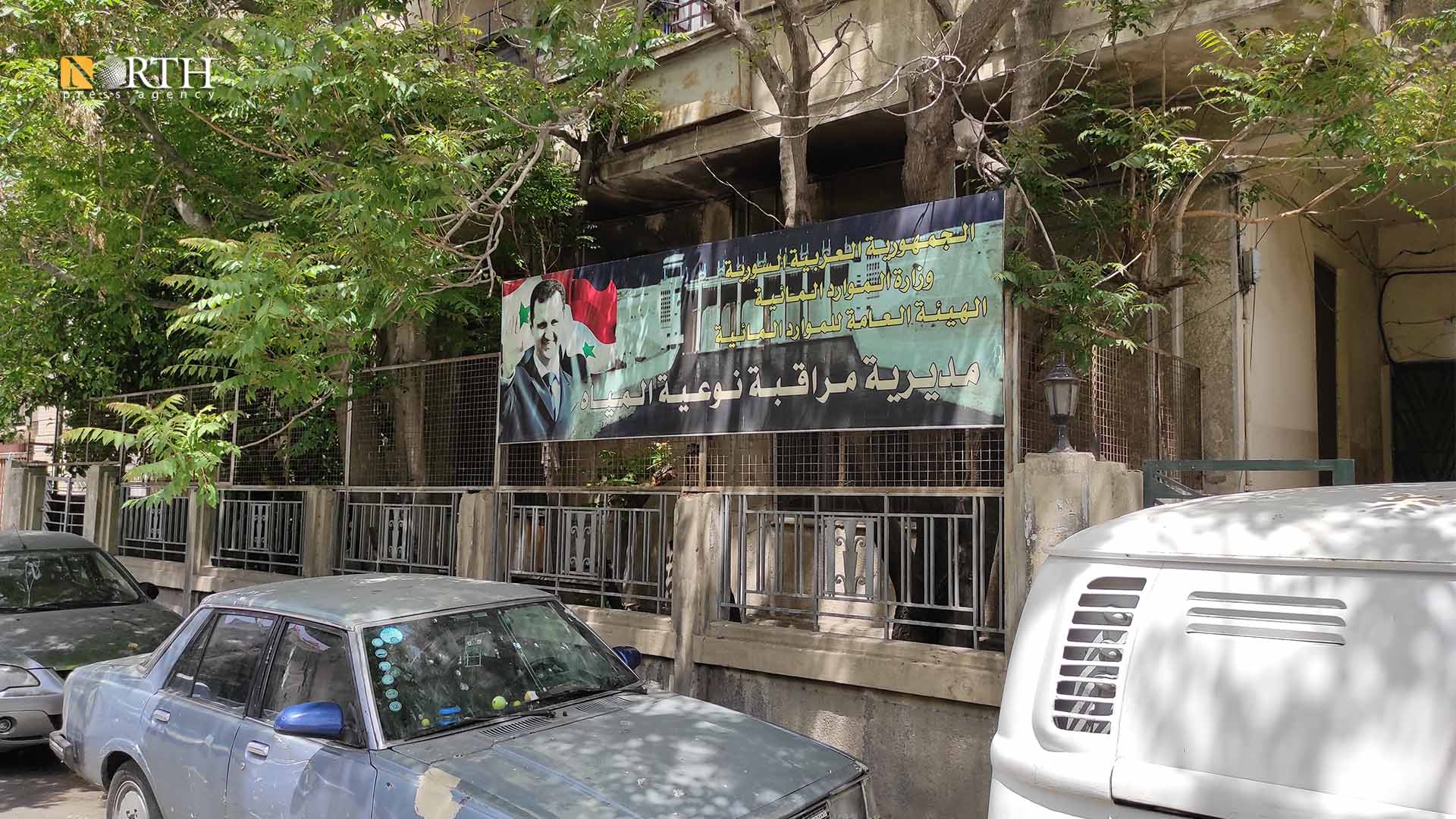
DAMASCUS, Syria (North Press) – Before moving to live in the Sheikh Sa’ad neighborhood, Sahar Mukhalalati, 52, and her family did not know what water rationing was when she lived in Mezzeh area – Basatin al-Razi in the city of Damascus.
“The water comes two hours in the morning, and then we do not have it until the next day,” she said in an interview with North Press.
Many neighborhoods in the city of Damascus witness continuous and frequent water cuts, especially in the summer, which is accompanied by an unfair rationing system that varies according to each neighborhood in terms of the number of hours of water availability.
Water rationing has affected Mukhalalati’s lifestyle, especially as it is accompanied by power outages, which prevents her from filling the water tank.
Mukhalalati fills the tank through water tankers at a cost of more than 1,500 Syrian pounds (SYP) per barrel (220 liter).
According to the official SANA news agency, the Water and Sanitation Establishment in Damascus and Rif Dimashq, announced the start of implementing a new water rationing program in Damascus, starting from May 20, with water cut off ranging between 10-12 hours per day, depending on the neighborhoods.
However, it seems that the water situation is better in the al-Mezzeh Jabal, where Hussein al-Malih (pseudonym) lives in, as the water is available for more than 10 hours a day.
“Despite the water crisis in Damascus and its suburbs, the water situation is good where I live, as we do not suffer from long hours of water cut off,” he told North Press.
Al-Malih added that it does not take a long time for water to come when it is cut, unlike other areas.
In a statement to the semi-official al-Watan newspaper on May 20, Mahmoud Zalzalah, Director of Investment and Maintenance at the Public Establishment for Drinking Water in Damascus and Rif Dimashq, accused the residents of consuming water in the capital at record numbers, where consumption exceeded 9 m³ per second.
“The government is unable to invest or find water sources to cover the needs of the population,” a source from the Water Establishment in Damascus told North Press.
On condition of anonymity, the source stated that “the Water Establishment does not carry out the periodic and necessary maintenance of water networks or the expansion of those networks.”
On June 28, the Syrian Prime Minister, Hussein Arnous, stressed finding appropriate solutions to the difficulties in achieving justice in rationing and securing drinking water needs in the governorates, which will lead to alleviate the suffering of the population, according to the official page of the cabinet on Facebook.
“The decline of the Fijeh spring without the flow of 8,000 m³ per second, paves the way for the return of rationing to the capital during the coming period,” Director General of the Establishment for Drinking Water and Sanitation in Damascus and Rif Dimashq, Mazin al-Shibli, said in a statement to al-Watan newspaper on June 20.
Al-Shibli pointed out that the daily need exceeds 10,000 liters of diesel fuel, but in practice they receive no more than 25,000 liters per week.