
Turkey insists on deploying its peacekeepers in Azerbaijan, despite Russian rejection
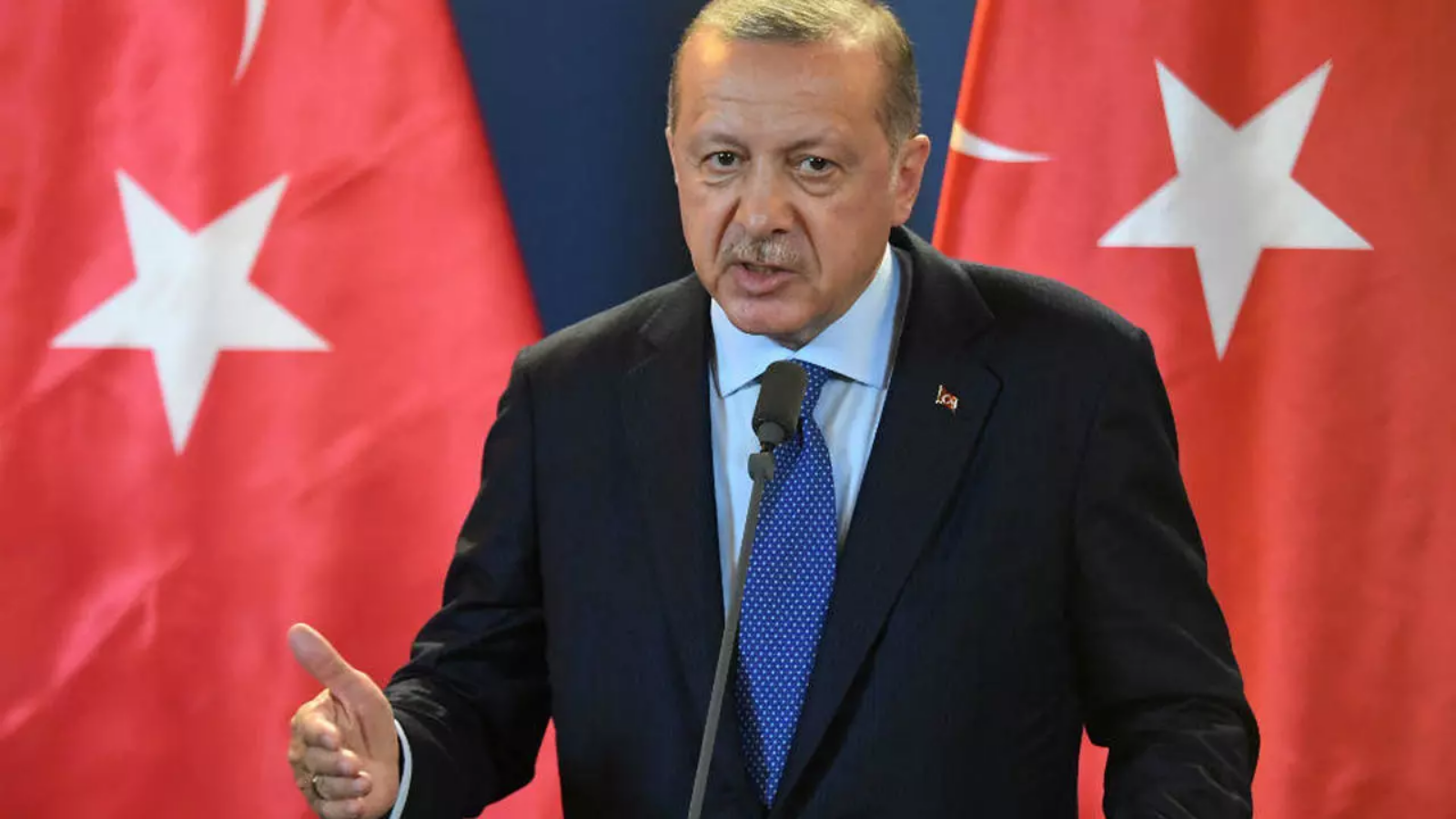
ISTANBUL, Turkey (North Press) – Turkish president Recep Tayyip Erdogan said on Monday that Turkish troops would be part of the peacekeeping operation joining Russian troops in overseeing the peace deal in the disputed Nagorno-Karabakh region.
Russia, meanwhile, stressed that the signed Russian-Turkish memorandum was to establish a joint monitoring center, and not to deploy a joint task force.
Nagorno-Karabakh, known as Artsakh, is a mountainous region officially recognized as part of Azerbaijan, though it has a predominately Armenian population and is a de facto independent country which calls itself the Republic of Artsakh. The most recent round of fighting is the fiercest since the 1990s, after the collapse of the Soviet Union and Artsakh’s declaration of its autonomy from Azerbaijan.
The Turkish government announced on Monday that it submitted a motion to Turkish parliament seeking its approval to deploy peacekeepers to monitor a ceasefire agreement between Azerbaijan and Armenia.
“Turkish armed troops will accomplish its mission in the Russian-Turkish joint center that Azerbaijan will designate, and the activities in the center,” according to the memorandum signed by Erdogan.
“Civil individuals will take part in the mission as needed,” according to the memorandum.
Russia stressed that the November 10 peace deal stated that Russian peacekeeper troops would deploy along the frontlines in Karabakh. Additionally, the deal stated that Turkey would monitor the ceasefire through a Russian-Turkish joint center that would open in Azerbaijan for this issue.
Meanwhile, the memorandum did not mention anything about deploying Turkish peacekeepers alongside Russian troops, although Azerbaijan wants Turkey to take part.
Despite Erdogan’s statements and hints at deploying Turkish peacekeepers in Karabakh, Russia rejected this notion, believing that Turkey misunderstood the memorandum that stipulated only the establishment of a joint monitoring center for the ceasefire, according to a Russian diplomatic source.
Turkey began to make threats, as Turkish Defense Minister Hulusi Akar said that his country was presented in the Karabakh memorandum on the ground and politically. “No one can subject Turkey to a fait accompli policy in the region,” he added.
The Turkish president stressed that with the agreement reached, the areas in Azerbaijan that have yet to be “liberated,” including the remaining parts of Karabakh, will be left to Azerbaijan.
Armenian forces must also withdraw from the city of Kalbjra by the fifteenth of November, from the cities of Aghdam and Kazak by the 20th, and Lachin by the first of December.
“A road will be constructed to connect Azerbaijan and the Nakhchivan Autonomous Region; a transport corridor will also be opened between Armenia and Khankendi, and Azerbaijanis displaced by the Armenian occupation of Nagorno-Karabakh will return to their homes under the supervision of the UN High Commissioner for Refugees,” he added.
“The memorandum signed between Russia and Turkey and other parties stipulated the creation of a joint monitoring center for the implementation of the signed ceasefire,” Salim Kharralt, General Secretary of the National Democratic Solidarity Party in Damascus, told North Press.
“But according to the Turkish policy and interference, it cannot be trusted and changed in any time and place,” he added.
Turkey’s president announced on Wednesday the “setting up of a joint Turkish-Russian center to monitor in Karabakh liberated from the Armenian occupation in order to take all measures to prevent any violation to the ceasefire.”
“Amid the tension between the two parties and the emergence of the Turkish role, Russia is trying to reduce [Turkish] influence in Azerbaijan,” Jawad Gul, a journalist specializing in Turkish affairs residing in Turkey, said to North Press.
Russia seeks this “through hinting to allow Turkey to conduct a military operation east the Euphrates,” according to Gul.
Gul said that if the Russian rejection and Turkish insistence continues, “then they would accept the fate accompli to deploy Turkish peacekeeper troops.”
On Friday and Saturday, a Russian-Turkish delegation held discussions to on development in Karabakh region.
However, during those discussions, they reached no results, while Turkish observers described those talks as stumbling and said that the dispute was over the deployment of Turkish peacekeepers, amid clear Russian rejection of this request.