
Sources close to Suwayda Druze leader deny talks with Syrian government
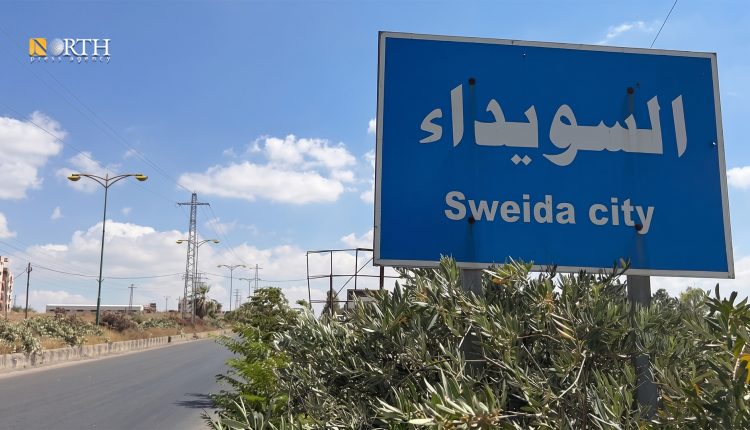
SUWAYDA, Syria (North Press) – Sources close to the Spiritual leader of the Druze community in Suwayda Governorate in southern Syria, Hikmat al-Hijri, on Monday denied the existence of negotiations with the Syrian transitional government, saying reports about such talks were “untrue.”
The sources, who spoke to North Press on condition of anonymity, said the issue of prisoners and detainees is being addressed through U.S. mediation in an effort to reach “a certain arrangement,” without providing further details about the nature of the arrangements under discussion.
They said the education file remains one of the main outstanding issues, noting that around 12,500 Middle and High school students were prevented from taking their exams after the government required students from Suwayda to travel to the Damascus countryside to sit for them.
Secret negotiations
Private sources earlier told the Beirut-based Al-Modon digital newspaper that secret negotiations were taking place between the Syrian transitional government and al-Hijri.
They said the talks went beyond a ceasefire and detainee exchanges to discussions on arrangements to restore Suwayda’s ties with the state, including integrating members of the National Guard into the Ministry of Defense, integrating civilian employees and linking local institutions to Syrian ministries.
Al-Modon reported that U.S. mediation recently resulted in a prisoner exchange between the transitional government and the National Guard, involving the release of 61 detainees from Suwayda in exchange for 25 people held by Druze armed groups.
However, sources close to al-Hijri told North Press that such negotiations do not exist, stressing that the prisoner file is currently the only track being addressed through U.S. mediation.
Unimplemented road map
The developments come as the Suwayda road map, announced by the Syrian Ministry of Foreign Affairs and Expatriates in September 2025 with U.S. and Jordanian support, continues to face difficulties in implementation.
The road map included measures aimed at reintegrating Suwayda into state institutions, including short- and medium-term security and administrative arrangements leading to the Governorate’s full integration into government institutions.
It also called for the formation of a local police force representing all components of Suwayda, under the leadership of a figure from the Governorate appointed by the Interior Ministry, as well as the withdrawal of civilian fighters from the Governorate’s administrative boundaries and the deployment of trained and qualified police forces.
The road map also included the release of all detainees and abductees, accelerating prisoner exchanges, restoring government services to the Governorate and securing the Suwayda-Damascus road, in addition to supporting reconciliation efforts among the Governorate’s communities.
It further called for the establishment of a trilateral mechanism involving Syria, Jordan and the United States to monitor implementation of the road map, while affirming that Suwayda is “an integral part of Syria” and calling for an end to external intervention in the Governorate.
In June, Claudio Cordone, the U.N. deputy special envoy for Syria, warned the Security Council that the deadlock in Suwayda was continuing, saying no progress had been made in implementing the road map’s confidence-building and reintegration measures.
Cordone said key issues remained unresolved, while warning that some calls for Suwayda’s separation posed a threat to Syria’s unity and sovereignty.