
Turkey’s Erdogan says Syrian Kurds share in peace and stability
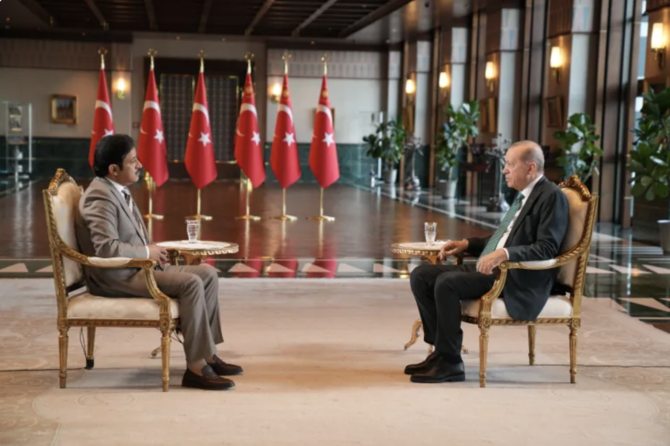
QAMISHLI, Syria (North Press) – Turkish President Recep Tayyip Erdogan on Sunday said that Syria’s Kurds should have a share in peace and stability in the country’s new era, while reaffirming Ankara’s intention to strengthen ties with Kurdish communities across the region.
In an interview with Al-Jazeera Arabic, Erdogan said that Turkey was working to support stability in post-Assad Syria and emphasized the importance of ensuring that Kurds benefit from the country’s political transition.
“We will continue to strengthen our relations with the Kurds and preserve their rights in various countries of the region,” Erdogan said, stressing that Syria’s Kurds should have a role in the peace and stability that Ankara says it seeks for the country.
His remarks come as Damascus and the Kurdish-led Syrian Democratic Forces (SDF) continue efforts to implement the Jan. 29 agreement on integrating the SDF and its institutions into the Syrian state.
The agreement, reached between Syrian President Ahmad al-Sharaa and SDF Commander-in-Chief Mazloum Abdi, provides for the integration of military and civilian institutions in northeastern Syria into state structures.
The issue of Kurdish rights has also gained renewed attention following measures by Damascus aimed at addressing longstanding grievances of Syria’s Kurdish population, including legal recognition and citizenship-related rights.
Erdogan’s comments come amid Turkey’s efforts to reshape its policy toward the region following the fall of the Assad government in December 2024. Ankara has maintained close relations with Damascus and has repeatedly called for Syria’s territorial integrity and political stability.
At the same time, Turkey has been pursuing its “terror-free Turkey” initiative, which includes efforts to end the armed conflict involving the Kurdistan Workers’ Party (PKK). The PKK announced in 2025 that it would disband and end its armed struggle against Turkey following a call from its imprisoned leader, Abdullah Ocalan.
The developments have raised expectations that changes in the broader Turkish-Kurdish conflict could also affect Syria, where Kurdish political and military forces have played a central role in governing northeastern areas since the outbreak of the Syrian conflict.
Erdogan has previously indicated that Ankara supports a political settlement that preserves Syria’s territorial integrity while ensuring stability for all communities.
His latest remarks also come as Turkey considers a presidential visit to Damascus. Turkish Ambassador to Syria Nuh Yılmaz said on Aug. 15 that Erdogan could visit the Syrian capital before the end of the year.
For Syria’s Kurds, Ankara’s position remains significant as Damascus and the SDF negotiate the future of security, governance and political rights in the country’s northeast.
By Jwan Shekaki