
Only source of water for Syria’s Hasakah at risk of drying up
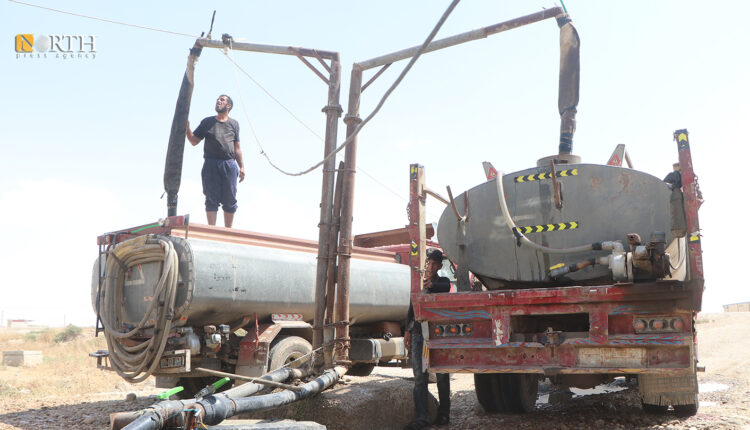
HASAKAH, Syria (North Press) – The water levels of al-Hame wells, the only source for tankers to transfer water to residents in Hasakah and Tel Tamr in northeastern Syria, keep dropping, putting the lives of about one million people at risk.
Sheikmous Darwish, an expert in groundwater geology who spoke to North Press earlier, said that the surface wells that provide water to Hasakah and its surrounding areas are at risk of drying up within a month, warning of an “imminent humanitarian catastrophe.”
The people of Hasakah and Tel Tamr and their countryside started to rely on water from al-Hame wells, located about 20 km west of Hasakah city, four years ago, after Turkey and its affiliated opposition factions, also known as the Syrian National Army (SNA), took control of Sere Kaniye (Ras al-Ain) and Alouk water station and cut off water for over 40 times to Hasakah and its countryside.
The region of al-Hame and surrounding villages have around 80 wells suitable for drinking water. The people of Hasakah buy water from tankers that fill up water from these wells.
The large demand for water by the people of Hasakah, especially amid increasing temperatures, led to a significant drop in water level in al-Hame wells, according to Darwish.
Muhammad Hassan al-Ahmad, an owner of a well, told North Press that there are 75-80 wells in the al-Hame region that provide suitable drinking water, unlike wells in the rest of the countryside of Hasakah, where the water is salty or bitter.
The level of water in al-Hame wells is dropping every day, al-Ahmad said, noting that in early 2023, it used to take about 10 minutes to fill a 35-barrel tanker, whereas now it takes about 40 minutes to fill it up, he added.
Al-Ahmad noted that wells in al-Hame region are the main water provider for the city of Hasakah and Tel Tamr and the countryside of al-Shadadi and camps in that area. There are no other sources of drinking water in the region.
Salim al-Saleh, an owner of a water tanker, said, “Two months ago, it took 10-15 minutes to fill his tanker, but now it takes about an hour to do so. The situation is getting worse day by day.”