
Donors’ conference to be held for earthquake-affected Syria, Turkey – EU
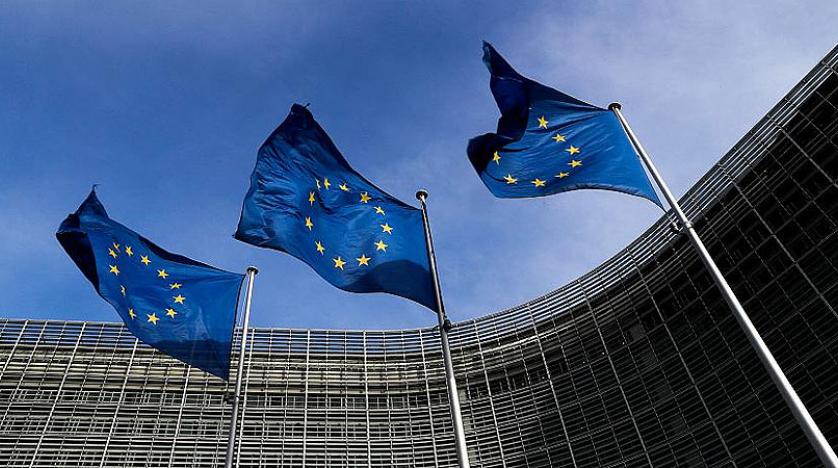
QAMISHLI, Syria (North Press) – On Wednesday, the President of the European Commission and the Prime Minister of Sweden, in a call, agreed to organize a “Donors’ Conference” to urge international community to support people affected by the devastating earthquakes that hit Syria and Turkey on Feb. 6.
In a press release, the European Commission said Ursula von der Leyen, The President of the European Commission, and Ulf Kristersson, the Prime Minister of Sweden, set a date for the “Donors’ Conference” on March.
At dawn on Monday, a 7.8-magnitude earthquake hit Syria and Turkey, killing thousands and injuring much more. The earthquake also caused immense destruction of buildings, trapping thousands under the rubble.
The death toll of those killed in Syria in the earthquake has reached 3.583 people, while 6.342 were injured.
The conference will be chaired jointly by Commissioner in charge of Neighbourhood and Enlargement Negotiations, Olivér Várhelyi, and the Swedish Minister for International Development Cooperation and Foreign Trade, Johan Forssell.
Leyen stressed, “The priority now is to work around the clock to save as many lives as possible,” noting that there are many people who are still trapped under the rubble of the collapsed buildings in both countries.
She added that 31 search and rescue teams and five medical teams from 23 countries have been sent to the affected Syria and Turkey.
The President of the European Commission confirmed that the EU will not leave people of Syria and Turkey to face this tragedy alone.
Sweden’s Kristersson said that the consequences of the unprecedented disaster “are truly horrendous” as extent of human and material loss are becoming clearer day after day.
Reuters reported that the Syrian government, for the first time, asked for assistance from the EU two days after the earthquakes.
The EU emergency support and humanitarian assistance provided to Syria worth 3.5 million euros (equals $3.7 millions), according to Reuters.
European Commissioner for crisis management, Janez Lenarcic, said that Syria made the request for support by the EU through “the civil protection mechanism.”
Lenarcic stressed that enough safeguards are needed to ensure the aid by the 27-member bloc “provided effectively reached those in need,” adding that future assistance “would not go un-monitored.”