
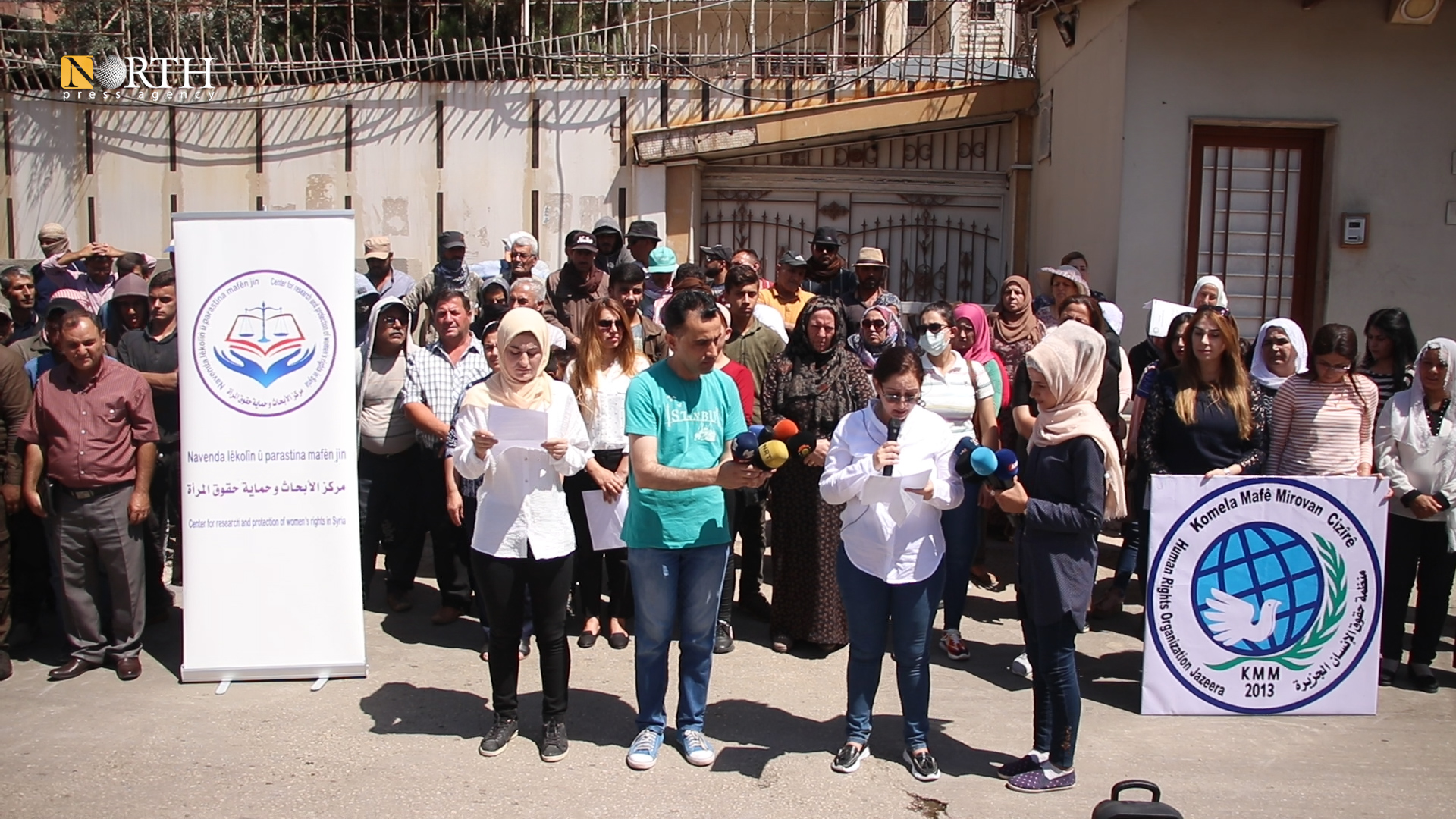
QAMISHLI, Syria (North Press) – On Sunday, seven human rights organizations in the city of Qamishli, northeastern Syria, said in a report on the situation of Syrian refugees and IDPs in conjunction with the World Refugee Day, that half of the Syrians have become out of their houses and are exposed to health, social and psychological risks.
The organizations read a statement in front of the headquarters of the UN in Qamishli. The statement indicated that since 2011, the Syrian war led to the fleeing of millions from their houses and cities.
The statement added that half of the Syrians have become out of their houses and are exposed to health, social and psychological risks, according to the UNHCR Special Envoy Angelina Jolie.
“There are tens of Syrian camps that host thousands of forcibly displaced people from their houses, who live the worst living conditions,” the statement noted.
Hundreds of thousands of IDPs in northeast Syria
“There are hundreds of thousands of IDPs and refugees in northeast Syria that need urgent humanitarian support,” an official at Human Rights Organization in Jazira region, Avin Juma’ said.
“We do not receive humanitarian aid due to the closure of crossing with the region which hinders the work of the humanitarian organizations and the arrival of aid,” she added.
“Our demand to open the crossing, stop the armed conflicts in all of Syria and end the Turkish occupation of the region to allow the IDPs to return to their areas to begin a new stage that all Syrians live in peace,” she referred.
On June 20, the world celebrates World Refugee Day to shed light of the concerns, issues and problems of refugees and those whose lives are threatened in their countries.
In 2000, the UN General Assembly decided to celebrate refugees day on June 20 as it coincides with the African Refugee Day, which many African countries celebrate.
Seven human rights organizations participated in the event, of which are the Human Rights Organization in Jazira, Center for Researches and Protecting Women’s Rights, Human Rights Organization in the Euphrates and other local organizations.
Deprived of aid
“We cannot describe their suffering and tragedy as they lack the basic needs and suffer from poverty, illness, shortage of water and food, and are deprived of the basic rights that the international conventions and resolutions guaranteed them,” the statement pointed out.
The Universal Declaration of Human Rights and the 1951 Refugees Convention and its Additional Protocols in 1967 stipulate the right of a refugee to housing, education, work and access to grants in the field of relief and public assistance.
The statement called on the local, international and regional organizations that concern with the refugees affairs, on top of them the UNHCR and the UN, to bear their responsibilities especially in northeast Syria.
After reading the statement, representatives of the organizations delivered a copy of the reports, which is about 30 pages, to local officials of the AANES and employees of the UN in Qamishli.
The statement cited a letter from the UN Secretary-General, Antonio Guterres, in which he said, “the Syrian crisis is not the worst in humanity but rather the most dangerous, in addition to the dangers of its spillovers and negative effects to all countries in the region.”
Statistics estimate that the number of Syrian refugees to neighboring countries has reached nearly two million people, most of whom are women and children, and that 1.1 million people have crossed the international borders to Europe, and more than seven million have been internally displaced.