
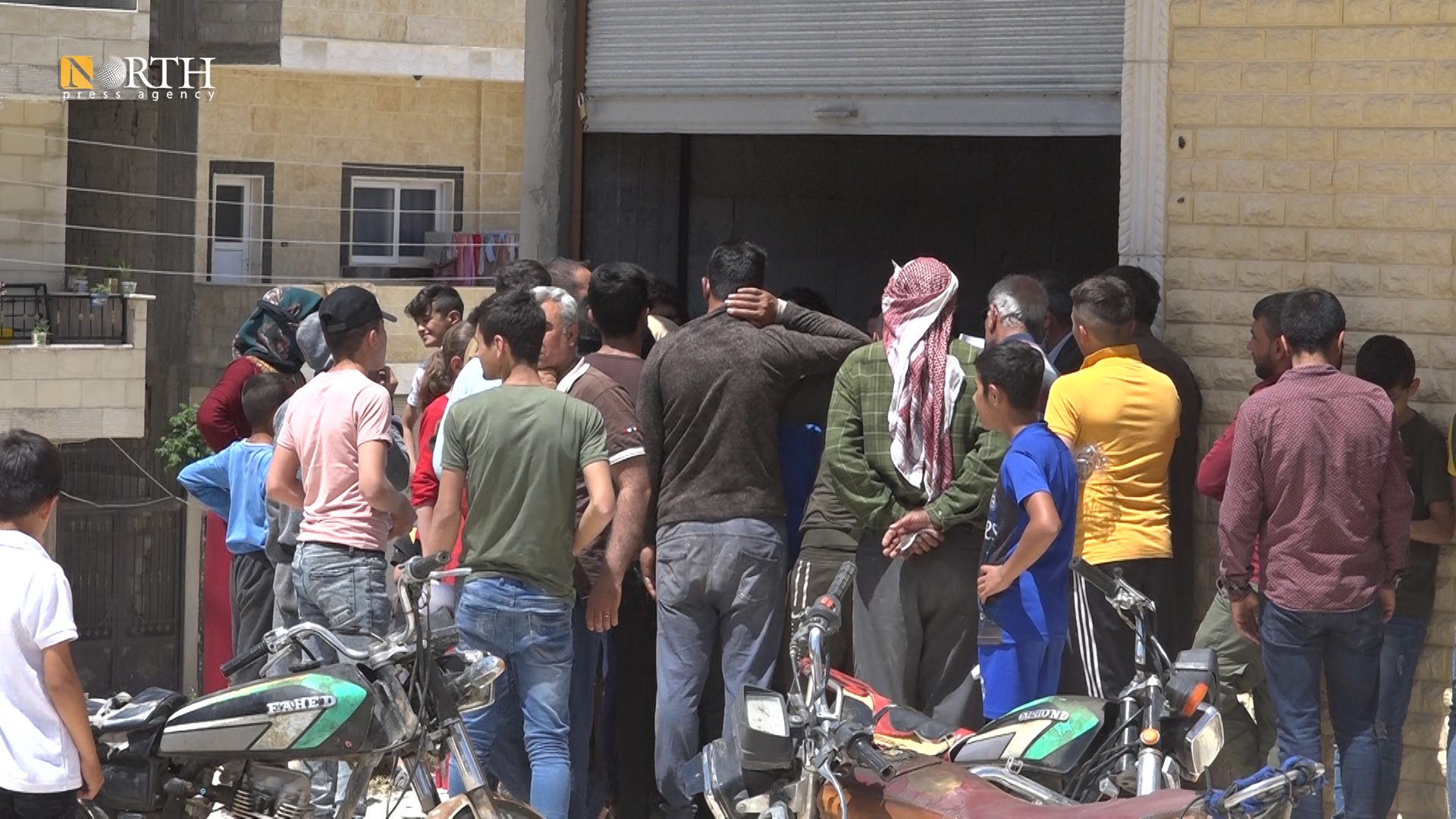
KOBANI, Syria (North Press) – In light of increasing demand for gas cylinders following the new system of power rationing, Aysha Sheikhi, a resident from Kobani, north Syria, was forced to buy a gas cylinder from Raqqa for 5,000 Syrian pounds (SYP) after she was not able to obtain one in Kobani.
However, before the new power rationing system, Sheikhi, like other residents in Kobani, used to operate the laser cooker in preparing meals.
Ongoing crisis
For two months, Kobani has been witnessing gas shortage and increasing gas consumption as a result of the increasing electricity rationing hours.
In mid-February, Electricity Directorate increased rationing hours from 12 to 16 hours per day.
In a previous statement to North Press, Euphrates Region Electricity Board co-chair Nesrin Kan’an attributed the rationing system to “ongoing Euphrates water cut off by Turkey.”
If Turkish seizure of Euphrates water continues, electricity rationing hours will increase in Kobani, Kan’an mentioned.
Insufficient quantities
Meanwhile, residents of Kobani have to wait hours in order to register or obtain a gas cylinder.
In Euphrates Region, there are 22 gas distribution centers of which 12 are scattered in the city of Kobani, nine in the villages, and one in Ain Issa.
Euphrates Region’s monthly allocation of gas cylinders reaches to 33,600 of which 24,000 are the allocation of Kobani, according to Kobani Gas Office.
Extra quantities
Two month ago, Ma’rouf Ali, a resident from Kobani, registered for a gas cylinder; however, he has not obtained it yet.
“Shortage of gas cylinders causes us difficulties in preparing meals, especially we are witnessing Ramadan,” he said.
However, “due to the power outage that we are witnessing we are forced to bring extra cylinders, but the crisis is still there,” administrator in Gas Office Muhammad Hassan stated.
Before the new rationing system, “we obtained sufficient quantities so that we did not witness overcrowdings in front of the centers,” he mentioned.
Hassan believes that there is no solution but to increase electricity supply, since the gas factory in Qamishli is unable to meet the increasing demand of people.
For more than three months, Turkey has limited the flow of the Euphrates into Syria, depriving large numbers of people of usable water. Turkey reduced the flow of water from the Euphrates River into northeast Syria’s dam gradually, reducing the amount of water received to unprecedented lows.
Turkey keeps water in six dams, the largest of which is Ataturk Dam, the second largest in the Middle East, with a storage capacity of 48 billion m³, violating the international agreement they signed with Syria in 1987 which stated that Syria’s share of water coming from Turkey is 500 m³ per second.
The water flow to the Euphrates River is now limited to less than 200 cubic meters, according to the General Administration of Dams in Northeastern Syria.