
New Russian move in Artsakh to block Turkey
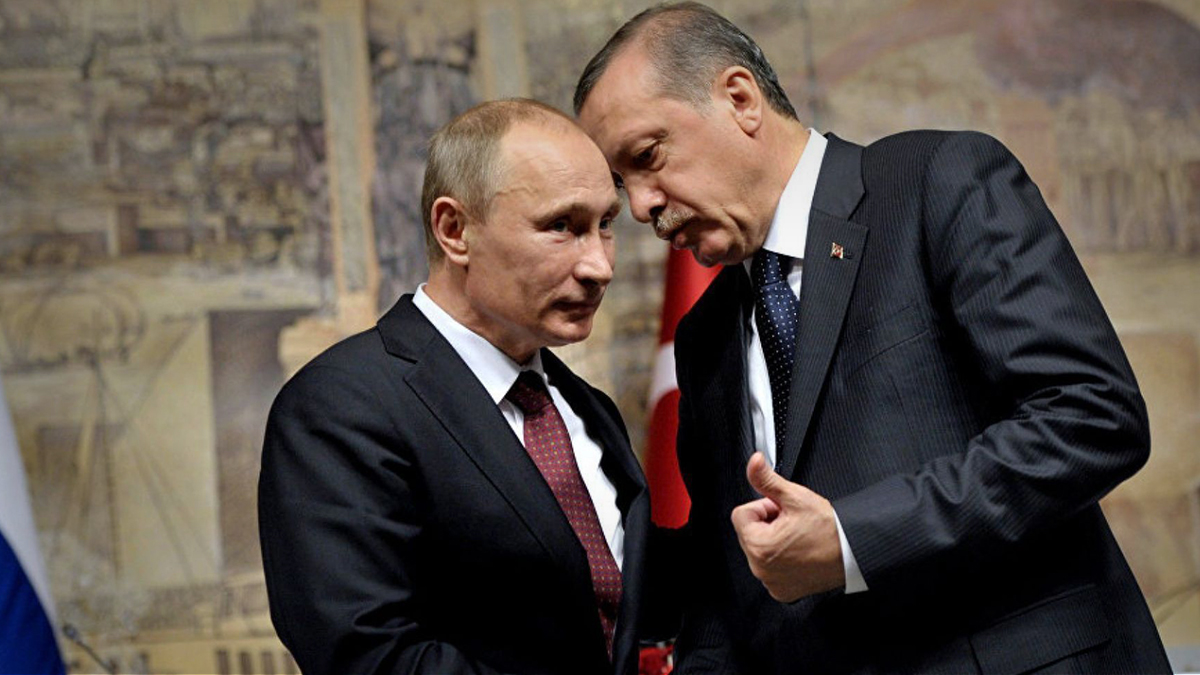
ISTANBUL, Turkey (North Press) – Russia announced, on Wednesday, the reposition of its military observation posts along the front line in the disputed Karabakh region between Azerbaijan and Armenia.
It also announced the approval of the Russian Federation Council to deploy Russian peacekeepers in the region.
On Thursday morning, for the first time, the Russian peacekeepers escorted an Azerbaijani army convoy that set off from the city of Shusha towards one of the villages of Karabakh region.
“Russian peacekeepers in Nagorno-Karabakh provided security for convoys of Azerbaijani soldiers traveling from Shusha to the Fizuli district of Azerbaijan,” Igor Konashenkov, the official representative of the Russian Defense Ministry, said on Thursday.
“On November 19, patrols of Russian peacekeeping forces ensured safe movement of five cars with servicemen of the Azerbaijani Armed Forces from Shusha settlement to Fizuli district of the Republic of Azerbaijan”, Konashenkov said.
He stressed that a “ceasefire regime is observed throughout the contact line”.
The Council of the Russian Federation adopted a resolution unanimously that includes approval of Russian President Vladimir Putin’s request to send Russian forces equipped with weapons and military equipment to Karabakh region.
Turkish presence
No military or diplomatic statement was issued by Russia indicating new details related to the Russian position on Turkey’s intention or its demands to deploy its peacekeeping forces in the region.
Russia insists that the Turkish presence will only be in the joint monitoring center that was agreed upon between the Russian and Turkish defense ministries a few days ago.
Javad Gul, a journalist specializing in Turkish affairs and international relations, told North Press “What Russia is doing today is taking place without coordination with the Turkish side.”
He pointed out that the deployment of this number of observation points on the ground, in addition to Russia’s stationing in the monitoring center, which is supposed to be shared with Turkey, comes as a preemptive response to Turkey’s intention to send its country’s forces to the contact line in Karabakh region.
He added, “It is a message from Putin to Erdogan that Karabakh region and that disputed geographical area are in the hands of the Russians militarily.
According to Gul, any Turkish move in the region is taking place under Russian supervision. “This matter will not be accepted by Turkey, as it weakens its position towards its allies, and Azerbaijan.”
Gul said, “Turkey will not make any mistake that could anger Russia.”
Turkey will resort to diplomacy and military understandings at the negotiation table not through force of arms, because Russia was the first to put its feet in the region, according to Gul.
Russia is aware of the importance of this region to Turkey, so it hastened to block any road to Turkey, and for the region to become a new blackmail card by the Russians against the Turks, he added.
On the 10th of November, Russian President Vladimir Putin announced that Azerbaijan and Armenia had reached an agreement providing for a ceasefire in Karabakh region.
On Tuesday, the Turkish Parliament approved a memorandum for the Presidency of the Republic, on sending troops to Azerbaijan.
Dialogue style and soft messages
Abdullah Ozdemir, an analyst specializing in Turkish affairs, told North Press that Turkey won’t accept its marginalization and exclusion from this agreement, as it knows the size of the moral, political and economic losses in the event that it is isolated from any decision regarding the Karabakh region.
He pointed out that Turkey is following the method of dialogue and soft messages, instead of the policy of intransigence that it follows in the eastern Mediterranean issues, the Libyan, or the Syria’s Idlib issues.
Turkey is aware about its strong military presence in Syria’s Idlib, gives it the power of negotiation, while in Karabakh Turkey is aware about the strong and heavy military presence of Russia there, Ozdemir said.
Turkey is striving, through its soft messages in Karabakh, to gain the approval of the Turkish people for any possible military move, in addition to winning the favor of Russia, which is basically ready to respond to Turkey and blackmail it in Idlib issue, according to Ozdemir.
The head of the International Center for Political Analysis and Prediction, Russian political analyst Denis Korkodinov, said in exclusive statements to North Press, that Turkey is keen not to anger Russia.”
He pointed out that “this is related to the developments between Azerbaijan and Armenia, and its interference there in the interest of Azerbaijan, especially since this Turkish support will push Russia to restructure its relations with Turkey.”
The Russian Foreign ministry announced, Thursday, that Armenia and Azerbaijan have exchanged 385 dead bodies since the 13th of November.
“The Russian leadership is still in constant contact with the two parties to coordinate work in the post-conflict phase,” Maria Zakharova, the Director of the Information and Press Department of the Ministry of Foreign Affairs of the Russian Foreign Ministry said.