
Raqqa – North-Press Agency
Ahmad al-Hassan
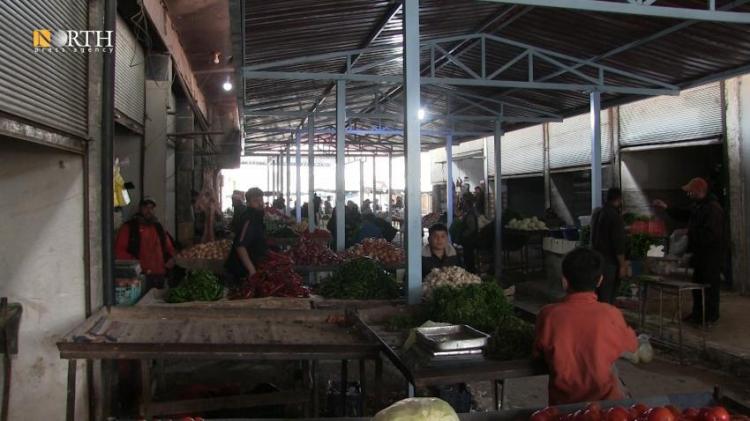
In the past two days, markets in the city of Raqqa in northern Syria witnessed an unprecedented price hike of food and vegetables, in conjunction with the enforcement of the quarantine imposed to avoid the spread of the new coronavirus epidemic, which caused a wave of discontent among residents who accused traders of exploiting the situation.
"The traders took advantage of the lockdown to raise prices according to their whims, and they have been exploiting us after the announcement of the lockdown which was implemented to protect us from coronavirus," Bara' al-Shawakh, a resident of the city, told North-Press.
In this regard, on Wednesday, the General Administration of Supply and Consumer Protection of the Economic Commission for the Autonomous Administration of North and Eastern Syria issued a bulletin on food and basic materials' prices.
Jamal Haj Othman, another resident of Raqqa, said that high prices reflect "individual exploitation, and prices vary from one market to another," he said.
Mobile markets, which many low-income people depend on to secure their needs, were closed in the neighborhoods of Raqqa and surrounding areas in light of the lockdown that has been in place since last Monday, as it was witnessing great congestion amid fears of the spread of the new coronavirus.
38-year-old Abboud al-Agha, a vegetable seller in Raqqa, accused traders who import vegetables from other governorates of taking advantage of the conditions for their interests. "In this period we sell vegetables produced locally, while the ones we import from other governorates are high in price and low in quality, so we have to sell it overpriced," he said.
Ahmad al-Shawakh, head of the Market Watch Office in Peoples Municipality in Raqqa, said: "We are conducting supervisory visits in an attempt to control prices; we work intensely to prevent exploitation by the traders."
During the first and second days of the lockdown, the markets of cities and towns in northeastern Syria witnessed a decrease in the amount some kinds of food and basic materials and an increase in the prices of other items, while the exchange markets witnessed an instability in the foreign exchange rate, which went up more than two hundred pounds per US dollar.