
Raqqa’s women narrate four years of pain
Raqqa – North-Press Agency
Mostafa Khalil
A short period away from the memory of their homes, Syria's women lived all kinds of pain during the last nine years, where the faces of friends, neighbors and relatives faded away. Many flags over lied on military vehicles, each one of them brought a new controlling power, the most oppressed was the darkness that entered Raqqa in 2014, which didn't only impose black dress on women, but it exceeded to burying their hearts to choose the darkness for mourning on what they had lost.
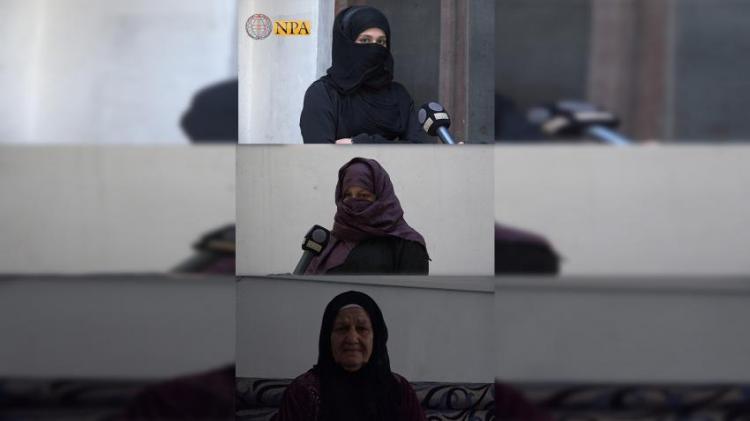
The 60-year-old Hadla tried to oppose those who demanded her to wear the veil, by saying: "I'm old enough, why should I wear a veil They stopped me on the way twice, Islamic State (ISIS) militants were asking me about the reason of not putting veil on my face, and my reply was that, I'm an old woman and feel dyspnea when putting something on my face", she said, adding: "I shouted at their faces till they let me alone".
During ISIS attacks on Raqqa, Hadla lost her son, but suffering loss hasn't departed her heart, she said: "My son was killed with lots of children and elders, may God not bless them.”
While Huda al-Jasem, after she witnessed the tragedy of her husband's killing during ISIS attacks on the city, she decided to bear the responsibility of her house, but she wasn't safe from ISIS members.
"They wanted to marry me and other things,” she said, adding: "I was forced to leave the house to provide food and key needs for my children.”
Huda narrated the attempt of an ISIS militant to marry her after she became a widow, confirming that she suffered a lot in order to be able to convince him of her refusal to marry him, she added: "I don't wonder anything from them, they had an 8-year-old girl married to a 40-year-old man, considering that Islam issued about this matter.”
Huda told the story of her son's sickness, whom she was forced to rescue forgetting to cover her face, to be punished for that because according to ISIS, she had committed a crime and must be whipped in the street.
"What I have done was that, I rescued my patient son in the night without putting the veil on my face, because of that I was whipped in the street in front of people,” Huda said.
Also, Areej al-Ali who insisted to complete her academic education in Deir ez-Zor despite ISIS control over Raqqa, she narrated how she was subjected to insult by ISIS militants.
"They were considering our going to other regions as apostasy and our education as barefacedness, they imposed veil on us and prevented us from completing our education,” she said.
The hidden stories behind the black cloths in Raqqa don't end, the women were the most affected and suffered from marginalization, oppression, imposing rules and severe punishments by ISIS militants, in addition to inhumane constraints against personal freedom, forcing the woman in Raqqa to live in constant fear, hoping not to choose the blackness forcibly.