
Official says water network damage slows distribution in Syria’s Hasakah
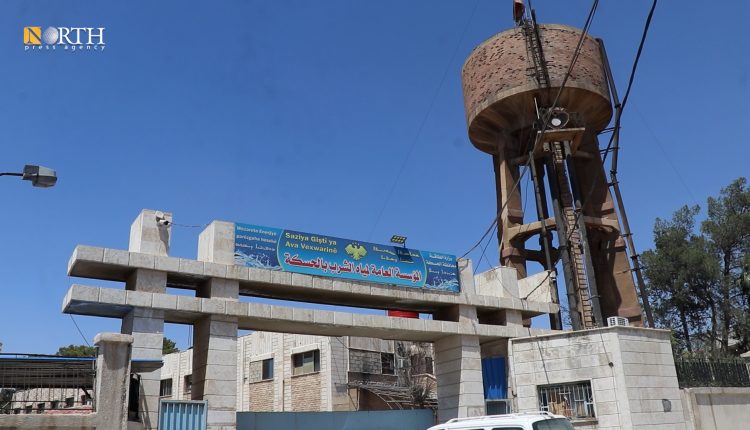
HASAKAH, Syria (North Press) – Hasakah’s General Corporation for Drinking Water and Sanitation on Thursday said extensive damage to the city’s water network is preventing drinking water from reaching all neighborhoods despite the resumption of pumping from the Alouk Water Station.
Farhan al-Owais, Director of the Corporation, told North Press that the utility remains in a trial pumping phase to identify and repair faults across the network.
Al-Owais said water is being pumped from the Alouk Water Station to the Aziziyah pumping station and into the city’s distribution network, but some neighborhoods remain without water because of major pipeline breaks and other damage. He said supplies would gradually reach all areas once repairs are completed and illegal connections are removed.
He described Hasakah’s water network as “almost completely collapsed,” saying more than 70 percent of the system has deteriorated. Maintenance teams identified about 35 major faults during the first two days of pumping, in addition to dozens of smaller failures.
Al-Owais attributed the damage to years of inactivity, road construction, urban expansion and sewer projects that affected pipeline routes, as well as the absence of an accurate map of the city’s water network.
He said maintenance teams are deployed across the city to repair the damage, while the Water Control Unit has resumed work to identify illegal connections and violations. The unit will begin with warnings before imposing fines when necessary, alongside a public awareness campaign promoting water conservation and protecting the network.
Regarding Hawl town and its surrounding countryside, al-Owais said water from the Alouk Water Station must pass through three pumping and distribution stations between Hasakah and Hawl, all of which are currently out of service, preventing water from reaching the area.
He said temporary solutions are being implemented while the rehabilitation of the three stations has been included in the 2027 budget plan.
Al-Owais added that the Alouk Water Station is currently operating at partial capacity, with between 14 and 19 wells rehabilitated out of 34, alongside five horizontal pumps. Water is currently pumped using two to three pumps, depending on demand.
He said the water rationing schedule will remain flexible during the coming period as maintenance progresses and new faults are identified, with efforts focused on reducing supply interruptions as much as possible.
Al-Owais said the Alouk aquifer remains stable but stressed that reliance on groundwater is not a sustainable long-term solution.
He said the proposed Tigris River water transfer project remains one of the main long-term options to secure a permanent water source for Hasakah, Qamishli and surrounding areas, adding that the Ministry of Energy is actively pursuing the project while seeking financing for its implementation.