
Syria’s Hasakah records over one million tons of wheat procurement
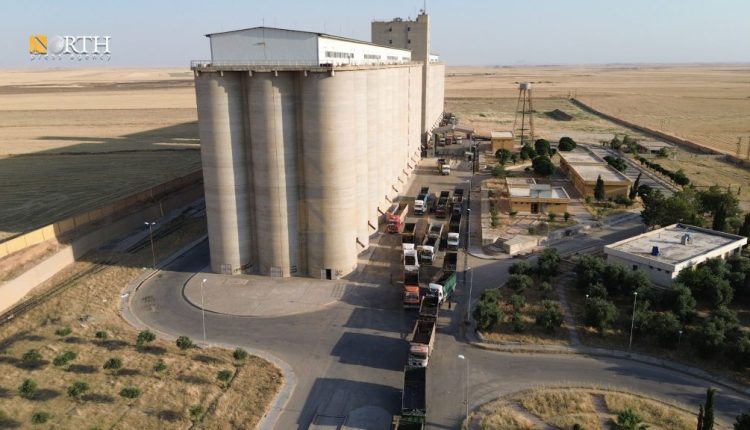
HASAKAH, Syria (North Press) – Wheat deliveries to official collection centers in Syria’s northeastern Hasakah Governorate have exceeded 1.017 million tons, marking one of the largest procurement seasons in the Governorate’s history, a local official on Sunday said.
Mohammad Shawqi Mohammad, Director of Internal Trade and Consumer Protection in Hasakah, told North Press that preparations to pay farmers for their wheat deliveries have entered the final stage, with payments expected to begin in the near future.
According to Mohammad, wheat was marketed through 21 collection centers, which received more than 328,000 tons of durum wheat and over 670,000 tons of soft wheat.
“These figures reflect the success of the current agricultural season and the abundance of production across the Governorate,” he said.
He acknowledged that the peak of the harvest season posed significant logistical challenges due to the large volumes arriving at collection centers, coupled with limited storage capacity and available space in silos.
However, he said the Syrian Grain Corporation branch in Qamishli, in coordination with the Ministry of Economy and Industry and the General Syrian Grains Administration, implemented a series of measures that ensured uninterrupted procurement operations and the smooth transport of wheat throughout the season.
Mohammad added that most of the obstacles encountered during the harvest have now been resolved. Authorities are currently processing farmers’ invoices and completing administrative and financial procedures before forwarding them to the Agricultural Bank, which is finalizing the technical and accounting preparations required to begin disbursing payments in the coming period.
He described this year’s wheat procurement campaign as one of the largest ever recorded in Hasakah, saying the results reaffirm the Governorate’s strategic role as Syria’s primary wheat-producing region. He also praised the cooperation of farmers, the efforts of staff at collection centers, and the work of all institutions involved in ensuring the success of the season.
By Samer Yassin