
UN officials say ISIS threat has grown steadily since mid-2025
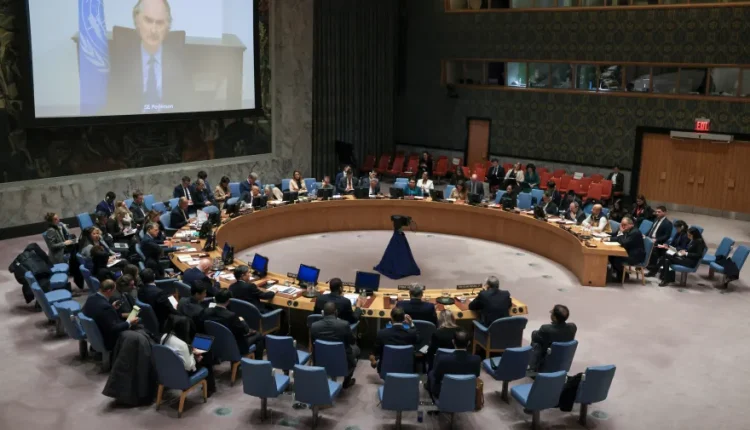
DAMASCUS, Syria (North Press) – U.N. officials told on Wednesday the UN Security Council that the threat posed by the Islamic State (ISIS) has increased steadily since mid-2025, becoming more complex and multi-front.
Alexander Zuev, Acting Assistant Secretary-General for Counter-Terrorism, said ISIS and its affiliates have expanded their presence in West Africa and the Sahel, while sleeper cells remain active in Iraq and Syria.
He added that ISIS’s Khorasan Province continues to pose one of the most serious threats in Afghanistan, with the potential for its impact to extend beyond the region’s borders.
Zuev explained that the group exploits ongoing conflicts, weak governance, and security vacuums to consolidate its influence and recruit new members in several fragile areas.
He noted that tens of thousands of individuals suspected of links to ISIS—including foreign women and children—remain stranded in camps in northeastern Syria.
Zuev warned that conditions in Hawl camp and detention facilities, particularly amid the withdrawal of some local forces, create a fertile environment for the group’s resurgence or reorganization if the root causes of the crisis are not addressed.
For her part, Natalia Gherman, Executive Director of the Counter-Terrorism Committee Executive Directorate, said ISIS and other extremist groups have intensified their use of cryptocurrencies, virtual assets, and cyberspace for financing and planning.
She explained that the growing use of drones and artificial intelligence in propaganda and recruitment, as well as in targeting infrastructure, is accompanied by a particular focus on recruiting youth and children through digital platforms.
Gherman stressed that airstrikes and military operations—including US strikes against ISIS in Syria—degrade the group’s operational capabilities but do not eliminate the existing threat, nor do they replace the need to address the underlying drivers of extremism.