
AANES rehabilitates archeological wall of Syria’s Raqqa
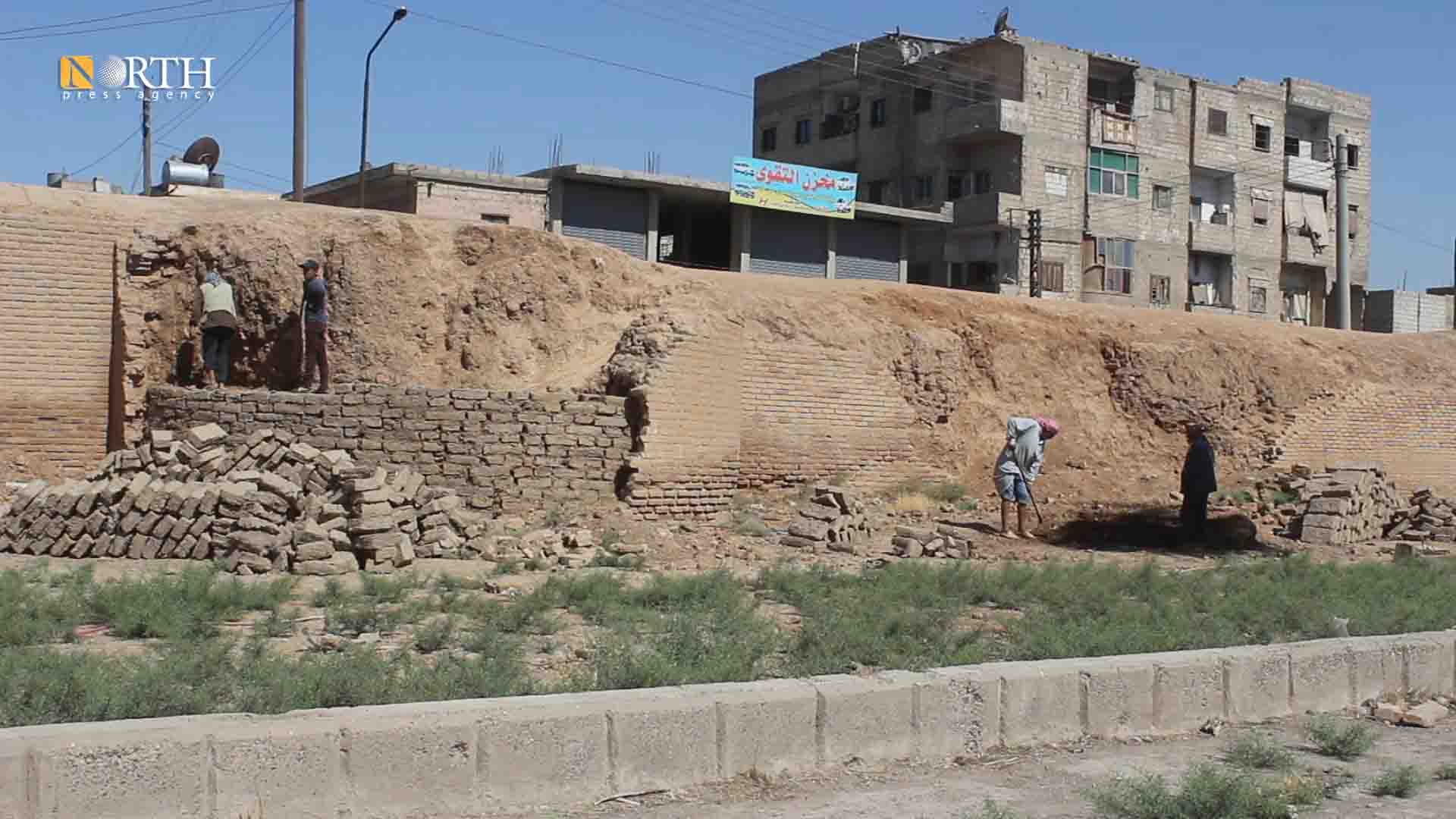
QAMISHLI, Syria (North Press) – An official in the Autonomous Administration of North and East Syria (AANES) said on Monday they started the second phase of the restoration of the archeological wall in the city of Raqqa, northern Syria.
Serfraz Sharif, co-chair of AANES’ Culture Board, told ANHA, a Kurdish news agency in Northeast Syria, the wall holds a great significance in Raqqa and survived many violations committed by the Islamic State (ISIS) over a long period.
Parts of the wall were partially or completely destroyed during battles as several parties took control of Raqqa after the start of the Syrian crisis.
In January 2014, ISIS fully captured the city of Raqqa from the Syrian opposition factions and later declared it as the de-facto capital of its caliphate. The group was expelled from the city in October 2017 after a four-month battle with the Syrian Democratic Forces (SDF), backed by the U.S.-led Global Coalition to Defeat ISIS.
Since then the AANES has worked on restoring all cultural and archeological sites destroyed during ISIS’ rule.
Sharif added that the five km long wall dates back to 775CE and has a historic, archeological, and social significance for the people of Raqqa.
She pointed out that parts of the wall would be repaired in the second phase under the supervision of a staff of local engineers and team specialized in restoring archeological sites.
The rehabilitation started with making mud bricks and using hand tools similar to the method used in building the wall in ancient times.
The Culture Board had previously restored some parts of the wall as well as the tower during the first phase of the restoration in 2023.