
Hasakah city witnesses surge in water pollution-related diseases
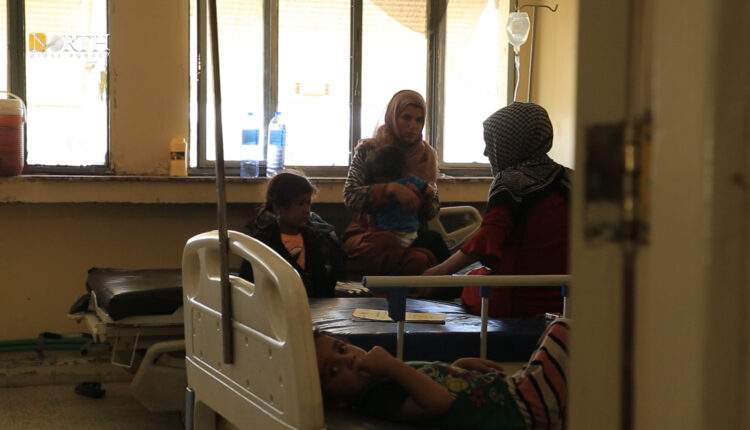
HASAKAH, Syria (North Press) – The city of Hasakah, in northeastern Syria, is experiencing an increase in disease cases, which can be attributed to water pollution and the absence of a reliable water source.
On Monday, the Autonomous Administration of North and East Syria (AANES) declared Hasakah a disaster area because of Turkey’s continued water cut-off to the city and the surrounding areas, and accused Russia and the Syrian government of “complicity”.
Fares Hamo, a neurologist at the People’s Hospital in Hasakah city, stated on Thursday that the combination of high temperatures and the lack of access to clean water sources has resulted in a surge of disease cases.
The residents currently rely on mobile tankers that fill their water from surface wells in the city’s countryside. Unfortunately, these wells are often contaminated, resulting in unclean water supply.
The doctor explained that during summer, the water outage from Alouk station, combined with high temperatures, increases pollution. Moreover, the quality of water the mobile tankers provide varies, as each tanker sources water from a different well.
Hamo emphasized that relying on bad alternative sources of water can lead to a severe health crisis, as it can cause a range of illnesses including diarrhea, intestinal infections, typhoid, and other waterborne diseases.
According to the hospital administration, The People’s Hospital has recently observed a surge in disease cases, with a rate of more than 10 cases per day. The majority of those affected are children.
The doctor has expressed concern over the possibility of the emergence of other diseases such as cholera, as temperatures continue to rise. He emphasized that the situation will only deteriorate further unless clean water is made available from dependable sources.
The city of Hasakah is witnessing a significant rise in temperatures, exceeding 44 degrees Celsius at peak hours.
On Wednesday, Sheikhmus Darwish, the groundwater geological expert in the AANES Water Directorate, warned of the drying up of surface wells that provide Hasakah and its countryside with drinking water.