
Not returning British families from NE Syria is ‘strain’ – US newspaper
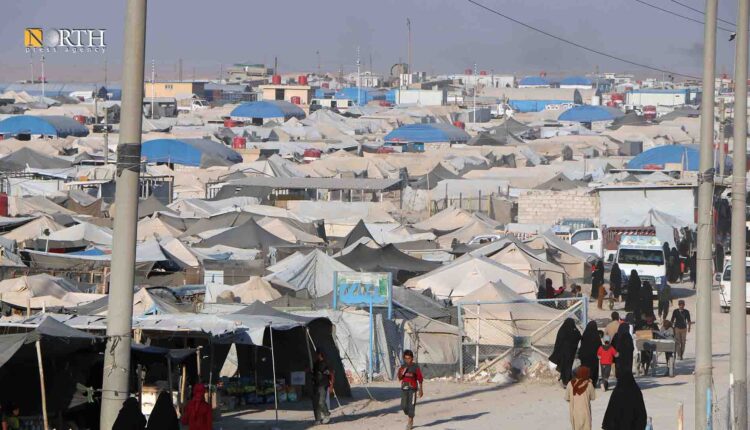
QAMISHLI, Syria (North Press) – The failure of the United Kingdom (UK) to bring home its citizens with links to Islamic State (ISIS) from camps in northeast Syria is considered a strain “on its human rights record,” US-based Politico said on Thursday in an opinion piece by Rob Williams, Chief Executive Officer of War Child.
With only ten repatriated orphans “unaccompanied children,” the UK, when seen alongside the steps taken by other countries regarding their citizens trapped in northeastern Syria, always refuses to “undertake the humane repatriation of families.”
Under the “inexplicable” pretext of “protecting Britain from potential security threats”, the UK leaves 25 British families in Hawl camp.
Leaving families, mostly children, who were born into the horror of war, to suffer under dire conditions in a “conflict area” is “shocking,” especially that the UK is known for its leading role in global campaigns to end sexual violence in conflict and tackle human trafficking, according to Williams.
He stressed that bringing these families home contributes to upholding moral obligations, as well as, to safeguarding “national and regional security.”
The newspaper highlighted the issue that so far no one in the Hawl camp has yet been “charged with a crime” and they are kept in the camp for their “unproven” links to ISIS.
On June 10, the Autonomous Administration of North and East Syria (AANES) announced that it would begin the trial of foreign ISIS fighters held in its prisons in line with international and local terrorism laws.
On June 11, Badran Chia Kurd, co-chair of the Foreign Relations Department of the AANES, revealed to al-Arabiya TV channel, no support has been provided to the AANES to try foreign “ISIS terrorists,” and the AANES would establish the courts and the needed facilities alone.
Williams said, “The U.K. needs to do the right thing — for all British families at Al-Hol — and take the necessary measures to support their reintegration into society.”
He noted that the past years witnessed an increase in the pace of repatriation, “reflecting a growing international consensus regarding the urgency of the current situation.”
Hawl Camp is home to just under 50,000 people, over half of whom are Iraqis.
ISIS lost its final stronghold in Syria in March 2019. The Syrian Democratic Forces (SDF) with the support of the US-led Global Coalition, defeated ISIS after fierce battles in the town of Baghouz in the eastern countryside of Deir ez-Zor, bringing an end to the ISIS so-called caliphate.
After Baghouz, thousands of ISIS fighters were transferred to prisons, while their families were transferred to the Hawl and Roj camps in the AANES-held areas.
With regard to the condition in the camps in northeast Syria, the War Child Chief Executive Officer stressed that children are the “most vulnerable victims” who suffer under “rapidly deteriorating” conditions amid lack of basics of food, clean water, shelter, and medication.
The UN Committee on the Rights of the Child recommended the UK “undertake effective and urgent measures to repatriate children” from northeast Syria where they face an “imminent risk.”
Williams also voiced concern over the issue to separating the adolescent boys from their families and detain some, age 11, in detentions “where they’re at heightened risk of sexual abuse, and have little to no contact with the outside world.”
The UK has contributed to northing regarding the issue, instead it provided funds to the construction of detentions, according to Williams.