
Covid-19 center in Syria’s Qamishli lacks equipment
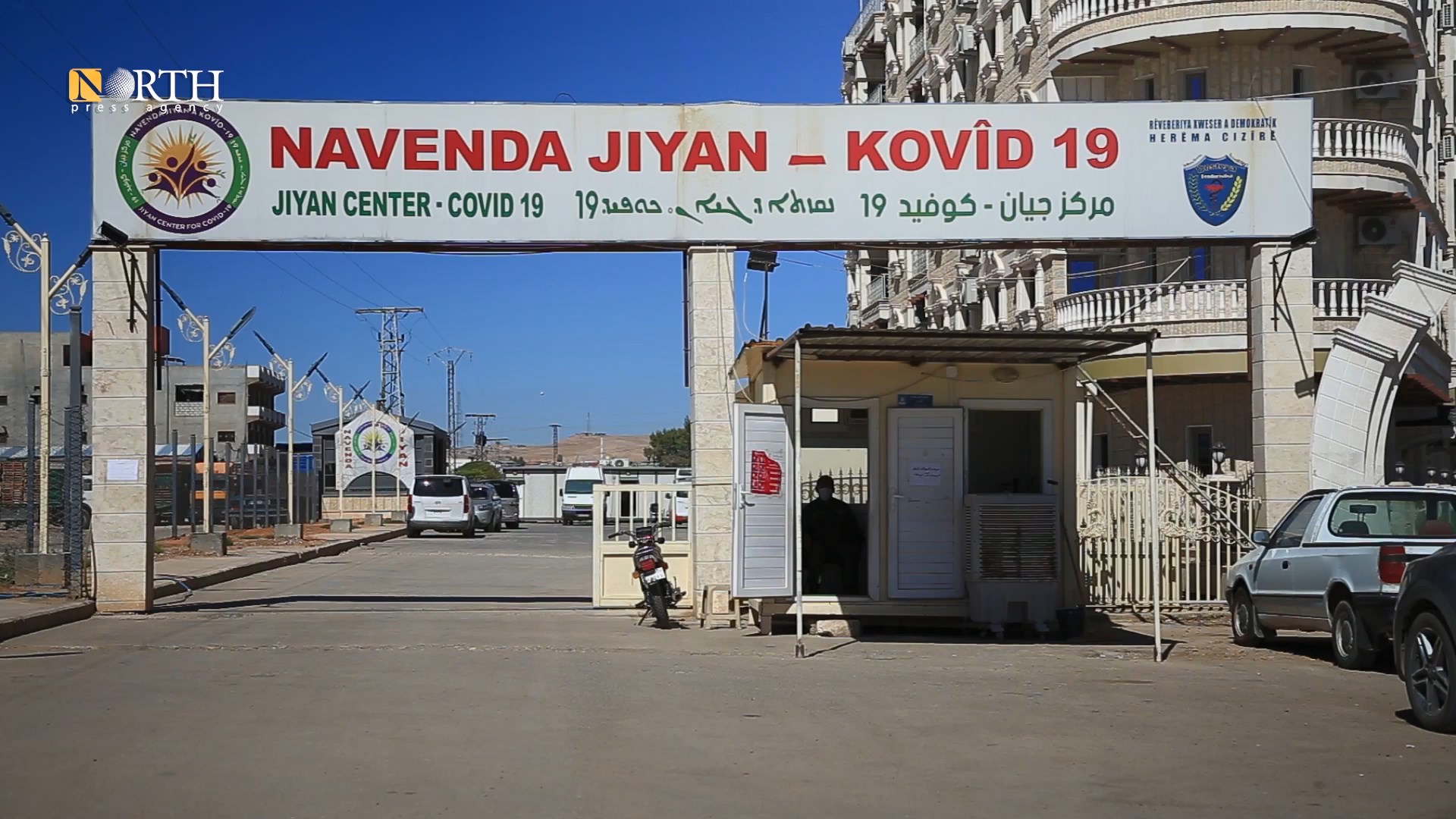
QAMISLI, Syria (North Press) – Rodi Khalil, who accompanies a COVID-19 patient in the city of Qamishli, northeast Syria, seems satisfied after the recovery of his relative, who received care at the Jiyan COVID-19 Center in the city.
However, the officials of the center say, it has a limited capacity (60 beds) amid a shortage of oxygen and medical equipment.
After the PCR test was done for the patient and his infection was confirmed, his condition got worse at home, so his relatives admitted him to the Jiyan Covid-19 Center.
“His oxygenation was between 30 to 40 when arriving at the center,” Khalil said.
“Thanks to the medical staff of the center who treated him. His condition is much better now and will be discharged from the hospital,” he added.
“The only Covid-19 center in Qamishli can receive 60 patients only,” director of the hospital, Dr. Abdulghani Hassan said.
“We also lack ventilators, as we have only 15 ones,” he added.
Hassan called on the international and humanitarian organizations to help control the pandemic in the region.
He pointed out that the center has recorded 90 recoveries so far, while 60 deaths were recorded until late September.
For her part, Jihan Muhammad, who is in charge of the Nursing Department at the center, said that they receive patients “around the clock.”
“The epidemic is spreading widely among people who have not received the vaccine, which has led to an increase in infection rates and overcrowding in hospitals,” she added.
Muhammad pointed out that the center is the best place for the severe conditions, because even the other hospitals do their best, but most of them lack equipment.
She pointed out that they face great difficulty with the cases that rush to the center after their condition deteriorates and their breathing levels deteriorate, “the symptoms worsen in one patient out of every five infected.”
The Nursing Department official at the center stressed that abiding by the total lockdown and social distancing is the way to reduce infections and relieve pressure on the only center specialized in coronavirus in Qamishli.
Yesterday on Tuesday, the Crisis Management Team in the Jazira region, northeast Syria, suspended the implement of the total lockdown in its areas of control, excluding the cities of Qamishli, Hasakah and Derik, as they still record high deaths and infections after 10 days of imposing the total lockdown.
In late September, the co-chair of the Health Board of the AANES, Jiwan Mustafa, said in press conference that “The situation in the health centers is frightening, as they are close to full, and the situation does not get better. Rather, it signals a humanitarian catastrophe.”
The health Board daily announces the record of hundreds of new infections unlike previous times where there were just dozens.