
Taxes and fees by opposition checkpoints raise import prices in Syria’s Azaz
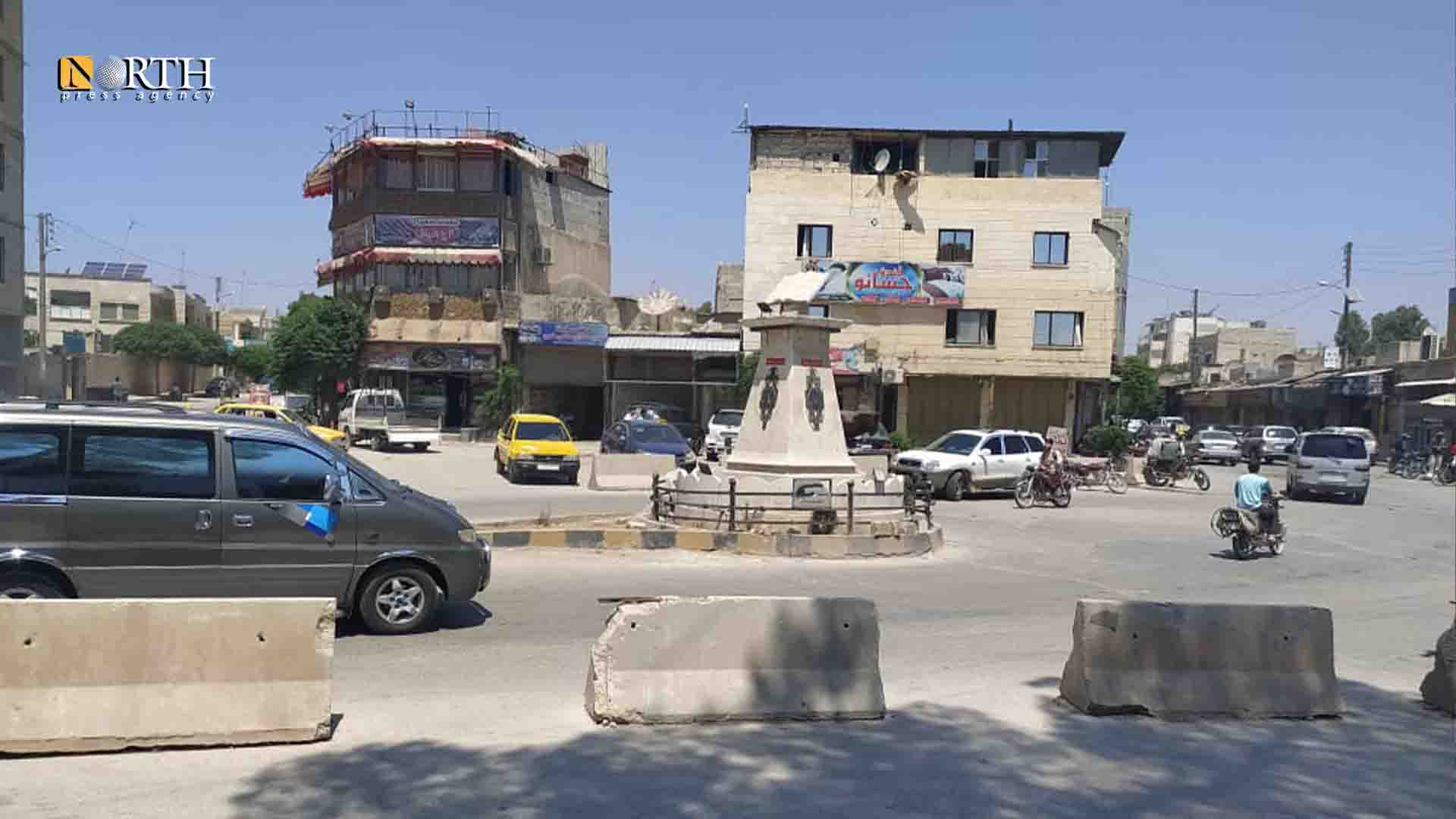
AZAZ, Syria (North Press) – Ammar Mahmoud (a pseudonym), a merchant from the city of Azaz in the northern countryside of Aleppo, northern Syria, counts the costs of goods that he imports on a semi-monthly basis through transport trucks from the city of Jarabulus, east of Aleppo, coming from the Autonomous Administration-held areas in Manbij.
The merchant finds himself forced to raise the prices of goods to cover the taxes imposed on him by the checkpoints at the entrances to cities such as al-Rai, al-Bab and even his city of Azaz.
Mahmoud pays approximately $300 to be paid as traffic taxes at the four intersections near the city of al-Rai, in addition to the checkpoints at the entrances to the cities of al-Bab and Azaz in the event that some of his goods are deposited in the warehouses of those cities for investment in the markets of the region.
The city of Azaz and other cities held by the Turkish forces and the Turkish-backed armed opposition groups are witnessing a significant increase in food and consumer prices.
According to traders, taxes vary from one checkpoint to another, as each checkpoint imposes between $50 and $70 per shipment, depending on the number of trucks and imported goods.
Goods coming from Jarabulus to Azaz are subject to fees from both al-Rai and Azaz checkpoints, while those coming from Jarabulus to Afrin are subject to al-Rai, Azaz and Afrin checkpoints.
The merchant said that these taxes and fees are different from the fees placed on the Turkish crossings in the event of bringing goods from Turkey into those cities.
The fees paid at the Turkish crossing amount to 1,200 Turkish liras for each two cargo trucks, according to traders.
Manipulating the livelihood of the people
Muhammad Rahmo, a merchant from Azaz, held the checkpoints of the Turkish-backed armed opposition groups the responsible for the high prices of imported goods.
He pointed to the lack of trucks coming from the Autonomous Administration-held areas to Jarabulus and the rest of the opposition-held areas because of the fees imposed on them, which leads to an increase in prices.
Areas in northern Aleppo are held by the Turkish-backed armed opposition groups, while Idlib and parts of western Aleppo are held by Hay’at Tahrir al-Sham (HTS, formerly Jabhat al-Nusra).
These areas are separated by crossing points, one of which is called Deir Ballut Crossing near the Atma area, north of Aleppo, and is used for people crossing between the two areas.
While the Ghazawiya crossing near the town of al-Basouta in the countryside of Afrin, north of Aleppo, is used to transport goods between the two areas and shipment vehicles.
Taxes are imposed by HTS on every export and import from its areas, and this is done by weight, as the value of the tax on each ton is estimated at $15, according to traders.
Walid Mashhadani (a pseudonym), a displaced person from Homs who works in importing goods, said that the fees imposed by the checkpoints on the outskirts of large cities and between opposition areas in northern Aleppo and northern Idlib are tasteless.
He added, “They have no right to do so, and these actions indicate manipulation of the population’s livelihood and unjustly taking our money.”
Pretext
However, Mua’yad al-Tamah (a pseudonym), a displaced person from Damascus countryside and living in Azaz, said that sellers and merchants are making excuses to raise the prices of imported materials.
“They have many pretexts to do so, once higher fuel prices, once the exchange rate fluctuated and its impact on the sale market and once on the fees imposed on the goods,” he said.
The prices of basic commodities in the areas held by the Syrian opposition in Syria, such as Azaz and Idlib, are linked to the exchange rate of the Turkish lira, which has witnessed a significant decline against the US dollar recently.
Local residents of those areas believe that dealing in the Turkish lira did not protect them from the difficulties of living and the constant high prices of food and basic staples, and they expressed their dissatisfaction and grumbling about the continuous rise in prices.
He pointed out that the prices of all materials are too high and not commensurate with the monthly income of most of the population, in light of the lack of job opportunities and the deterioration of the living situation.