
Labor union pharmacy opens in Syria’s Raqqa
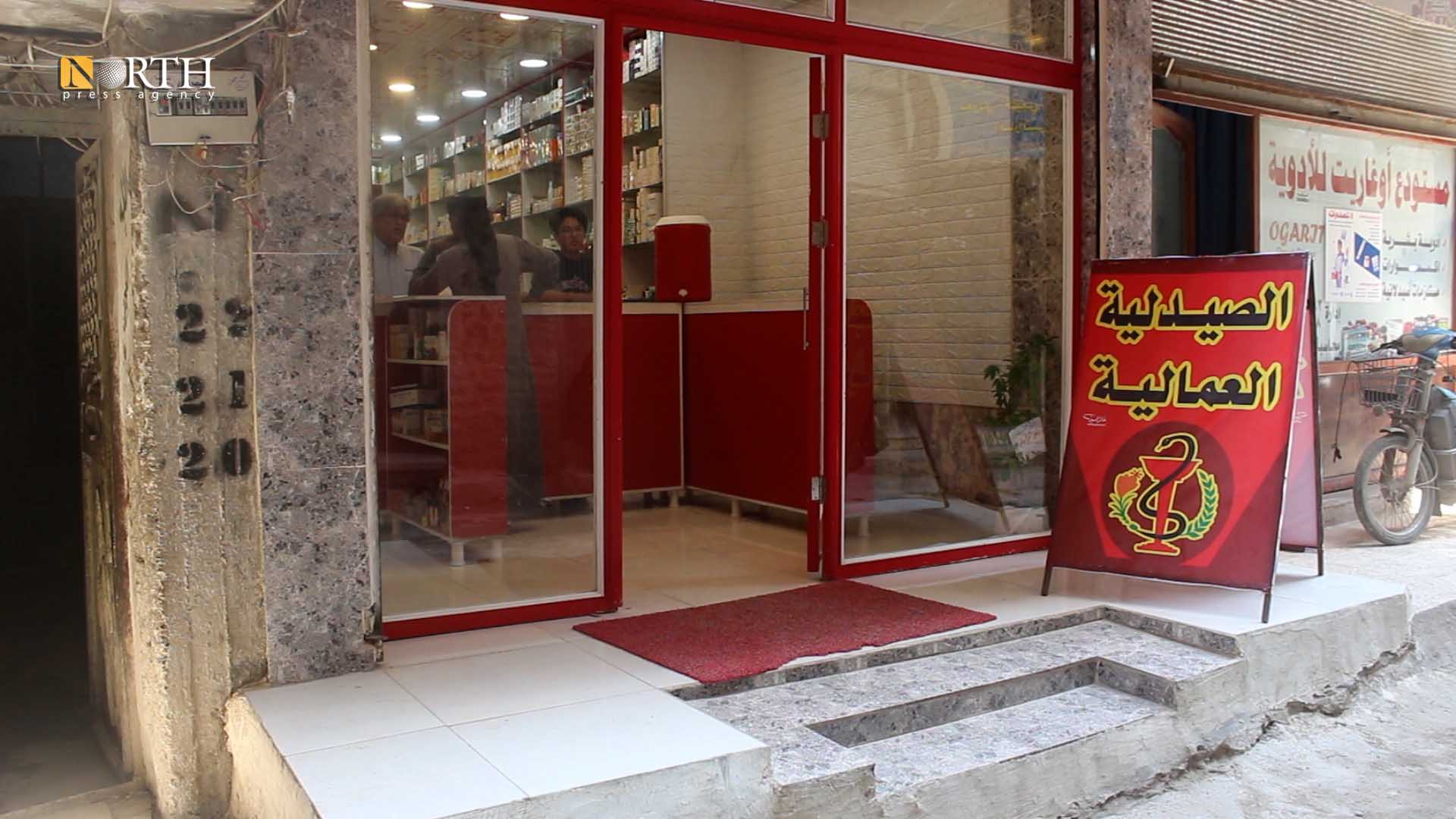
RAQQA, Syria (North Press) – Khalid al-Omar, a day laborer in the city of Raqqa, northern Syria, smiled when asked about the price of the medicine in the laborers’ pharmacy, as he noticed a significant difference in price between it and others he used to purchase from.
Al-Omar considers the project of the pharmacy a “good step,” especially as their living conditions and the high prices of all materials negatively affect their purchasing power.
At the beginning of May, and with cooperation with the Pharmacists Association by an initiative of a pharmacist, the Raqqa Labor Union opened this pharmacy, where medicines are sold to the residents who have a labor card.
The profit margin is only 5% of the value of the medicine that the pharmacy purchases from warehouses in the city.
Laborers are entitled to benefit from the services provided by the pharmacy after showing their labor card, which the Raqqa Labor Union gives them upon their acceptance into the union.
The pharmacist Ahmed al-Shihab, the innovator of the idea of the pharmacy, said that he proposed the idea several months ago, “but the discussion stages with the Labor Union contributed to the delay of the opening.”
“The turnout of the pharmacy was limited at first; it later improved due to the fact that many residents did not know the purpose of the pharmacy and the nature of its work,” al-Shihab added.
Al-Shihab deals with most of the medical warehouses in the city in an attempt to secure different kinds of medicines for the customers.
Male and female laborers can obtain a card, according to the co-chair of the union Zahir al-Abdullah.
“The NGOs, including the Labor Union, seek to adopt and stimulate individual and collective initiatives that the civil activists conduct in the city,” al-Abdullah told North Press.