
Oxygen shortage threatens coronavirus patients in Syria’s Deir ez-Zor
DEIR EZ-ZOR, Syria (North Press) – Shehab al-Assaf (29 years old), along with his five brothers, started searching for an oxygen tank for his mother, who was infected with coronavirus at the Kaisum Hospital in the city of Hajin, east of Deir ez-Zor.
Worried about his mother’s life, Assaf, like other residents of the eastern countryside of Deir ez-Zor, started looking for oxygen for his mother in the hospital for a month ago.
The oxygen shortage in the eastern countryside of Deir ez-Zor, east Syria, increases the suffering of those infected with coronavirus and other chronic diseases, which have led to some deaths in rural hospitals.
The availability of oxygen tanks for coronavirus infections has decreased in the eastern countryside of Deir ez-Zor due to its consumption of medical resources, especially after the outbreak of the third wave of the virus.
A medical organization working in the countryside of Deir ez-Zor warned, at the beginning of this month, of the spread of coronavirus due to the severe shortage of oxygen tanks, in addition to the lack of medical supplies and protective equipment, which threatens to send the epidemic out of control.
On April 19, al-Furat medical team and several hospitals in the eastern countryside of Deir ez-Zor urgently asked for help after the lack of oxygen that caused the worsening of the condition of some infections, and the occurrence of serious complications such as loss of consciousness and paralysis.
Al-Assaf told North Press that he should have obtained an additional tank of oxygen, fearing for his mother’s dangerous condition, whatever the price.
Al-Assaf added that the hospital did not provide oxygen for his mother, despite her critical condition and desperate need for oxygen.
He said that he took his mother home due to the lack of oxygen in the hospital and to put her in quarantine after learning that her treatment would be limited to oxygen inhalation, and there are no drugs or vaccines for the virus.
Al-Assaf called on the concerned organizations and the Autonomous Administration to support all necessary projects for the provision of medical supplies, noting that the eastern countryside of Deir ez-Zor suffers from a dire health situation due to the lack of capabilities to fight coronavirus.
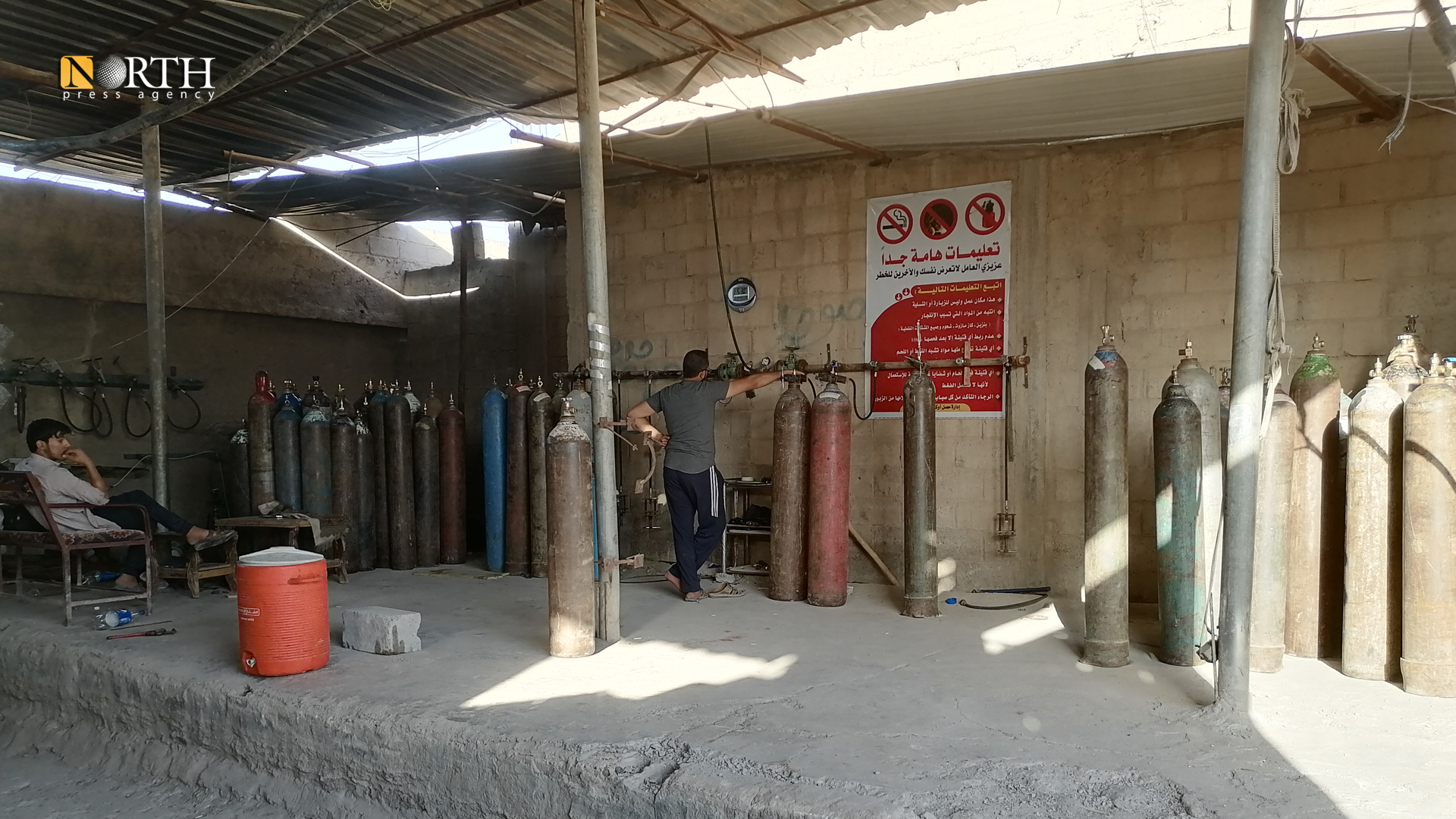
On Tuesday, a plant to generate artificial oxygen announced the reopening of the plant in the town of Kashkiya, east of Deir ez-Zor, which is the first of its kind in the region to provide the necessary oxygen for coronavirus patients.
Hamad al-Alawi, the owner of the plant, said, “The oxygen provided will be good and suitable for surgeries and incubators, but it needs support.”
The plant was established on May 24, 2020, and was run for about twenty days in 2020. The plant then stopped working due to the lack of workers’ experience in working on some of the plant’s mechanisms and the lack of spare parts, according to al-Alawi.
Al-Alawi pointed out that one of the biggest challenges facing the plant is securing spare parts, such as the oxygen compressor, as well as subsidized fuel of good quality.
Al-Alawi added that they have contacted with some companies in China and Turkey, but they refused to sell without internationally recognized commercial registry and a bank account, neither of which al-Alawi could provide.
They have asked the Autonomous Administration and the Deir ez-Zor Civil Council to provide the diesel fuel needed for the work of generators, in addition to an electricity license, but these requests have not yet been approved, according to al-Alawi.
“The oxygen plant runs at less than half of its production capacity, and the humanitarian and medical organizations in the region must provide assistance for such projects,” said al-Allawi.
In a previous statement from the Economic Committee in the eastern countryside of Deir ez-Zor to North Press, some civil administration institutions in Deir ez-Zor are now still in the process of being formed, but they open their doors to any investor and provide them with all forms of assistance.
Earlier, the Autonomous Administration called on international bodies, led by the World Health Organization, to provide the coronavirus vaccine to northeast Syria as soon as possible due to the increasing number of infections of in the region, despite imposing complete and partial lockdowns in all its regions.