
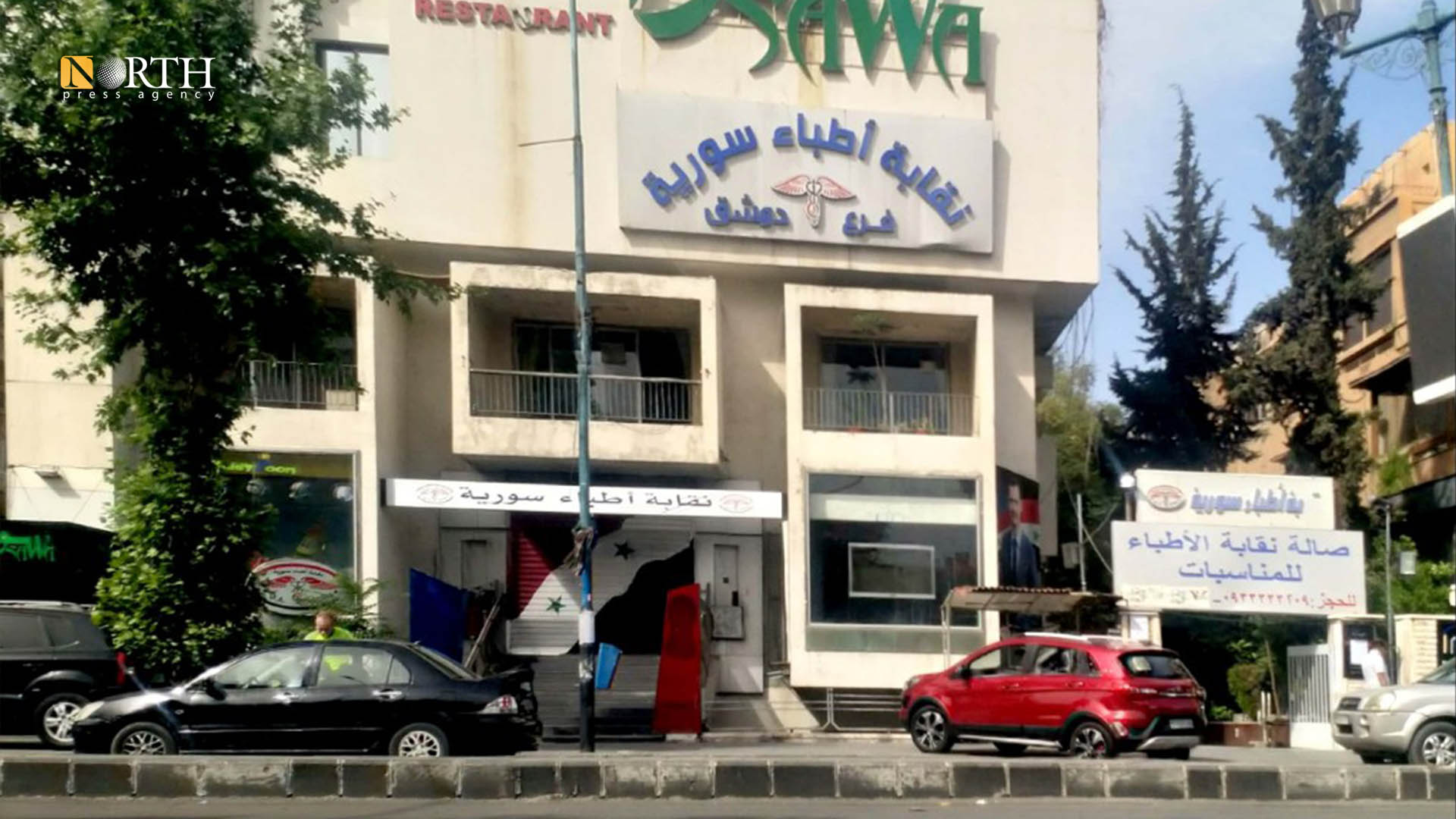
DAMASCUS, Syria (North Press) – Muhsin Dardar (a pseudonym), a resident doctor specializing in anesthesia at the Mouwasat University Hospital and living in the Mezzeh neighborhood in Damascus, was surprised when he went to the Doctors Union to pay his annual dues and was informed that he could obtain a card for the officers’ club.
The doctor, who liked the idea, decided to immediately start filling out the enrollment form necessary to obtain the card, but after filling in the information, he was met with four sheets containing many questions examining the minutest details of his life, his family, and his relatives.
Detailed information
The form included writing the names of all his family members and relatives, their places of residence and work, and other information that even he did not know anything about, according to the doctor.
In mid-March, the Damascus Doctors Union announced that it had started handing out officers’ club cards to doctors in order for them to benefit from the services provided by the military to its officers.
The club consists of a hotel, winter and summer lounges, a child’s park, and a library. It also receives guests of the General Command, both local and foreign, in addition to the officers and their families, and provides them with all necessary services, and recreational shows and weddings venues as well.
Dardar needed to make dozens of calls to obtain some information. “I felt disappointed, tired, and fatigued after I finished filling in the form. Frankly, I no longer know if it was worth the effort in the first place,” he said.
Many doctors complain about the many obstacles and requirements set by the Union and the military institutions in order to obtain the card, which is supposed to provide them with some benefits and privileges.
This announcement follows a package of decisions and projects that the Union declared in the last period to “improve the conditions of doctors.”
Earlier, the Union allowed the doctor to open his own clinic while doing military service, raised the pension from 25,000 to 50,000 Syrian pounds, and allocated a private petrol tank for them before it was canceled due to the fuel crisis in the country.
“Security Study
After reading an advertisement on the Union’s official Facebook page to register for an Officers’ Club card, hematologist Nawras al-Ali (a pseudonym), who works at Damascus Governmental Hospital, decided to obtain the card, especially after his wedding party and his wish to stay in the hospital to save costs.
But he was also surprised by “the security investigation and the huge amount of information that must be provided in exchange for such a simple luxury.”
He added, “I felt that I was in a security branch and not in a doctors’ union, and the last thing I imagined would be that the price of obtaining a permit to enter a wedding hall would be a detailed security study.”
Although al-Ali filled out all the information, his request was rejected “without providing any justification in return, and the most likely reason is simply that my mother’s family comes from a region that witnessed demonstrations and protests at the beginning of the war years.”
Fadi al-Akkari (a pseudonym), a resident at al-Assad University Hospital, refused to fill out the form after seeing it, “because it may cause harm to my family and relatives.”
He believes that the issue is not that important and does not deserve all this strictness, and that the Union should pay more attention to the actual problems that doctors face, such as adjusting the prices of medical examinations and securing adequate quantities of medical supplies and prevention tools for hospitals “at the very least.”
The poor purchasing power of the government salary and the need for doctors to complete their specializations push them to work outside hospitals and in professions that are not related to medicine.
During their residency, the doctors receive a monthly salary of no more than 50,000 SYP.
Al-Akkari said that he now feels that the state’s security grip is haunting him in all aspects of his life. “I am unable to rent a room or obtain bread and gas, apart from the constant complications in conducting any simple transaction in state departments.”