
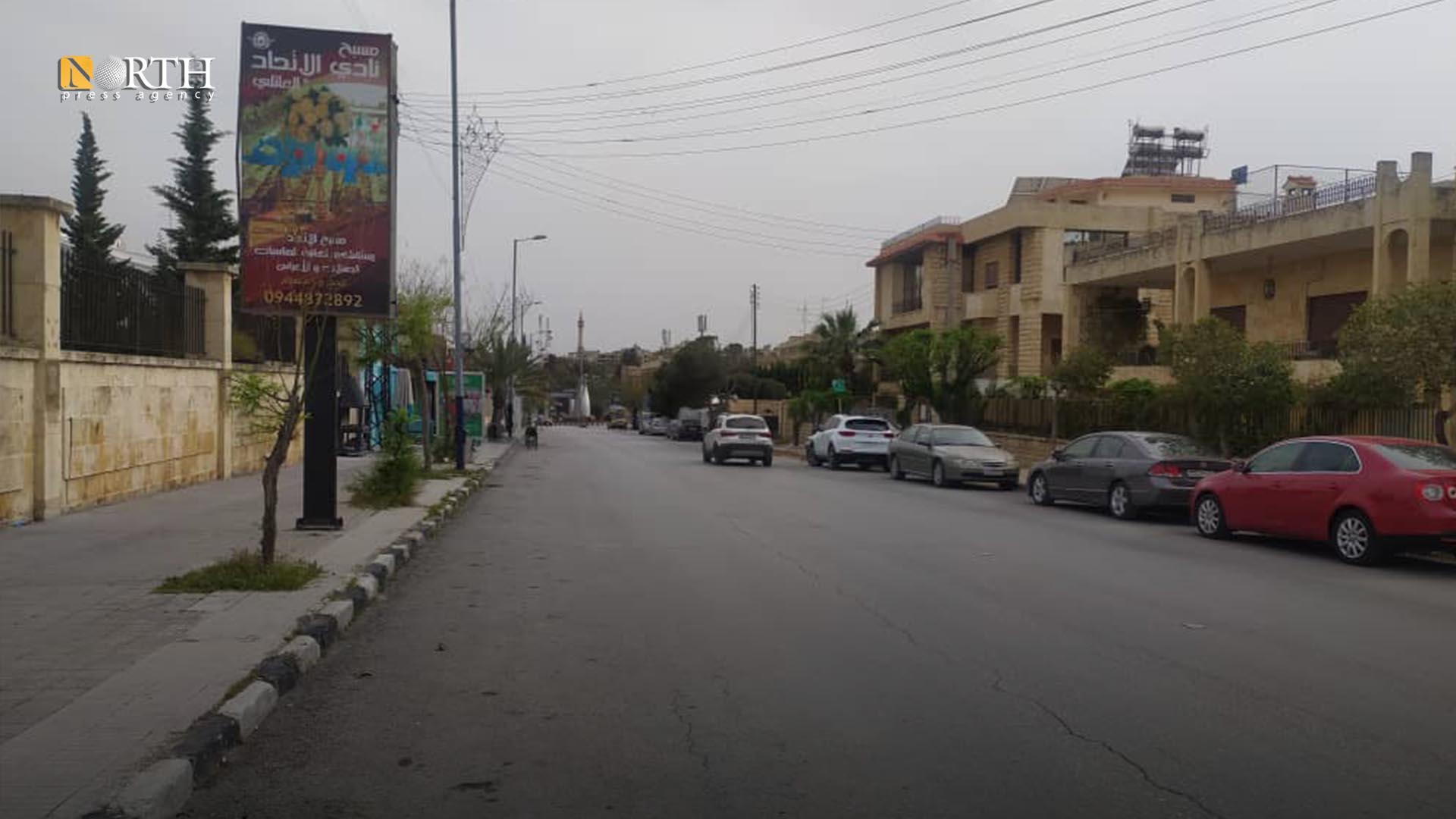
ALEPPO, Syria (North Press) – On Sunday, the Syrian government announcement of the resumption of schools and educational institutes was met with widespread criticism and complaints by teachers in the city of Aleppo, north Syria.
These criticisms come with the severe transportation crisis that the city and its countryside are experiencing due to the shortage of fuel.
On April 4, the Syrian government announced the suspension of attendance for universities and most schools for two weeks to curb the spread of the Coronavirus, but residents and observers said that the real reason behind this is the fuel crisis in the government-controlled areas.
Speaking to North Press, Kawthar Taljabini, a teacher at Fah School in the eastern countryside of Aleppo, says that she cannot find transportation from the Nile Street neighborhood where she lives to her school in the eastern countryside.
“The only bus that was taking us to school stopped due to the lack of fuel. We were asked to go to school without providing us with any means of transportation,” she added.
Teachers say that the educational complex and the Directorate of Education in Aleppo responded to complaints by saying “Depend on yourselves and go to your schools.”
Taljabini indicated that she does not know how to get to her school. “We are threatened either with dismissal.”
The suffering of transportation is not limited to public schools, but includes private schools, universities, and kindergartens. Most of the private schools and universities have stopped the service of delivering their students.
For more than two months, the petrol, gas, and diesel crisis has worsened in Syrian government-held areas, and the reduction in fuel allocations and the increase in fuel prices has led to a major transportation crisis, especially for the public transport, some of which have stopped working permanently.
On Monday, Issa Issa, director of distribution at the fuel company, told a local radio that “starting from the beginning of July, diesel will be distributed via messages in all governorates.”
Residents of Damascus, however, see that the distribution method is “nothing but a revival of black market business,” according to a previous North Press report.
During the past weeks, the government has relied on fuel shipments from Iran.
On Saturday, the Syrian Ministry of Oil said that an oil tanker was attacked off the Syrian coast by a drone, which caused a fire in one of its storage tanks.
“The fire broke out after the tanker was exposed to what is believed to be an attack by a drone coming from the direction of Lebanese territorial waters,” the Ministry added.
Hala al-Khatib, a language teacher at Ibn al-Bitar School in Salah al-Din neighborhood, told North Press that she pays about 14,000 Syrian pounds for a taxi to get from her home in the neighborhood of al-Zahraa Association to the Salah al-Din neighborhood and back.
She added, “The government closed schools during the last period, not because of coronavirus, but because of transportation, due to the absence of fuel, and then it reopened them without solving the problem.”
Al-Khatib wondered, “if the government is not able to solve the problem, how can employees and people with limited income find solutions?”