
Soleimani assassination served Trump as Israel fears the growing power of Iran
Ramallah – North-Press Agency
Ahmad Ismail
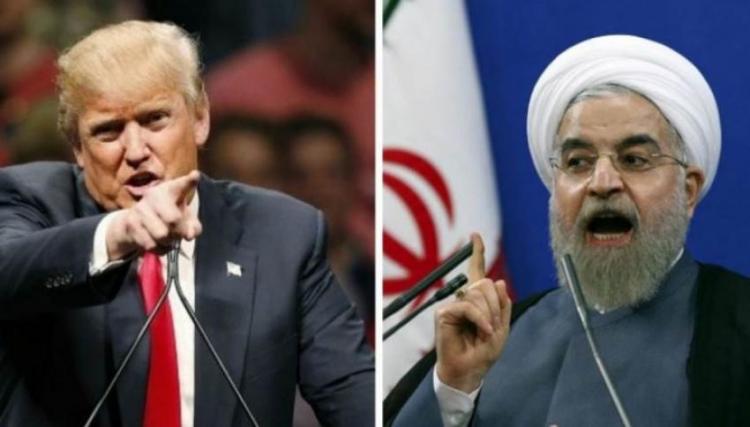
Hassan Awad, a Palestinian journalist based in the United States, sees that the state of war that the U.S. and Iran have approached in the Middle East has ended in a situation of no war and no peace. As Hassan said during his talk to North-Press that the Iranian regime and the Trump administration were in urgent need of heightened tension and escalation, as we have witnessed in Iraq in the recent days, because operationally the two sides need an external enemy in order to strengthen the local front on one hand, and solve its internal crises on the other hand.
However, reality shows that the two countries (U.S. and Iran) are at a state of war in terms of politics and field. What is being done is an attempt to avoid its continuation and a concentration of conflict management position to remove the causes of war and to return to a state of diplomatic and economic crisis.
Regarding the domestic status of Donald Trump, Awad predicted that Trump would win a second presidential term in the upcoming elections next November, noting that the options of the Democrats are "bad.”
"Even my American friends who hate Trump will vote for him!" Awad added.
On the other hand, an Israeli security source told North-Press that the military circles in Tal Aviv were aware in advance that the Iranian response for the assassination of Quds Force Commander, Gen. Qasem Soleimani would be in Iraq and not anywhere else, and in the manner of containment that occurred at dawn of Wednesday, when Iran bombed with ballistic missiles two U.S. military bases after the evacuation of the U.S. troops.
According to the Israeli point of view, the United States will not tend to escalate the exchange of strikes with Iran, but rather, seek to contain the crisis and the deterioration taking place with Iran, not to mention that the latter chose to avenge Soleimani in a way that does not lead the region into war.
Nevertheless, North-Press has observed that the Israeli fears of the "worst scenario" of tensions in the region still exist, especially that Israel's greatest concern was not about the nature of the Iranian response, as much as it focused from the very beginning on the repercussions of the assassination of Gen. Soleimani, in terms of contributing to imposing more Iranian hegemony over Iraq and the region for a decline in the American presence .. This is the security and strategic threat in the region for Israel, not the Iranian response.
Hence, the scenario of being drawn into battle still exists despite attempts to calm the U.S.-Iranian tensions … The situation is sensitive and matters are hung in the stage of defining the following rules for the actors in the region.
Indeed, what has increased Israel's concern about any possible downsizing of the U.S. presence in the region, is a sentence uttered by President Trump, says:"Middle East oil is no longer important to us," in addition to America's contradictory message which has reached Baghdad about withdrawing its troops from Iraq, then negated it.
This contradictory message prompted Israeli military analyst Eyal Alima, to say to North-Press that it indicates a real debate within the U.S. administration about whether or not to stay in Iraq.
"From the first day of Trump's term, we saw the absence of a plan which would justify the policy of the American presence in the region, and we've seen the moves between contradictory actions, and this is what distinguishes the U.S. policy during Trump's era," Alima added.
For Israel, Alima added, the assassination of Quds Force Commander Qasem Soleimani is an "achievement". However, if the operation leads to a U.S. withdrawal from Iraq, this does not serve the interests of Israel, which worries about "the expanding hegemony of Iran in the region."