
Netanyahu tours Mount Hermon in southern Syria
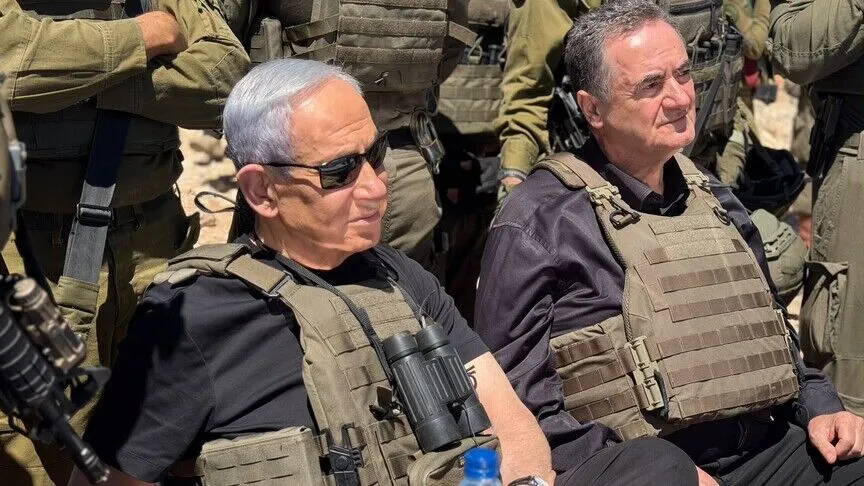
QAMISHLI, Syria (North Press) – Israeli Prime Minister Benjamin Netanyahu visited Mount Hermon in southern Syria on Wednesday with Defense Minister Israel Katz and senior military officers, reiterating Israel’s control over the area.
In a video released by Netanyahu’s office, he said Israel was at the summit of Mount Hermon on the eve of the Jewish New Year and claimed that Israel controlled the area from Mount Hermon to the Yarmouk River and onward to the Mediterranean Sea.
“We will not allow any terror army to establish itself on our border,” Netanyahu said, describing the control of the area as one of what he called the major achievements of Israel’s “War of Revival.”
Netanyahu said the Israeli military had received a security briefing during the visit on operations being conducted in the area. The briefing was delivered by Northern Command chief Maj. Gen. Rafi Milo and 210th Division commander Brig. Gen. Yair Peli.
He also said Israel’s main remaining task was to defeat what he called the “terror regime” in Iran, claiming that Israel was “very close” to achieving that goal and that the Iranian-led regional “axis” would eventually collapse.
Netanyahu’s visit came as Israel continues to maintain military positions in southern Syria following the fall of Bashar al-Assad’s government in December 2024. Israeli forces have remained in the former U.N.-patrolled buffer zone and have repeatedly carried out military operations and incursions in southern Syria.
Damascus has condemned the Israeli military presence as a violation of Syrian sovereignty and territorial integrity. The U.N. Commission of Inquiry on Syria also warned this week that some Israeli military activities in southern Syria could amount to violations of international law, including possible war crimes.
Katz, who accompanied Netanyahu during Wednesday’s visit, has separately reiterated that Israel does not intend to withdraw from the security zone in southern Syria while what Israel describes as jihadist threats remain.