
U.S. destroys 5 IRGC tankers after failed attacks on Navy warship
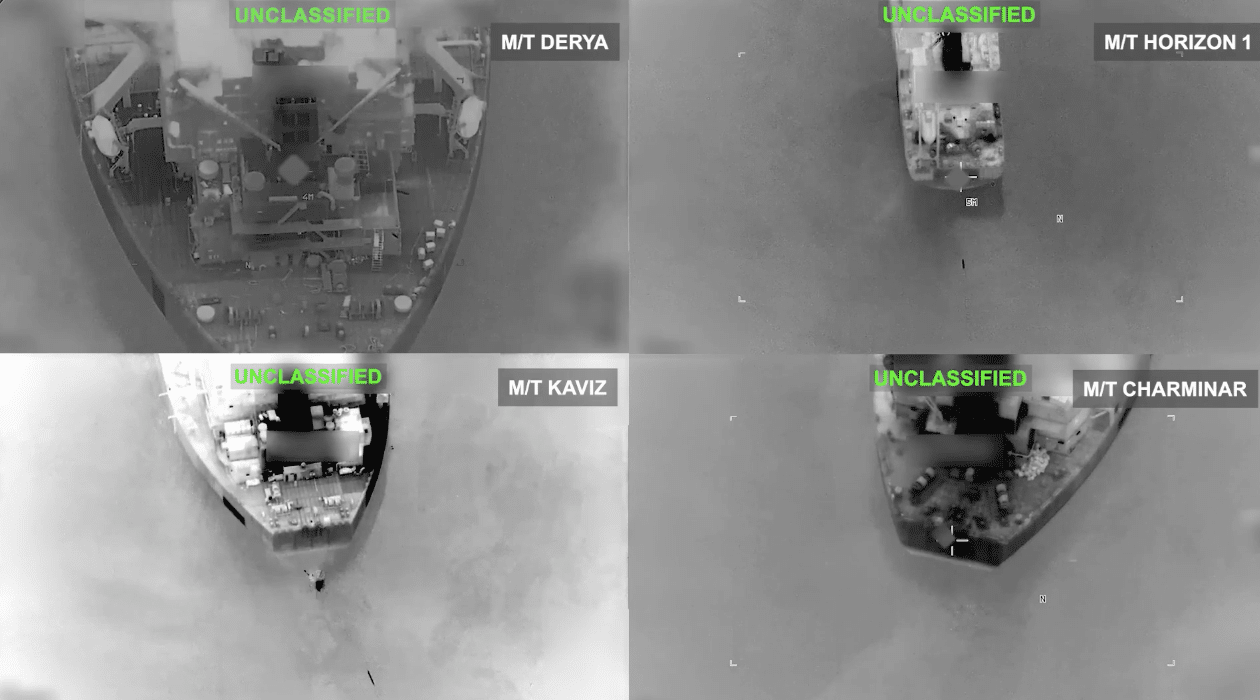
QAMISHLI, Syria (North Press) – U.S. Central Command said on Tuesday that American forces destroyed five Iranian crude oil carriers after the Islamic Revolutionary Guard Corps (IRGC) twice targeted a U.S. Navy warship with ballistic missiles over the past two days.
CENTCOM said that the American warship successfully evaded both attempted attacks and continued patrolling regional waters. No U.S. personnel were harmed.
In response, U.S. forces struck four tankers in the Gulf of Oman — the M/T Kaviz, M/T Charminar, M/T Horizon 1, and M/T Riesco — and the M/T Derya near Iran’s Kharg Island.
CENTCOM added that U.S. forces directed the crews to abandon the vessels before carrying out the strikes, which rendered the tankers inoperable.
The U.S. military said that the vessels were part of a multibillion-dollar shadow network used to finance the IRGC and its regional proxies.
The latest operation followed a similar U.S. response on Sept. 5, when CENTCOM destroyed three Iranian crude oil carriers after the IRGC launched ballistic missiles toward a U.S. aircraft carrier and a guided-missile destroyer. Those attacks also failed, according to CENTCOM, with no American casualties reported.
The confrontation escalated further early Wednesday, with Iran launching ballistic missiles toward a military base in Jordan used by U.S. forces, according to Iranian statements. Jordan said its air defenses intercepted 18 of 20 missiles, while two landed in unpopulated areas. U.S. officials said all American personnel were accounted for.
Iran also said it attacked 10 vessels, including two U.S. ships, near the Strait of Hormuz, where commercial shipping has sharply declined amid renewed attacks and threats to maritime traffic. Preliminary data showed only six commodity vessels transited the strategic waterway on Tuesday, below the recent average.
The renewed escalation has pushed oil prices higher, with Brent crude approaching $100 per barrel as concerns grow over disruptions to energy supplies and shipping through the Strait of Hormuz.