
Trump sends Saudi nuclear deal to Congress, ties it to Israel normalization
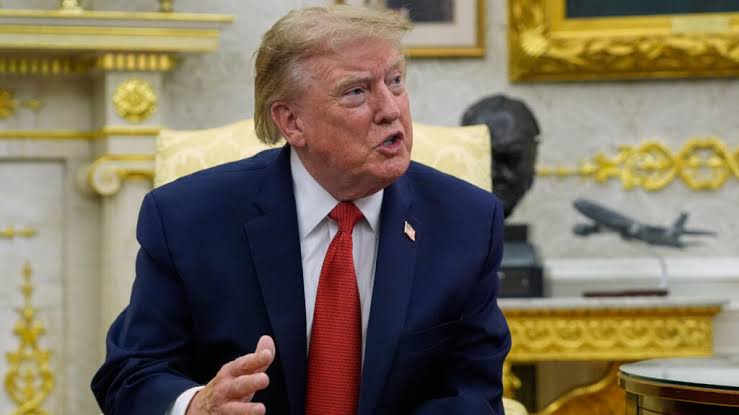
QAMISHLI, Syria (North Press) – U.S. President Donald Trump sent a proposed civilian nuclear agreement with Saudi Arabia to Congress, conditioning its implementation on Riyadh normalizing ties with Israel.
Reuters reported on Tuesday that the agreement, finalized in July, would allow U.S. companies to export civilian nuclear technology to Saudi Arabia, including AP1000 reactors. The deal now enters a 90-session-day review period in Congress. (Reuters)
Trump has maintained that Saudi Arabia must join the Abraham Accords, which established diplomatic relations between Israel and several Arab countries, for the nuclear agreement to proceed. He previously said the deal would not move forward without Saudi recognition of Israel. (Reuters)
According to Reuters, the agreement has drawn criticism from some Democratic lawmakers and nuclear nonproliferation experts because it does not include the same restrictions on uranium enrichment and spent-fuel reprocessing that the United Arab Emirates accepted under its 2009 nuclear agreement with Washington. (Reuters)
The Wall Street Journal reported that the agreement would give U.S. companies a central role in developing Saudi Arabia’s nuclear infrastructure. It also includes a two-year U.S.-Saudi study on the feasibility of a uranium enrichment facility, which could operate under U.S. company control without transferring sensitive enrichment technology to Riyadh. (The Wall Street Journal)
Saudi Arabia has long sought U.S. nuclear cooperation as part of its plans to develop nuclear energy and reduce its domestic reliance on oil. Riyadh, however, has continued to link any normalization agreement with Israel to progress toward establishing a Palestinian state.
The Abraham Accords established diplomatic ties between Israel and four Arab countries: the United Arab Emirates and Bahrain in 2020, followed by Morocco and Sudan in 2020–2021. Sudan has not ratified the accords due to internal instability.