
Archaeological tomb, ancient artifacts uncovered in Syria’s Afrin
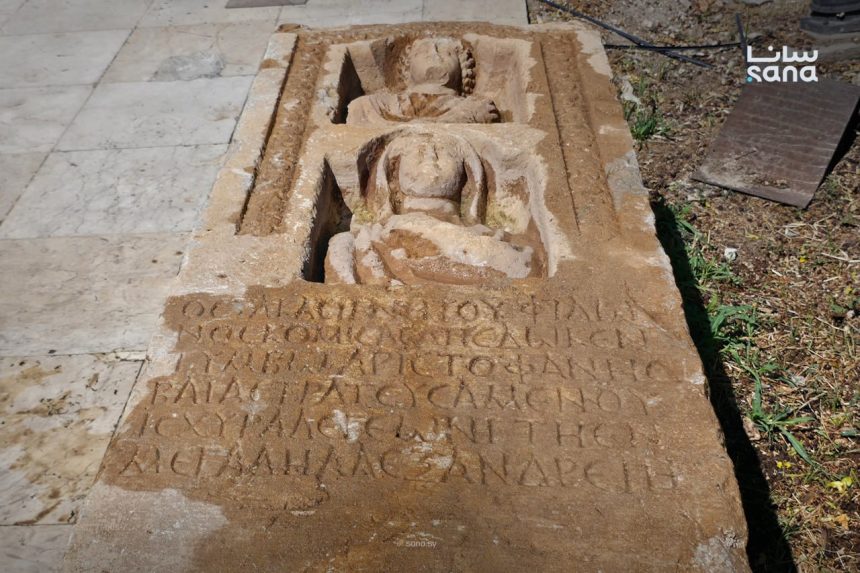
QAMISHLI, Syria (North Press) – Archaeological authorities in Aleppo on Sunday documented an ancient burial site and a collection of artifacts recently uncovered in the Afrin countryside, northwestern Syria, and transferred the recovered pieces to the Aleppo National Museum for preservation.
The Aleppo Directorate of Antiquities and Museums said the discoveries were made as part of efforts to protect the region’s cultural heritage, in coordination with the Afrin district administration, the Sharran Police and the Afrin Antiquities Office.
An archaeological burial site was discovered during excavation work for a water pipeline between the villages of Chema (Juman) and Omara (Omaranli) in the Sharran district, northeast of Afrin city.
A specialized team from the Directorate of Antiquities and Museums’ excavation and archaeological studies department, along with the Afrin Antiquities Office, inspected and documented the site and its contents.
The burial site contained three chambers, each holding four graves, for a total of 12 graves, according to preliminary information.
Authorities transferred the recovered artifacts to the Aleppo National Museum to ensure their protection and preservation.
In a separate discovery in the Bulbul district of Afrin, archaeological teams documented a number of ancient monuments and artifacts, including funerary stelae and a stone obelisk bearing ancient Latin inscriptions and carvings of human figures.
Preliminary findings also indicated that some of the artifacts may contain ancient Greek inscriptions.
Specialists said further archaeological studies are needed to accurately determine the age and identity of the discoveries. However, the inscriptions and carved images could provide important information about the communities that once lived in the area, as well as their burial practices, beliefs and social structures during the classical period.
Battal Khalil, head of the Afrin Antiquities Office, said the office had asked parliamentary representatives from Afrin and the Aleppo Directorate of Antiquities and Museums to establish a museum dedicated to the region.
Khalil said the artifacts discovered in Afrin were transferred to the Aleppo National Museum because it is the competent authority responsible for preserving them. He expressed hope that the artifacts could eventually be returned if a museum is established in Afrin.
Afrin is home to numerous archaeological sites reflecting the region’s long and diverse history. However, archaeological sites in the predominantly Kurdish region have faced significant threats since 2018, when Turkish forces and affiliated Syrian factions took control of Afrin following a military operation.
Over the following years, local and international reports documented damage to archaeological sites, including alleged looting, unauthorized excavations and land clearing. The latest discoveries have renewed attention to the need to document and protect Afrin’s remaining cultural heritage.