
OCHA urges ‘bridge between relief and recovery’ for Syria
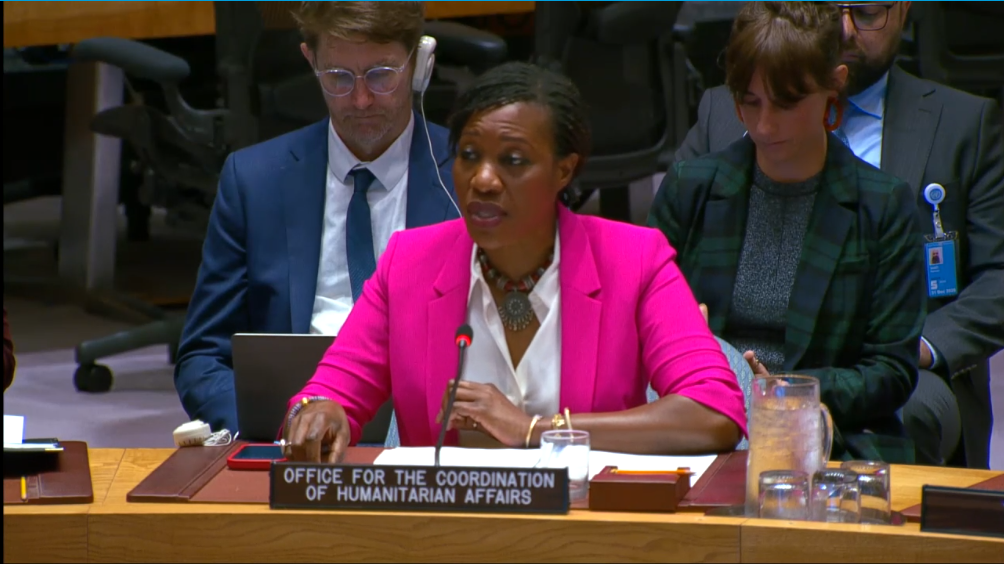
DAMASCUS, Syria (North Press) – The UN Office for the Coordination of Humanitarian Affairs (OCHA) on Tuesday called for sustained humanitarian funding and investment in recovery efforts in Syria, warning that millions still require assistance despite a significant number of refugees and displaced people returning home.
Speaking at a UN Security Council briefing in New York, Edem Wosornu, OCHA’s Director of Operations and Advocacy, said Syria was at a “pivotal moment” and needed a “bridge between relief and recovery” to help people move from dependence on emergency aid toward self-reliance.
Since December 2024, around 1.7 million refugees and 1.9 million internally displaced people have returned to their communities, Wosornu said. However, 5.5 million people remain displaced inside Syria, while another six million Syrian refugees remain abroad.
“Returns are not the finish line – they are the starting point,” she said, stressing that returnees need safety, basic services and livelihoods to remain in their communities.
An estimated 15.6 million people, nearly two-thirds of Syria’s population, still require humanitarian assistance, according to OCHA. Poverty, scarce jobs, damaged infrastructure and limited access to food, water, healthcare and education continue to drive vulnerability.
Wosornu said barriers to sustainable returns also include housing, land and property rights, civil documentation, rubble removal and access to electricity and other basic services.
She warned that humanitarian funding was falling short of needs. The UN’s $2.11 billion humanitarian appeal for Syria had received $815 million, or less than one-third of the required amount, halfway through 2026.
Since May, the World Food Program has halved emergency assistance, reducing the number of people receiving food support from 1.3 million to 650,000. At least 20 partners providing emergency health assistance have also suspended some activities, fully or partially.
Wosornu urged donors to invest in livelihoods, basic services, housing, demining and infrastructure while protecting civilians and maintaining humanitarian access, particularly in southern Syria, where about 80 percent of the population requires assistance.
“Syria needs a bridge between relief and recovery,” she said.