
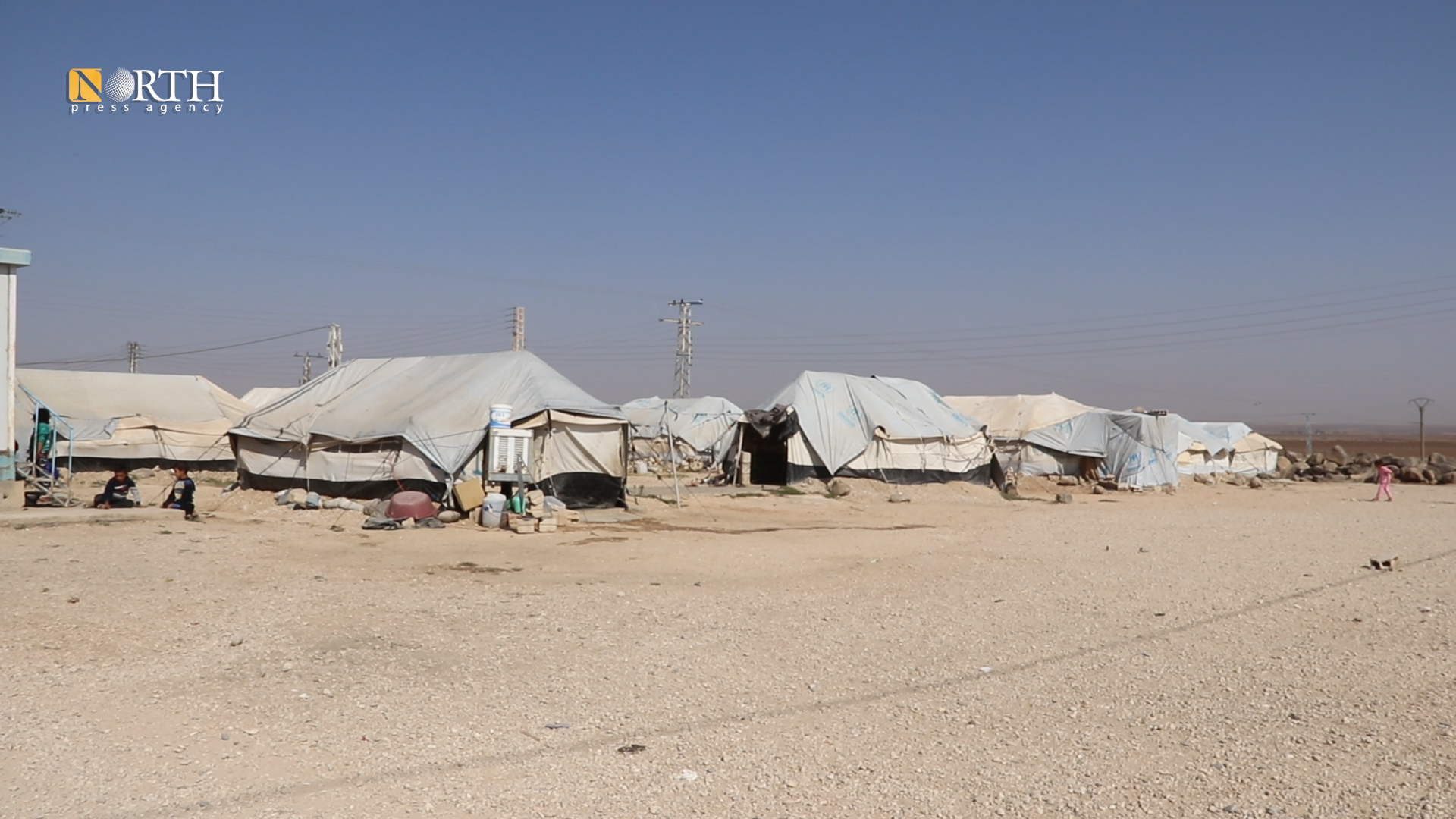
DERIK, Syria (North Press) – In front of his tent in Newroz camp in the countryside of Derik, northeast Syria, Ahmad Matar, an IDP from the countryside of Sere Kaniye (Ras al-Ain), sits with a number of other IDPs, talking about the deterioration of their living conditions due to their cessation of work for about ten days, and some of them have not received food aid for nearly two months.
IDPs in Newroz camp, who work as day laborers, complain about their poor conditions and their inability to maintain their families’ needs in light of the total lockdown to limit the outbreak of coronavirus.
They believe that the AANES should find fair solutions for the day laborers, such as granting sums of money or distributing food baskets to those affected during the lockdown period, especially since they are mainly displaced people suffering from lack of job opportunities and that the low daily wages barely covered the expenses of their families.
“Our situation is getting worse”
Newroz camp, which was reopened during the Turkish invasion on Sere Kaniye (Ras al-Ain) and Tel Abyad in 2019, includes 715 families, in total of 3,420 persons.
The camp was established in 2014 with the aim of sheltering families fleeing from Sinjar district (Shingal) after the Islamic State (ISIS) attacks.
Matar, a father of three, said that before the lockdown and due to his poor financial conditions, he was forced to sell part of the humanitarian aid he was getting in order to buy more necessary needs.
He pointed out that he has not received aid for a while, “Currently, our living conditions are very difficult, we have to work, we do not even have good clothes to wear, we do not eat well too, no meat, no vegetables .The lockdown has made things worse for us, before it, we could work, but our situation now is worse.”
Matar called on the Autonomous Administration to secure financial support for workers affected by the lockdown, in light of the high cost of living and the approaching winter season.
According to day laborers in the camp, their daily wages before the imposition of the lockdown ranged between 3,000 and 10,000 SYP per day, depending on the type of work and the number of working hours.
Last year, the AANES distributed one-time food baskets to some families in the cities and countryside of northern and eastern Syria, during the total lockdown, but that was not enough, according to workers from Derik.
With the imposition of the lockdown this time, AANES has not yet announced any plans to distribute aid to those affected.
“The aid we received is not enough”
Abdul-aziz Shahadeh, an IDP from the countryside of Tel Tamr, north of Hasakah, said that more than ten days ago he stopped working in blacksmithing and carpentry.
“If we do not work, we cannot live. We need daily expenses. We want bread and vegetables. We have stopped working on the one hand, and food prices are twice as high in the camp on the other,” he said.
About two months ago, Shahadeh, father of a family of ten, did not receive food aid, and the aid he received previously was few and did not contain all the materials.
Most of the IDPs in the camp buy vegetables, bread, sugar, tea, meat, clothing and other items from markets and shops at their own expense.
According to the camp administration, the lack of aid is due to the organizations that have recently reduced the quantities distributed, without addressing the reasons.
Omar al-Alo, IDP from Sere Kaniye, fears the extension of the total lockdown and his inability to buy his family’s winter clothing needs, especially with the approach of winter.
“The lockdown has affected us badly, we cannot go to the city or anywhere else to work, we do not have money to buy our needs, I have eight children and the aid is not enough for us at all,” al-Alo added.