
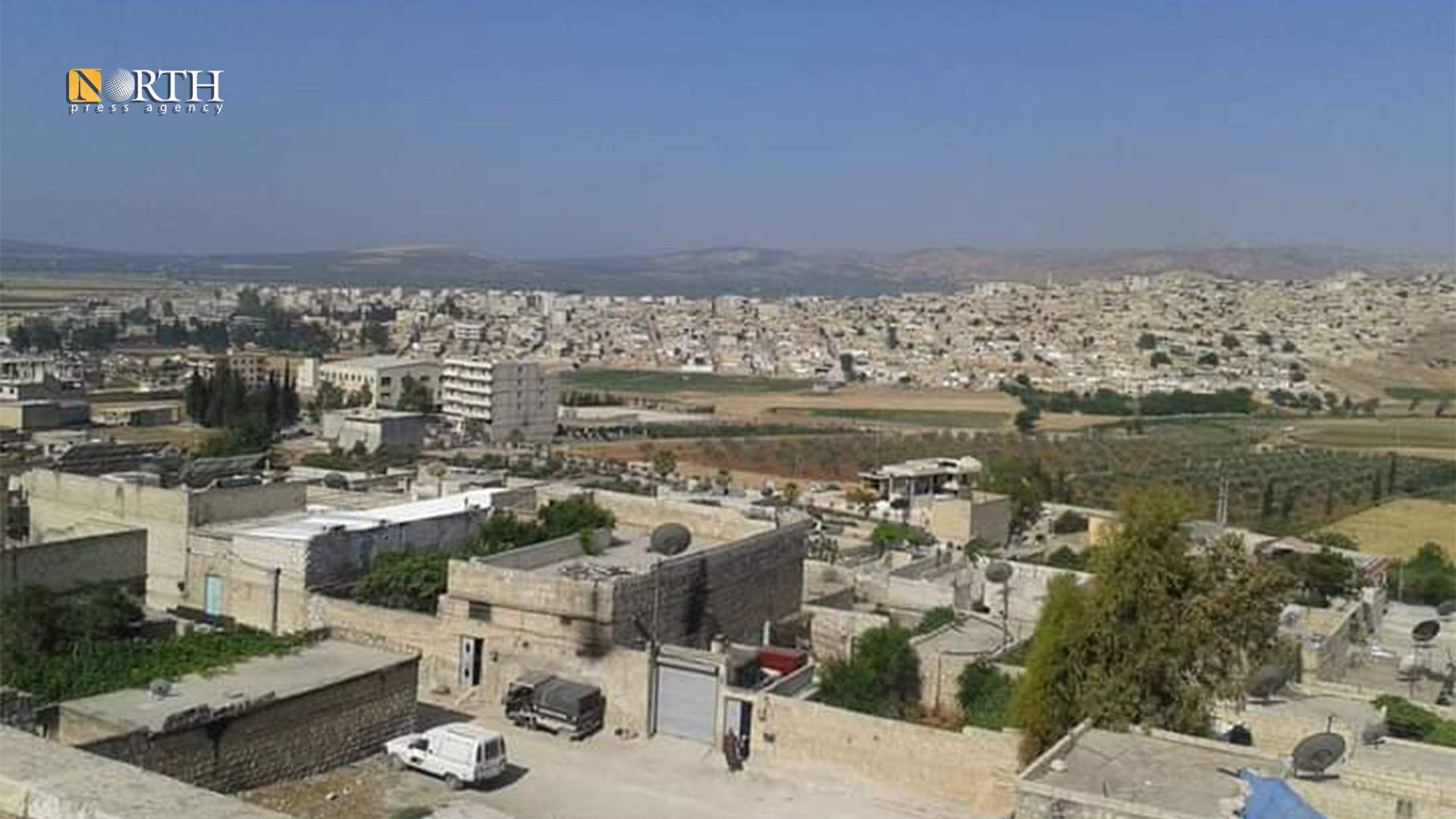
ALEPPO COUNTRYSIDE, Syria (North Press) – The return of Afrin IDPs to their homes, northwest Syria, without international guarantees, threatens their lives and leaves them vulnerable to violations committed by Syrian Turkish-backed armed factions, a human right activist close to the Autonomous Administration of North and East Syria (AANES) said on Wednesday.
“Calls released by the Kurdish National Council in Syria (ENKS) and the local council of factions in Afrin endangered lives of returnees,” said Ibrahim Sheikho spokesman of Human Rights Organization-Afrin.
“A number of those, who responded to ENKS calls, tried to reach their houses via smugglers affiliated with the both factions of al-Hamzat and Sham Legion, that impose large amounts of money on the returnees in exchange for allowing them to pass,” Sheikho added.
He pointed out that 35 families, which passed into Afrin through the village of Brad, south of Afrin, were handed over to the Turkish authorities at a post in the village of Kimar, south of Afrin, as soon as they arrived, for investigation.
After Turkey took control over Afrin in March 2018, more than 300,000 people were displaced to areas in the northern countryside of Aleppo, according to statistics by the Autonomous Administration in Afrin.
Some of the displaced sought refuge in the camps of al-Awda, Afrin, Barkhodan, Sardam and Shahba in the northern countryside of Aleppo. While some others were distributed among 42 villages and towns in the same area, while a number of families were displaced to Autonomous Administration areas or migrated abroad.
Meanwhile, residents, who preferred to stay in Afrin in order to protect their property, are being subjected to all types of violations, according to international and local human rights reports.
487 kidnappings including 50 women and 43 murders have been recorded since early 2021 to August 30, according to statistics released by Human Rights Organizations-Afrin.
“The Turkish-backed factions are subjecting those returnees to settlement agreements in turn for paying royalties which range between $5,000 and $8,000,” Sheikho stated.
“For example, the Sultan Suleiman Shah faction imposed $8,000 on Muhammad Jamil Sheikho, from the village of Sheikh al-Hadid and $6,000 on Muhammad Haji Hassan, from the village of Khululko.”
Additionally, the same faction prevented two female returnees from heading to their village, Qermitleq, northwest of Afrin city, until their father sold his tractor in order to pay 30 million Syrian pounds (SYP) to the faction in turn for facilitating their return to their family in the village.
The organization also documented that the Liwa al-Waqqas faction imposed $100,000 on Muhammad Waqfi Murad, from the village of Kafr Safra in Jinderis District, as ransom after he was kidnapped.
The documented cases for those people, who paid ransoms to factions in turn for either releasing them or subjecting them to settlements in order to return to their villages, has reached 25, according to the organization.
“The overall situation in Syria looks increasingly bleak. In addition to intensifying violence, the economy is plummeting, Mesopotamia’s famous riverbeds are at their driest in decades, and widespread community transmission of the COVID-19 seems unstoppable by a health care system decimated by the war and lacking oxygen and vaccines. This is no time for anyone to think that Syria is a country fit for its refugees to return,” the United Nations Commission of Inquiry on Syria said in mid-September.
“Clashes took place in the District of Bulbul, north of Afrin, between the Turkish-backed Suqur al-Shamal Brigade and Elite Army on houses that were seized by militants,” exclusive sources told North Press.
Meanwhile, a committee called “Rad al-Mazalem” (address injustices) allowed militants of both factions to retain the houses and property even if their owners return.
In the villages of Sheikh Khorz Foqani and Aboudan in the Bulbul District, the Turkish army expelled the returnees to their houses under the pretext that the village contains military posts and that they are not allowed to stay in the village, according to the same sources.