
‘We broke bread with each other, so do not betray us again,’ Syrians demand Russia stop Turkish bombings
TEL TAMR, Syria (North Press) – Residents of towns and villages in the northern countryside of Hasakah, northeast Syria, and many other Syrians are still confused regarding their position and acts after having their houses exposed to bloody Turkish shelling last week.
On Tuesday, Turkish forces and Turkish-backed armed factions shelled the town of Abu Rasin (Zargan), north of Hasakah, killing a child and woman and wounding civil residents, of whom 16 were transferred to hospitals in neighboring cities.
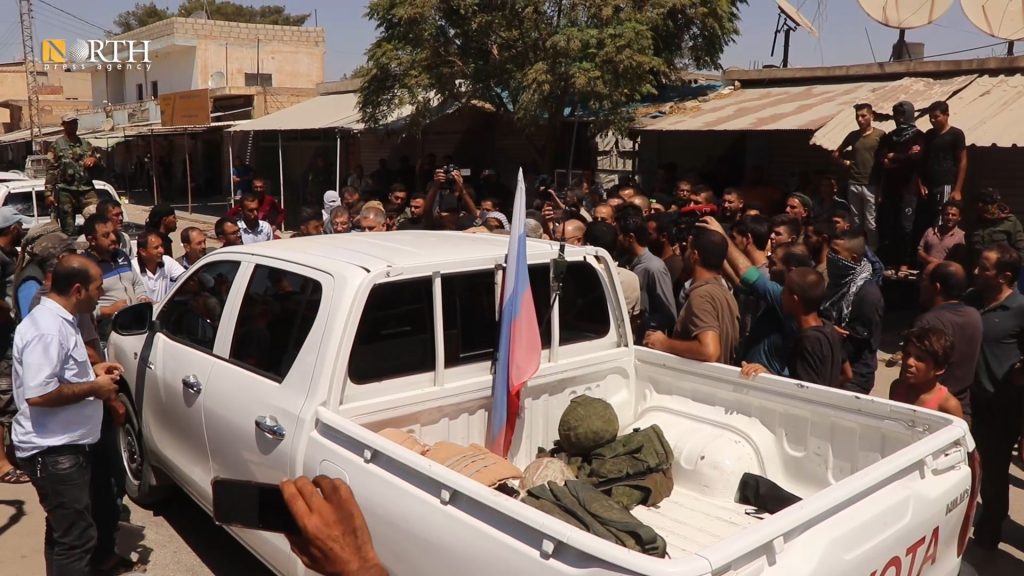
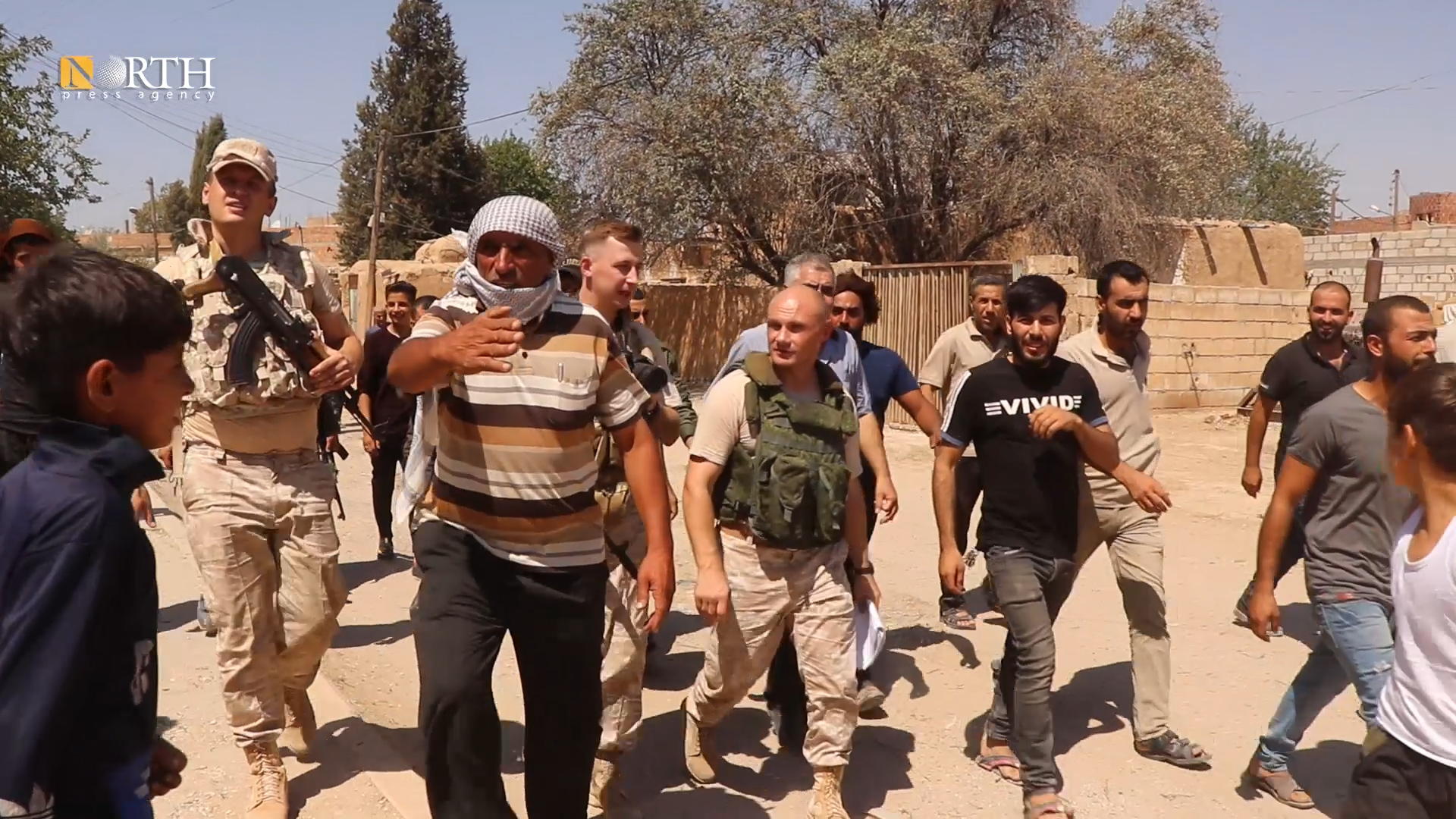
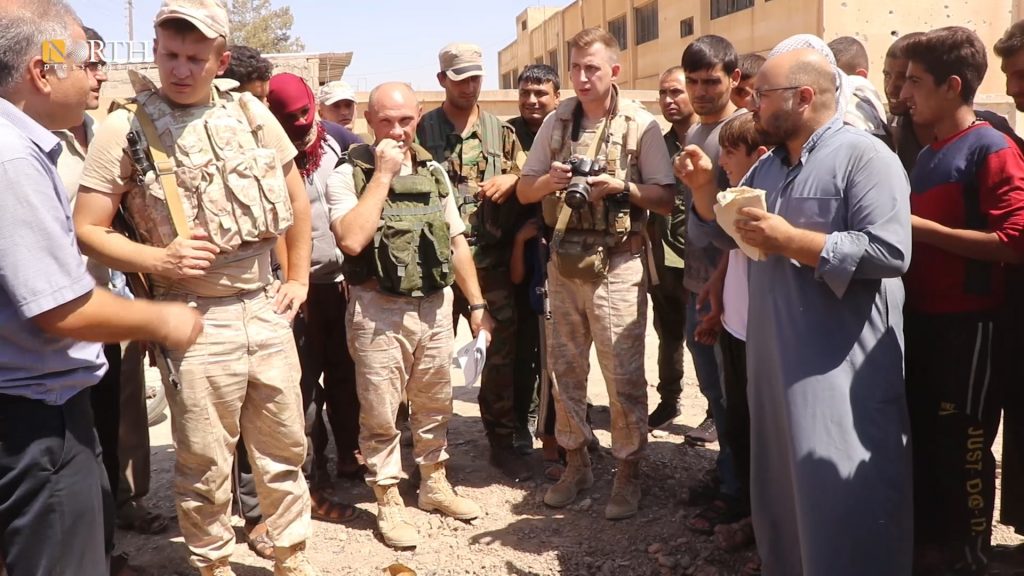
On Wednesday morning, residents gathered around a Russian officer in a place where a Turkish shell had fallen the night before, after they blocked the road in front of his vehicle and took him to see the impacts of the Turkish shelling.
While locals were gathering around the Russian officer, one resident asked to see him, taking a bite of the loaf of bread in his hand.
The man tore off a small piece of bread and gave it to the officer, who at first refused the offer. Kurdish and Arabic voices rose up from the crowd: “You can’t refuse it!”
“You have to!”
“Eat!” they shouted, before he finally ate the bread.
“Now, we broke bread with each other, so do not betray us again,” the man says to the officer.
In late 2019, when Turkey invaded Sere Kaniye (Ras al-Ain) and Tel Abyad, both Russia and the US signed two different ceasefire agreements covering the area with Turkey.
Residents of the town have held both Russia and the US responsible for the continuous Turkish shelling, since they are the guarantors for these ceasefires, and they consider their silence a green light for Turkey to continue targeting areas held by its alleged enemy, the Autonomous Administration of North and East Syria (AANES).
It is not clear whether or not the bread giver and those who were excited by his behavior wanted to mock what locals see as the Russians’ amoral decisions in the area by evoking an historic local custom.
After a decade of war in the country, Syrians differ in their positions regarding the war and crisis, leading locals to tackle these crises with mockery, insults, or quiet diplomacy.
The fate of Abu Rasin, or Zargan, a small town that includes several villages near the Syrian-Turkish border, depends on agreements which Syrians themselves often have nothing to do with.
The Russian officer, at the time, promised to convey the residents’ demands to his command, which would in turn communicate with Turkey.
However, Turkish shelling of the towns of Tel Tamr and Zargan and their countryside continued unrelentingly over the following days, in addition to targeting of the countryside of Aleppo, Manbij, and the northern countryside of Raqqa.
On Thursday, four leaders of the People’s Protection Units (YPG) and Women’s Protection Units (YPJ) died in a Turkish air attack on the headquarters of the Military Council in the town of Tel Tamr.
Also on Thursday, a Turkish drone targeted a car belonging to the AANES on the Qamishli-Amuda road near the Ali Faro junction, killing a leader in the People’s Protection Units (YPG).
On Sunday, a Turkish drone targeted a military vehicle in the village of Himo in the western countryside of Qamishli city, northeast Syria wounding an official of Internal Security Forces (Asayish) and two other civilians.
The commands of both Syrian Democratic Forces (SDF) and Asayish presented in two different statements information about the martyrs and said that they were the first to fight against the Islamic State (ISIS) in Kobani, Manbij, Raqqa, and Deir ez-Zor, and they countered the Turkish attacks during the invasions of Afrin, Sere Kaniye, and Tel Abyad in 2018 and 2019.
Last night, Turkish forces renewed their shelling of populated villages in the countryside of Zargan and Tel Tamr.
A father of three, whose house was destroyed by Turkish shelling says, “I am not the one to be blamed, I am a destitute citizen.”