
Child abuse continues in Syria’s Idlib
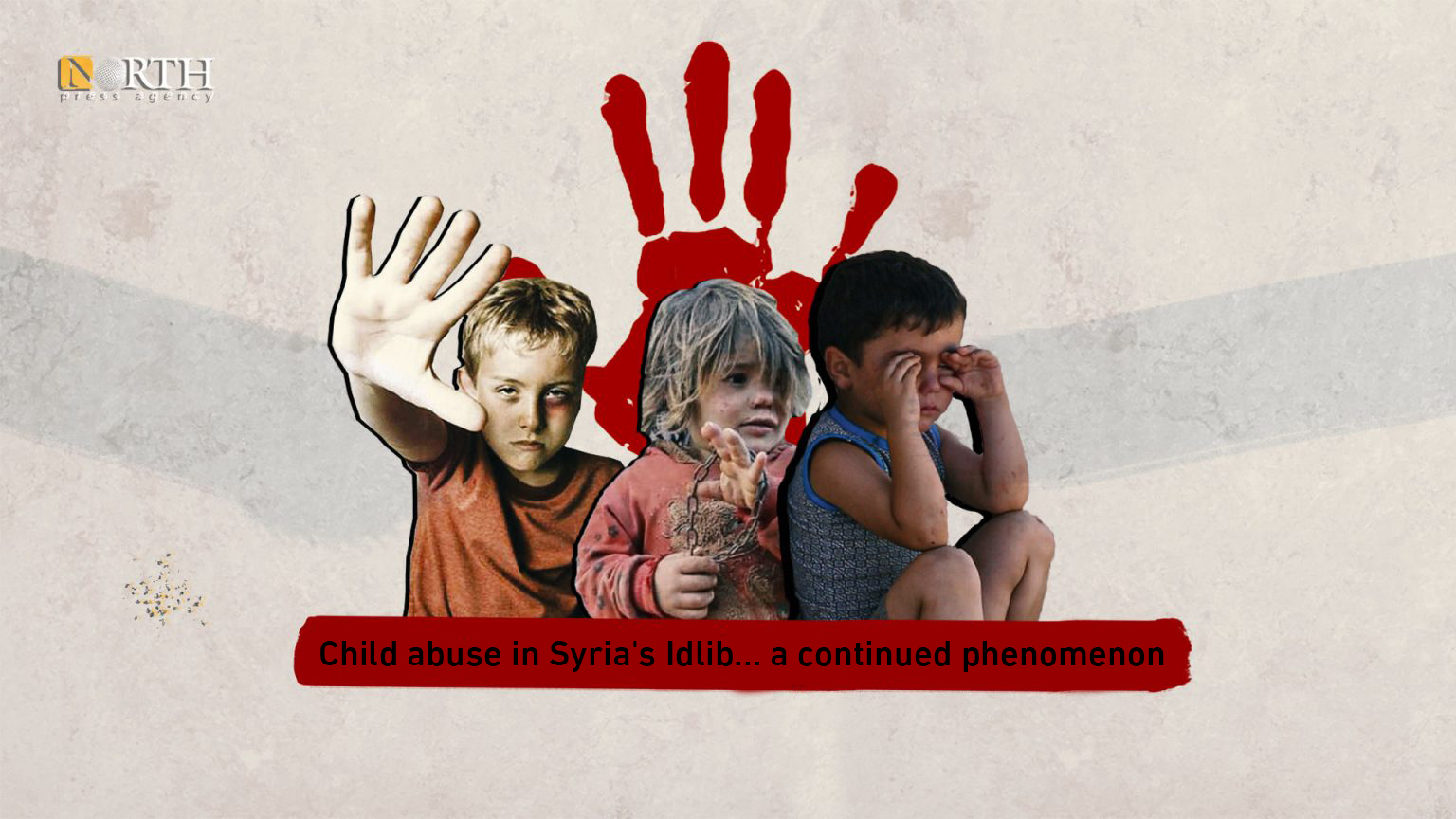
IDLIB, Syria (North Press) – A relative of the 10-year-old Ahmad al-Sabouh, an IDP from the northern countryside of Hama residing in the city of Sarmada, north of Idlib, northern Syria, revealed that al-Sabouh is subjected to physical abuse on a daily basis by his father especially after his mother’s death.
Al-Sabouh was forced to leave school and work in a car maintenance workshop, where he is also subjected to beating by the owner of the workshop, according his relative, who preferred to remain anonymous.
On several occasions, al-Sabouh’s father told the owner of the workshop, “treat him the way you like,” according to the relative.
Al-Sabouh works nine hours a day in return for ten Turkish Liras, which he delivers his father when he returns home.
“90% of children need support as violence, economic crisis and COVID-19 pandemic push families to the brink,” according to a report published by the UNICEF in March.
Despite the absence of accurate statistics to compare the rates of child abuse in Syria before and after the war, “five out of ten children in Syria are exposed to violence,” according to a report by the World Health Organization (WHO) published in 2019.
“Nearly 2.45 million children in Syria and an additional 750,000 Syrian children in neighbouring countries are out of school,” the UNICEF report added.
In early May, social networking sites were buzzing with news of the death of six-year-old Nahla Othman, who was publicly subjected to brutal treatment by her father in Faraj Allah camp in Idlib countryside.
At the time, a source from the camp told North Press that the girl’s father, Issam Abdelqader Othman, was an operative in Hayat Tahrir al-Sham (HTS, formerly al-Nusra Front), and Nahla stayed with him after her mother’s divorce during which she was tied to an iron chain for five months.
Her father used to treat her badly. The silence of camp residents over shackling the child is because of their fear of reprisals from her father, according to the source.
Activists published photos of the child playing in the camp with iron chains tied around one of her hands, as she was standing near a car inside the camp.
Ramya Mansour, a psychologist from Idlib, warns of the exacerbation of child abuse phenomenon in Idlib as it leaves long-term negative effects on the child on all psychological, physical and social levels.
Violence affects the child, as he becomes isolated and introverted, “which later leads him to think of suicide,” Mansour added.
“The dangerous phenomenon affects the children’s level of thinking, which sometimes makes them hostile in the surrounding society, in addition to lack of self-confidence, depression and other diseases.”
Mansour believes that awareness sessions and the imposition of real and strict laws would curb this phenomenon.
In mid-December 2020, a 10-year-old girl was beaten and physically abused by a teacher at a school in Shamarin camp in Idlib countryside.
At the time, a local source told North Press that the girl was physically abused in the school, which left bruises and deformities on her face.
“The teacher hit the girl and made the rest of the students spit on her before expelling her out of school,” the source added.
North Press monitored marks of violence and beatings on the body of the 11-year-old Hamdo al-Daher (a pseudonym), a child from the city of al-Dana, north of Idlib, while he was walking in the city with his friends.
Signs of bloating and bruising appeared on the face of al-Daher, but he refused to give any information about the perpetrator.
However, al-Daher’s friends told North Press that he told them that his father beat him after he lost 35 Turkish liras while going to buy some goods at the city market.