
Low production of irrigated wheat in Syria’s Hasakah
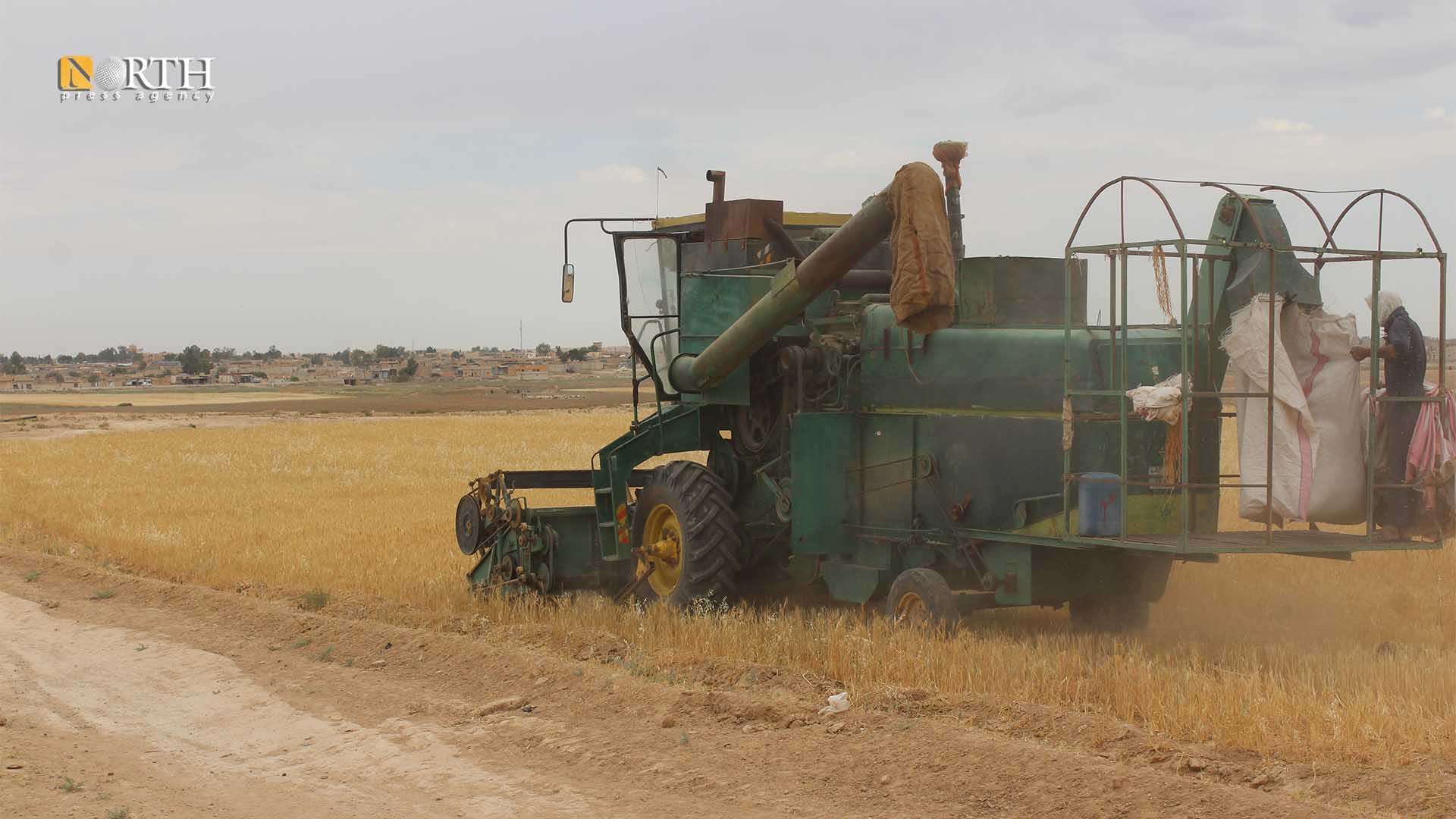
SHADDADI, Syria (North Press) – An official at the Agriculture Committee in Shaddadi town in the southern countryside of Hasakah, northeast Syria, said on Wednesday, the amount of production of the irrigated wheat crop in the area is low, after the rainfed areas were damaged.
The harvest season in Shaddadi and its countryside started at the beginning of this week, amid expectations about low production quantities of the irrigated wheat due to the lack of rainfall during the winter.
“The rainfed agricultural season was completely damaged, while the irrigated one damaged by 30%,” Bara’ al-Khalif, an official at the Agriculture Committee in Shaddadi, told North Press.
She added that the Agriculture Committee has not issued any decision to compensate the farmers yet.
The area cultivated with irrigated wheat in Shaddadi and its countryside is approximately 100,000 acres, while the rainfed areas were not known due to the lack of official statistics, according to the committee.
Al-Khalif indicated that the compensation decision is usually issued by the Economic and Agricultural Board of the Autonomous Administration, and once it is issued, the local committees will study the damaged areas and the size of the costs.
Ahmad Salloum, a farmer from the countryside of Shaddadi, said that the production rate of the wheat crop this year is very low.
He added that the average production per acre ranges between 155 and 220 kg of wheat.
The Syrian Jazira region witnessed a remarkable decline in the agricultural production after the Syrian war, while it used to contribute to the production of wheat at a rate exceeded 60% of the total local production.
The Autonomous Administration of North and East Syria (AANES) has marked 26 centers to receive wheat and barley crops during the current season distributed in all northeast Syria’s regions.
“The absorptive capacity of those centers estimates at 900,000 tons,” co-chair of the Economic and Agriculture Board of the AANES, Salman Barudo told North Press yesterday.
The Board allocated 13 centers in the Jazira region, five in Raqqa, three in Deir ez-Zor, three in the Euphrates region and one each in Manbij and Tabqa.
On May 19, The AANES priced one kilogram of wheat at 1,150 Syrian pounds (SYP), while a kilogram of barley was priced at 850 SYP.
Rainfed areas of wheat and barley in northeast Syria expand over 800,000 hectares, while irrigated areas expand over 300,000 hectares, according to the Agricultural and Economic Board.