
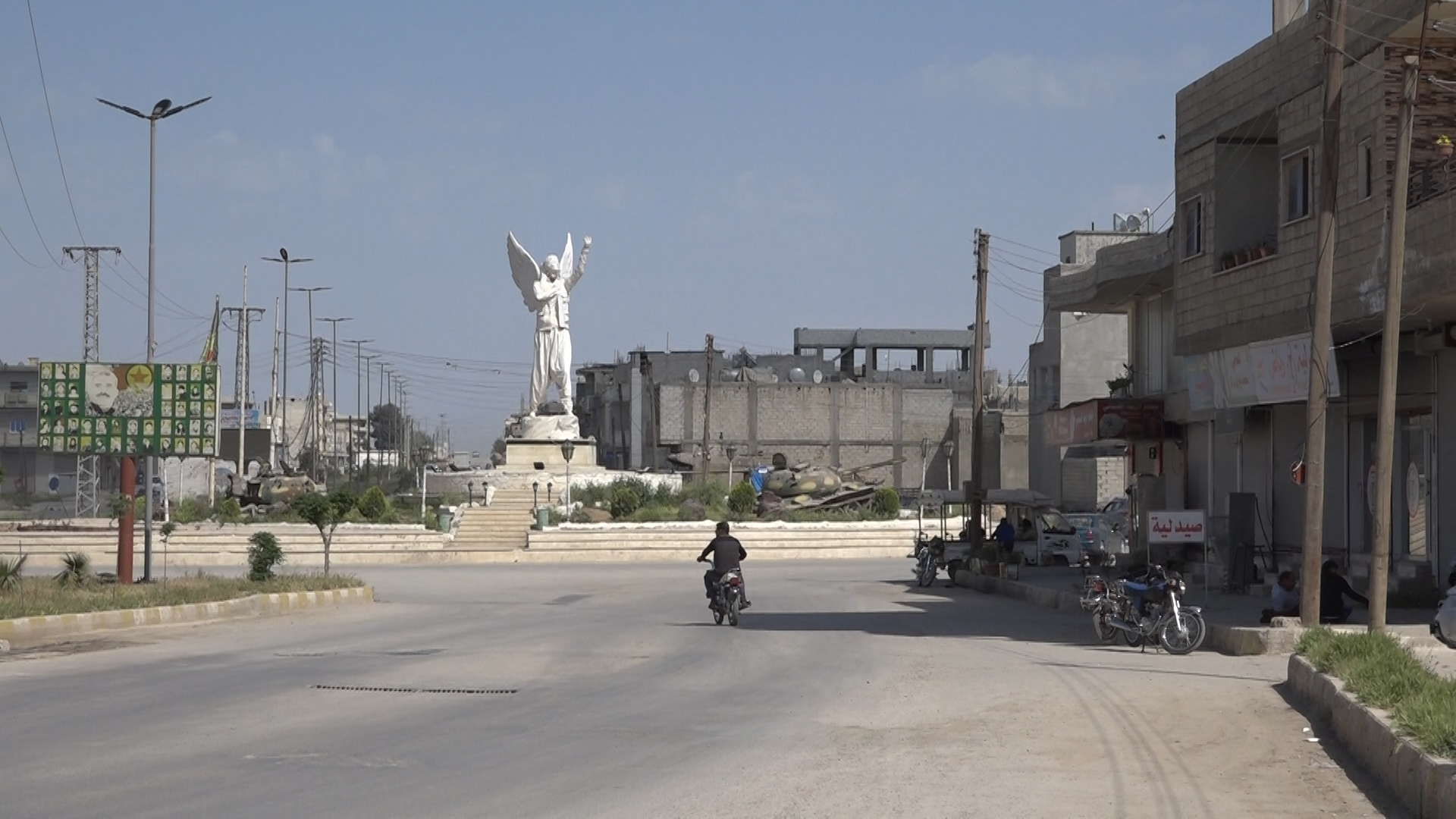
KOBANI, Syria (North Press) – Since the Energy Authority in the Euphrates region started a system of electricity rationing, Muhammad Qatash, the owner of a workshop manufacturing doors and windows in the city of Kobani, northeastern Syria, has been forced to turn on his generator to continue his work.
“We add generator costs to our product price, which constitutes an extra burden for the customers,” Qatash told North Press.
Due to the decrease of the water level of the Euphrates River, the Energy Authority in the Euphrates Region reduced the number of hours of electricity from 16 hours a day to only eight.
The city of Kobani is provided with electricity from six in the evening until four in the morning, while the countryside is powered from six in the evening until midnight.
For more than three months, Turkey has limited the flow of the Euphrates River into Syria, depriving large numbers of people of usable water. Turkey reduced the flow of water from the Euphrates River into northeast Syria’s dams gradually, reducing the amount of water received to unprecedented lows.
Turkey keeps water in six dams, the largest of which is Ataturk Dam, the second largest in the Middle East, with a storage capacity of 48 billion m³, violating the international agreement they signed with Syria in 1987 which stated that Syria’s share of water coming from Turkey is minimum 500 m³ per second on average.
The water flow to the Euphrates River is now limited to less than 200 cubic meters per second, according to the General Administration of Dams in Northeastern Syria.
Useless electricity
Kobani’s residents complain about the lack of electricity hours for the city during the day and evening, and the arrival of electricity to the city in the late evening and night hours only.
“We want daytime hours; we do not need electricity after midnight. We require that electricity be provided several hours a day,” Qatash added.
The scarcity of water resources is causing negative impacts on various walks of life, as crops that depend on the Euphrates have been damaged, in addition to rationing of electricity in most regions of northeastern Syria as a result of the low levels of reservoirs.
The Turkish seizure of the Euphrates water has caused living problems, the most prominent of which is the shortage of drinking water, power outage, impacts on cultivation and environment, agriculture and food security for the region in general.
The Public Dam Administration called on the United Nations and international humanitarian organizations to intervene in order to pressure Turkey to return to international agreements regarding water quantities, because the current situation may bring a humanitarian and environmental disaster.
The Turkish seizure of the Euphrates water caused living problems, the most prominent of which is the shortage of drinking water, power outage, and impacts on cultivation and environment.
Days ago, agricultural engineers in Raqqa warned that drought has turned into a real risk threatening vast spaces of agricultural lands that the Euphrates River irrigates.
Water flow of the Euphrates River continues to decrease, having reached 181 m³ per second, Muhammad Tarboush, an official from the General Management of the Dams in northeast Syria, said on May 18.
Under study project
Neighbors of Khalil Ali, a butcher, are annoyed by the loud and unpleasant sound of his generator, but he is forced to run the generator to keep his meat from spoiling.
Ali, like all owners of industrial fuel to run their private generators.
Khalil demanded that the city’s electricity supply hours be distributed more evenly – four hours in the day and four hours in the night.
Ruken Ahmed, co-chair of the Electricity Directorate in the Kobani district, said that the reason for supplying the city with electricity in the evening and night hours is due to security.
“The reason for this is due to security needs, especially as the city is close to the Turkish border. It cannot be dark within the city, where thefts or crimes occur,” she told North Press.
The district’s Electricity Directorate is studying a project to place large generators to supply the city with electricity during daylight hours, according to the ampere system popular in other parts of Syria, according to Ahmed, who did not specify the date for its implementation.