
US concerned about Turkey’s possible tests of Russian S-400 air defense
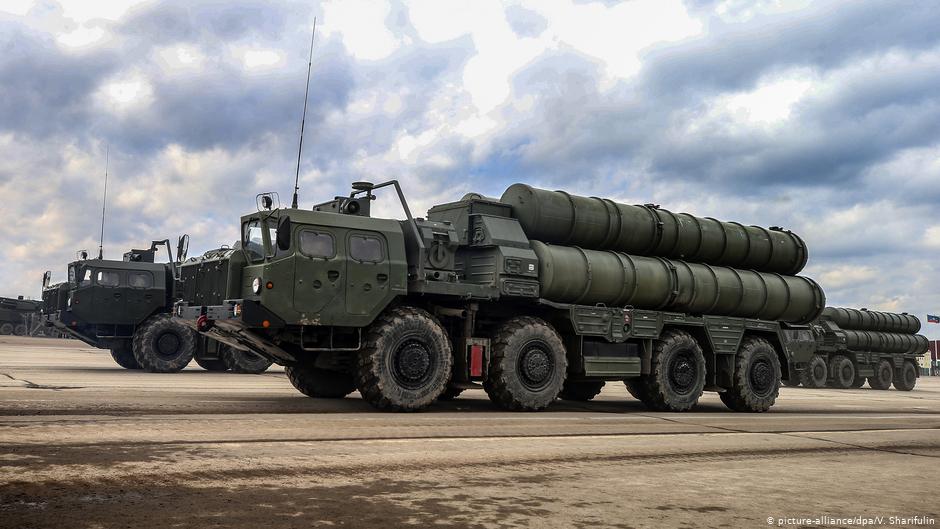
WASHINGTON DC, USA (North Press) – The U.S. State Department said on Oct. 7 it was “deeply concerned” about reports on Turkey’s possible tests of Russian S-400 air defense missile systems. “We are aware of these reports.”
“We continue to object strenuously to Turkey’s purchase of the S-400 air defense system, and are deeply concerned with reports that Turkey is continuing its efforts to bring the S-400 into operation,” a State Department spokesperson said.
The statement came after Ankara sent the systems to the Black Sea province of Sinop for testing, while Turkish authorities have not made any official statements on this.
“Our suspension of Turkey from the F-35 program, in response to the S-400 acquisition, signaled the seriousness with which the administration approaches this issue,” the spokesperson said, referring to Washington’s exclusion of Ankara from the US program developing the fifth-generation F-35 fighter-bomber.
The spokesperson added, “The US is confident that President Recep Tayyip Erdogan and senior government officials understand Washington’s position.”
Turkey’s purchase of the Russian-made missile defense system has been a cause of tensions between the country and the US over the past two years, with Washington constantly urging Ankara to return the system to Moscow.
“We continue to stress at the highest levels that the S-400 transaction remains a major obstacle in the bilateral relationship and at NATO, as well as a risk for potential CAATSA sanctions,” they said, referring to the Countering America’s Adversaries Through Sanctions Act of 2017 which imposed sanctions on Iran, North Korea and Russia.
On Oct. 5, NATO Secretary General Jens Stoltenberg said that Ankara’s purchase of the S-400 systems poses a risk to NATO and could lead to US sanctions.
It also made it a condition for selling its own Patriot missile system to Turkey, but President Recep Tayyip Erdogan has previously refused to give up the S-400 system.
“It is out of question to completely leave the Russian S-400 to buy US Patriots. We can buy Patriots too. However, we will buy the S-400 as well,” Recep Tayyip Erdogan told reporters in his flight en route to Ankara from Washington in November 2019.
The Trump administration has so far not sanctioned Turkey over the S-400 issue, despite increasing calls from Congress to do so.
If the government did decide to diplomatically retaliate against Turkey, it could enact sanctions through CAATSA, as it has already done for Iran, North Korea and Russia.
Although sanctions have not been imposed on Turkey, it was revealed two months ago that US Congress has been secretly blocking major arms deals with Turkey for the past two years over the S-400 issue.
The Russian and Turkish Ministries of Defense both confirmed the arrival of S-400 system components at Murted Air Base outside the Turkish capital Ankara on July 12, 2019.
The Pentagon has already repeatedly warned its Turkish counterparts that the only way to remain in the F-35 program was to cancel the S-400 deal.
In June 2019, senior U.S. military officials publicly revealed their roadmap for cutting the Turkish government, as well as the country’s defense contractors, off from anything related to the Joint Strike Fighter.
Turkey has begun tests of the radars associated with its new Russian S-400s using American-made F-16 Viper and F-4 Phantom II fighters, defying warnings from the United States that this “activation” of the surface-to-air missile systems could prompt new sanctions.