
The prominent items of “Berlin Summit” on Libya
Cairo – North-Press Agency
Muhaamed Abu Zaid
An international summit regarding the crisis in Libya to be held today, on Sunday, in the German capital Berlin, with the participation of some leaders of states and foreign ministers, in addition to three regional organizations (European and African Union and the League of Arab States), with the aim of concluding an agreement to resolve the crisis in Libya.
In this context, a political source familiar with the details of the preparations that preceded the conference with the parties concerned revealed, in special statements to North-Press, the most prominent items that Berlin Summit seeks to endorse in the framework of solving the political and security crisis in Libya, which are the items that Germany is calling for – being the conference advocate – in agreement with the participating European countries and relevant parties during the meetings and mutual contacts during the past five months.
"The conference will mostly differ completely from the conferences that preceded it which were related to resolving the Libyan crisis. It was preceded by a preparation for five months, since the first meeting, which brought together Ghassan Salameh (the Special Representative of the Secretary-General of the United Nations and Head of Mission of the United Nations Support in Libya), and German Chancellor Angela Merkel in Berlin last August. Besides, five meetings were held between high-profile officials of the presidents of concerned states, according to the source that preferred not to be named .
International participation
What also distinguishes the conference is that it comes with a large international participation, after a number of heads of state confirmed the attendance or the participation of foreign ministers, as is the case for the United States of America, of which its foreign minister is participating in the summit, and it is possible – according to the source- that the U.S. President Donald Trump would participate in a surprise the summit might bear, as he said, but he said that this is not yet certain.
The source added: "There is a plan divided into three axes and main sections for the summit's activities: the first is the financial and economic one, the second is the security and military one, and finally the legal and political one."
As for the legal and political aspect, "the summit seeks to unify the government and the legislative institutions and amend the political agreement (al-Skhirat Agreement) to suit the current stage and circumstances, with the amendment of the presidential council from nine to three people, who choose or delegate a head of government, an independent from the technocrats to form a president of "crisis government", presented to the House of Representatives.
According to the source, the aim in the political part is to unify the executive institution through a presidential council and a government, which will be a major axis of the summit, accompanied by the support of the majority of the participating parties.
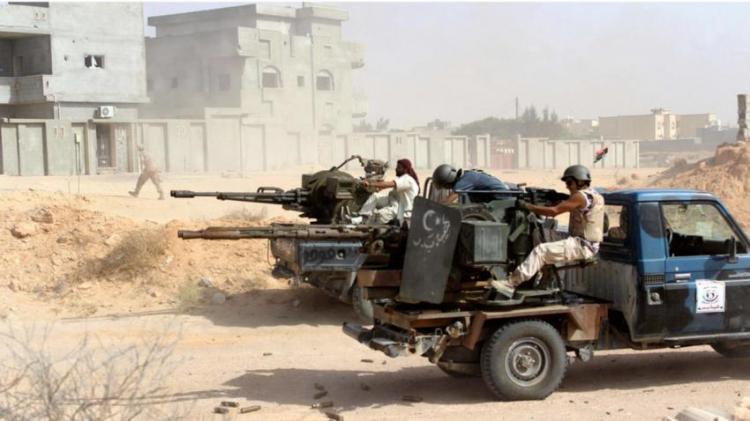
The source continued: "As for the security and military axis, work will be taken to provide for recommendations, then binding by a Security Council resolution decisively to disarm and disband the militias , and to put a mechanism to monitor this, exclusively, through the United Nations and the Libyan armed forces. All previous conferences ignored that axis intentionally or unintentionally, even though it was the cause of the tragedy in Libya, and the reason behind stopping any political solution."
Moreover, the source mentioned that there are "20 million weapons in Libya owned by more than 50 thousand militias, and it is necessary to disarm them before talking about any political solutions," which is what Berlin Summit will focus on, and what has been agreed upon. In the meetings that brought together the concerned parties and mutual contacts before the conference and during the past five months.
Turkish obstacle
However, the source stressed that the Turkish role, of course, may be an obstacle to achieving this; considering that Ankara is benefiting from the presence of the militias, cooperating with them and supporting them with money, weapons, and fighting members. Nevertheless, with international pressure, it is expected that the recommendations of the conference would be raised to the Security Council to issue a binding resolution for all to disband and disarm the militias in Libya, and to send a U.N. mission with the Libyan armed forces to implement and monitor its implementation.
As for the economic and financial aspect, among the most important items that the summit is working on – as agreed upon during the contacts and recent meetings that preceded the summit between the concerned parties – are linked to the need for a fair distribution of wealth in Libya, with the unification of the Central Bank of Libya and the prevention of oil resources from being distributed to the militias or to be trafficked into Turkey to bring in militants and so on.