
By Dilsoz Youssef
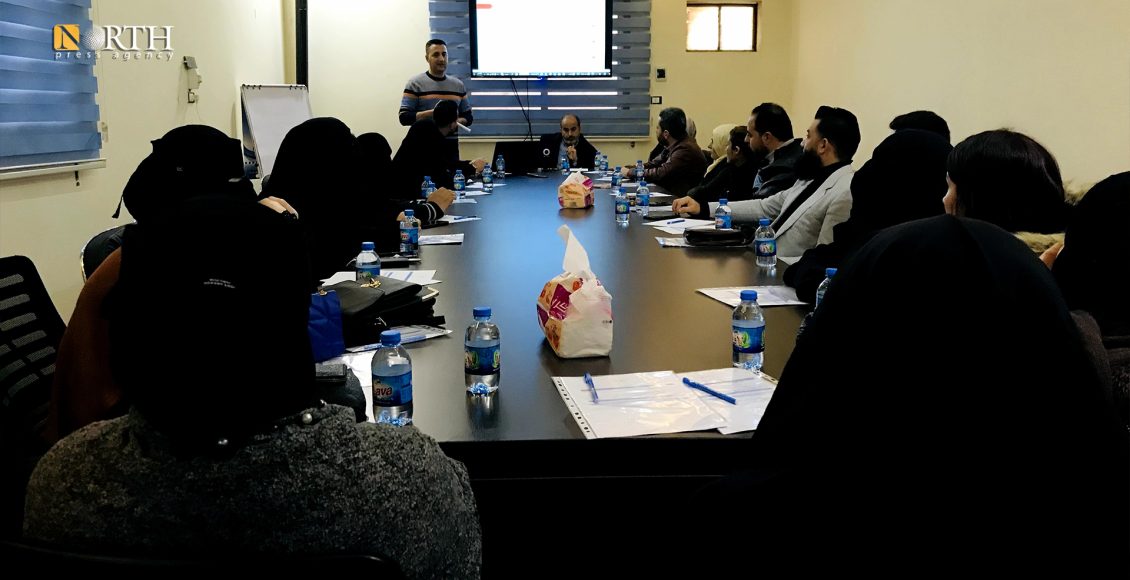
HASAKAH, Syria (North Press) – Civil society organizations operating in northeast Syria are striving to combat extremism through educational and awareness programs in areas where families of the Islamic State (ISIS) are present, as well as in areas where the effects of extremism persist.
Despite the defeat of the extremist group on the ground five years ago, its operations continue, posing a general threat to global security, as evidenced by the recent attack in Moscow.
Non-governmental organizations working in the field of countering extremism aim to reintegrate individuals affected by extremism into society by providing opportunities for education, training, and employment, along with psychological, social, and economic support.
In this context, Dawoud Dawoud, the executive director of al-Salam Organization, one of the organizations working to promote awareness among individuals affected by extremism in northeast Syria, believes that tangible progress has been made in combating extremism after five years since the defeat of ISIS.
In an interview with North Press, he said, “The process of countering extremism and changing extremist ideologies requires multiple efforts, including sustainable funding to ensure the continuity of programs and projects.”
However, he stressed that organizations face several obstacles, including a lack of funding and security challenges.
Currently, there are over 10,000 ISIS militants primarily high-ranking leaders, held in prisons by the Syrian Democratic Forces (SDF). Additionally, there are more than 50,000 individuals, mostly women and children from ISIS-linked families, residing in the Hawl and Roj camps in northeast Syria.
Halaz Abdulaziz, the executive director of Insight organization, emphasizes the crucial role of civil society in reintegrating individuals affected by extremism into their communities, particularly following military victories.
“Sometimes the direct impact of organizations’ work may not be immediately apparent. However, through our work with women returning from the Hawl camp, we have observed that the impact is cumulative, and with each participation in activities, their acceptance by the community grows, and they exhibit greater engagement,” she stressed.
Abdulaziz further explained that these organizations contribute to raising awareness about the dangers of extremism and promoting peaceful coexistence.
According to Abdulaziz the civil society organizations provide support to community members who were involved in the group’s activities or had connections to it, which contributes to peace-building, security, and stability in the region, while alleviating the burden on local authorities.
However, Dawoud emphasizes that countering extremism is a complex and long-term process, requiring continuous efforts to achieve lasting impact and bring about profound changes in communities affected by extremism.