
Assad’s overthrow excluded of restructuring Syrian opposition project in Qatar
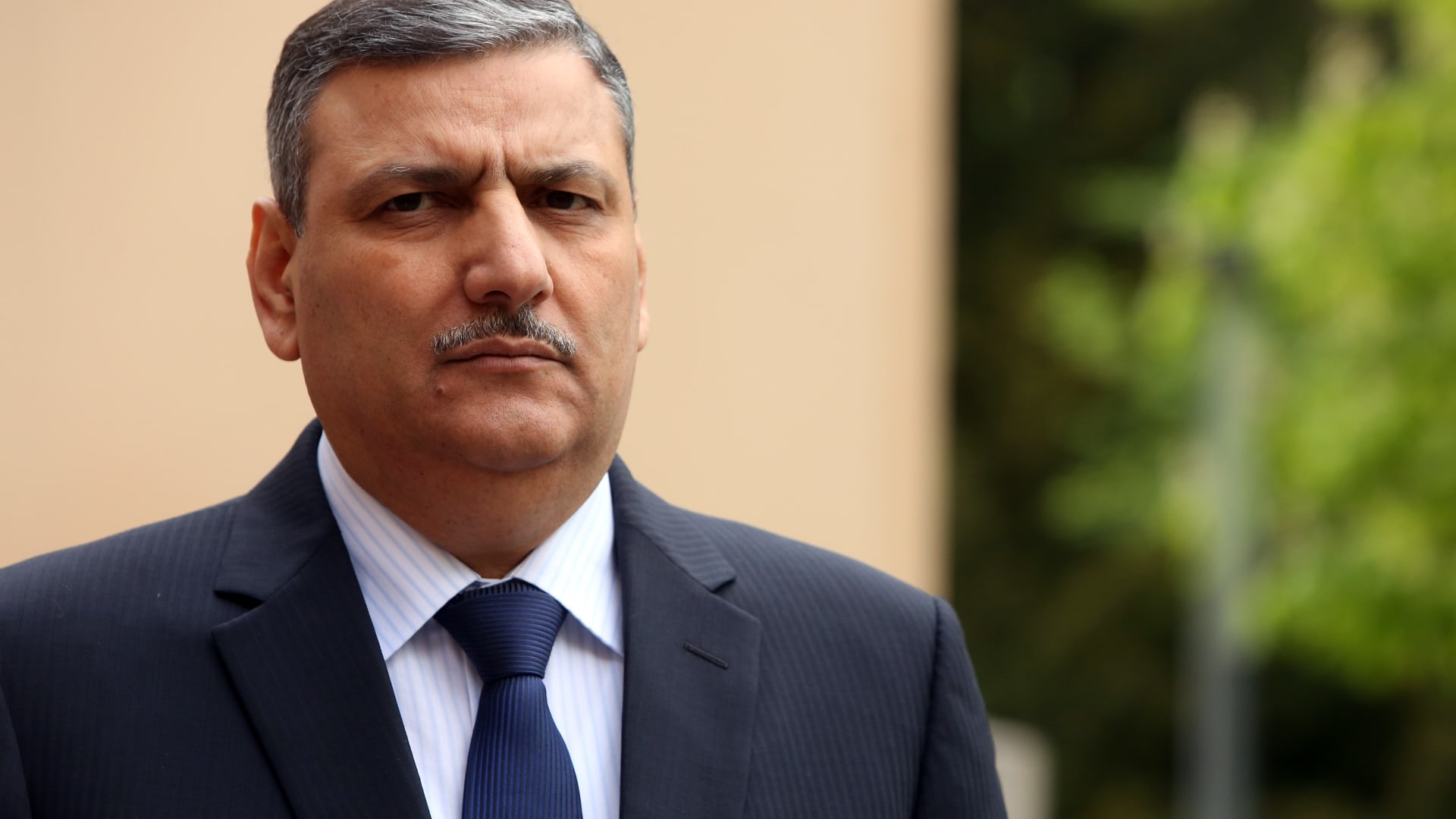
QAMISHLI, Syria (North Press) – After several Arab countries have normalized ties with Syria and after all travels between leaders and ministers of countries such as the visit of the Turkish President to Qatar in response to the invitation of its Emir, Tamim bin Hamad al-Thani, leaks emerged about preparations carried out by the Syrian opposition, present in Turkey, to return to its first bases in Qatar.
Over a decade of the Syrian war, the opposition with its different entities failed to unify its ranks and could not present a serious alternative for the current regime in Syria. And as a result of the successive field losses, it has become weak, its leaders dispersed and acted according to the agenda of their supporters.
Reports have recently leaked information regarding a restructure project at the hands of the dissident former Prime Minister, Riyad Farid Hijab, and directly supervised by Turkey and Qatar.
Turkey and Qatar are on the same page regarding the Syrian opposition that they have supported since its popular movement started calling for the overthrow of Bashar al-Assad.
According to the project, it is quite obvious that toppling the Syrian government demand has been abandoned and is free of any call for unite with other platforms and movements in light of not mentioning the Salvation Government.
The opposition powers are: platforms of Cairo and Moscow, which are two Syrian gatherings that have been well publicized in Egypt and Russia in 2014, they consider themselves an entity of the Syrian opposition.
However, other opposition entities see that they are government-friendly platforms and their goals and priorities contradict those of the High Negotiating Committee (HNC) which the National Coalition for Syrian Revolutionary and Opposition Forces forms its spine.
Despite capitals’ proliferation, they did not add to the work of the Syrian oppositions, with divert loyalties and multiple names, they so far have not been able to create a united rival against the government.
Return to the starting point
Now the most prominent opposition powers, which left Qatar under the name of “Syrian National Council” and headed to Turkey under the name of “National Coalition for Syrian Revolutionary and Opposition Forces,” are preparing themselves for a return to the starting point in Qatar under a new name that has not been revealed yet.
The recent Qatari-Turkish meetings in Doha resulted in an agreement to reconstruct the Syrian opposition in the interests of the current phase.
Due to changes that affected the map on the ground on one hand and the political path in talks with the Syrian government on other hand, the consensus was reached, according to reports.
The project to reconstruct the Syrian opposition and form a new entity in Doha is based on a project presented by Riyad Farid Hijab last year.
Hijab declared his defection on August 6, 2012, left Syria with his family and head to Jordan.
In 2015, he was selected by the Syrian opposition as a head of the HNC. On November 2017, he quitted without disclosing the reasons and this came days before the eighth round of Geneva negotiations on November 28.
In August 2020 and after being away from the Syrian political scene for three years, Hijab met Special Envoy for Syria, Joel Rayburn, and criticized the opposition institutions, whose structure needs to be reconfigured and rearranged, while maintaining its presence.
Hijab stressed, at the time, the need to restructure the Syrian opposition with the need to maintain the current present institutions in the interest of reproducing opposition on the level of institutions and goals.
Entity parallel to government
Hijab’s project, which does not call for unification with Moscow and Cairo platforms or partnership with the Salvation Government, abandons the idea of toppling the Syrian government as a way to reach the new Syria, which is intended to have moderate policies and isolates itself from the region’s conflicts under the slogan of national interest.
And this practically means normalization with Israel, and moving away from the resistance.
The project rules out many prominent personalities of the opposition and shows Hijab as a personality running an entity parallel to the government.
Days ago, Turkish Foreign Minister Mevlut Cavusoglu met Hijab in the Qatari capital, Doha, where they discussed developments in Syria.
This is the second meeting during 2021 bringing the Turkish Foreign Minister and the dissident Prime Minister together. In March, they met in Doha without disclosing issues discussed.
Before Erdogan’s official visit to Qatar, Mohammed bin Abdulrahman al-Thani, Minister of Foreign Affairs of Qatar, held a press conference with his Turkish counterpart Mevlut Cavusoglu.
The two ministers commented on Syria’s return to the Arab League stressing the impossibility of normalization with the Syrian government.
“Reasons and concerns behind the suspension of the Syrian government’s membership in the Arab League are still there,” the Qatari Minister of Foreign Affairs said.
As for the Turkish Minister of Foreign Affairs, he said, “I believe that inviting the Syrian government to an Arab League Summit or any other international meeting without a radical solution, will urge this regime to go ahead in its brutality and aggression.”
Potential heading to Damascus
Observers said those statements are released only for media, and things from under the table indicate other issues as the possibility of Doha normalizing ties with Damascus especially in light of the recent Emirati endeavors to bridge the Arab and Gulf stances for normalizing ties with Syria.
And taking advantage of the common goal of all to expel Iran or at least weaken its influence in Syria, which will be achieved through the economic field.
The Russian intervention and attempts to power over the political issue in Syria, pushes Qatar and Turkey to change their policies regarding al-Assad.
“The new consultation mechanism launched by Russia and Turkey to solve the Syrian crisis aims to increase the joint coordination between the countries for sake of helping the Syrian people and solve its crisis,” ambassador of Qatar to Russia, Sheikh Ahmed bin Nasser Al-Thani, said in June.
The new framework will strengthen the coordination between the three countries [Russia, Qatar and Turkey] regarding the Syrian crisis.
The new mechanism for the Syrian crisis was announced in a triple meeting that brought together Russian, Qatari and Turkish ministers of foreign affairs in Doha in March.
They said it will tackle particularly the humanitarian issues and will be parallel to the Astana Peace Talks, with Russia, Iran and Turkey participating in.
Russia is playing and politicizing the humanitarian issue [humanitarian aid] to achieve its goal through supporting the Syrian government, observers noted.
This move is quite clear through the Russian initiative to reduce the impacts of the unprecedented economic crisis Syria is witnessing and continue the efforts to break the diplomatic isolation of al-Assad.