
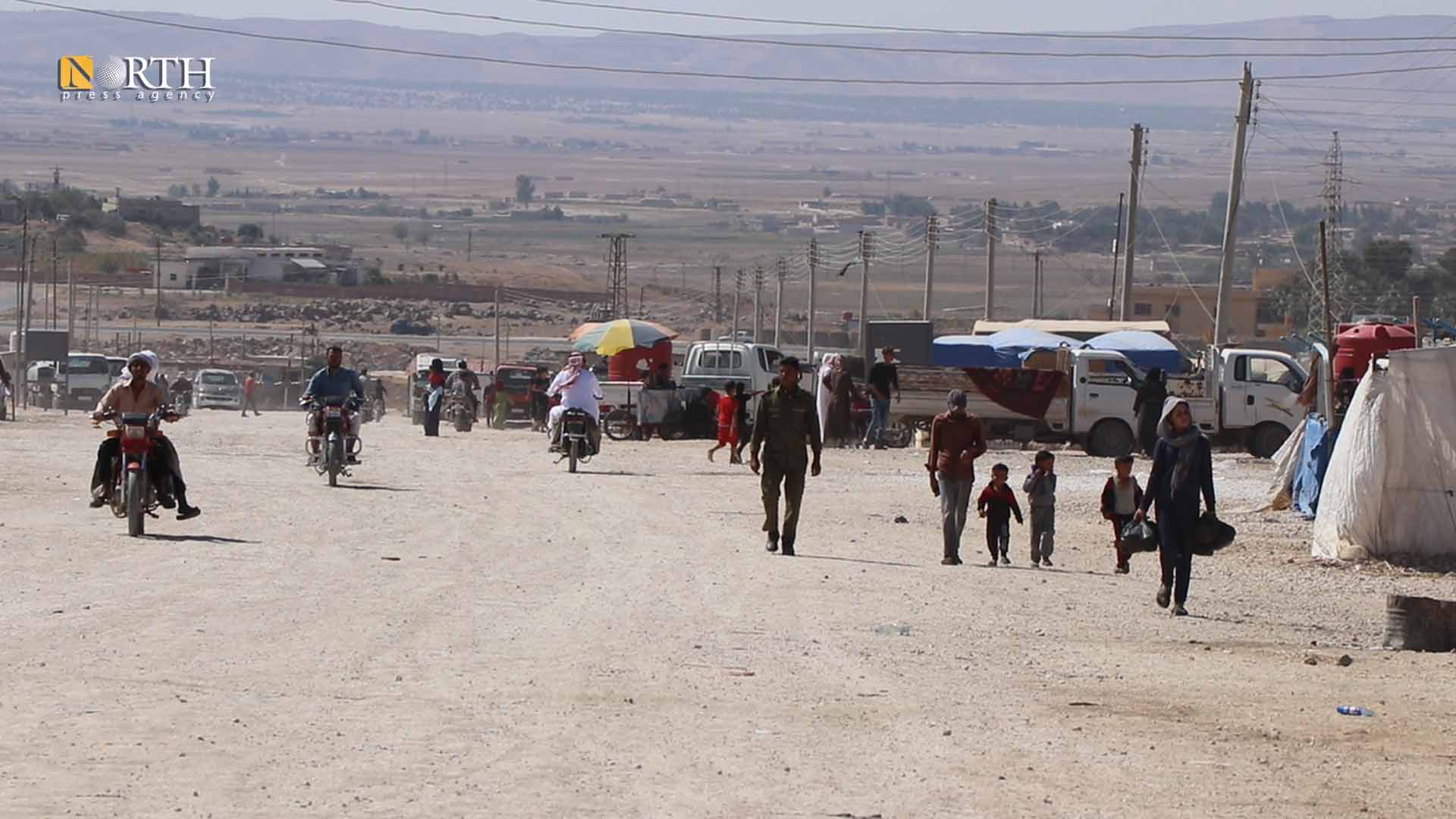
HASAKAH, Syria (North Press) – Tanker driver Muhammad Youssef is waiting for his turn to distribute water to residents of Washokani Camp for IDPs from Sere Kaniye (Ras al-Ain) in Hasakah, northeast Syria, with the gathered people not bothering to implement preventative measures against coronavirus.
In light of the increase in coronavirus infections in areas held by the Autonomous Administration of North and East Syria (AANES), residents of the camp, which includes about 15,000 IDPs, are ignoring the risks of the pandemic and do not comply with the preventative measures.
Lack of preventative measures
Youssef, who is residing in the camp, said, “Coronavirus is widespread, but the camp is witnessing a lack of preventative measures against coronavirus and people are gathering; they do not wear face masks.”
Youssef believes that supervising authorities and organizations operating in the camp have to provide residents of the camp with protective equipment “because the camp is big and includes a lot of people.”
Meanwhile, many circumstances that residents of the camp are witnessing, including attached tents and gatherings, especially to receive services and aid, can contribute to the rapid spread of infectious diseases.
On Monday, the total toll of the coronavirus infections in Syria’s northeast reached 25,018, including 842 deaths and 2,066 recoveries, according to the AANES Health Board.
Recently, Hasakah city has recorded high numbers of the coronavirus infections, with 114 infections recorded on Saturday amidst increasing numbers on a daily basis.
In a previous statement to North Press, AANES Health Board co-chair Dr. Jiwan Mustafa did not rule out that thousands of coronavirus infections would be recorded on a daily basis in the coming period, given the fast spread of the current wave of the virus.
Throughout the camp, which was hastily established in the village of al-Towayna about two years ago after the Turkish army and factions affiliated with it invaded the Sere Kaniye (Ras al-Ain) and Tal Abyad regions, IDPs are talking about the absence of awareness sessions on the pandemic and lack of protective equipment.
“You see gatherings everywhere in the camp without paying attention to preventative measures against the pandemic, which is spreading widely in the region,” said Abdulaziz Issa, a young man working in an AANES institution within the camp.
Issa, like many other residents in the camp, does not wear a mask, which he says is because “no one wears a mask and neither do I, because people accuse those who wear masks of being infected and people avoid them.”
Meanwhile, the main street and market in the camp are full of people.
The Washokani Camp suffers from poor infrastructure; sewage passes between the tents and collects dirt, and dust storms are frequent.
Infections in the camp
The head of the emergency team of the Health Board in Washokani Camp, Abdulaziz al-Kholaif, said that they have recorded 15 coronavirus infections since the onset of the fourth wave in the region.
“We regularly conduct awareness sessions in the camp and we advise people not to gather, to implement physical distancing, to wear masks and gloves, and to use sterilizers periodically,” he added.
However, those initiatives are limited, according to him.
“The quarantine center includes two parts, one for confirmed cases and another part for suspected cases,” he added.
Implementation of the preventative measures against coronavirus in the camp, according to officials in the administration of the camp, is difficult “because it is impossible to quarantine residents or impose physical distancing in overcrowded tents.”
Most of the infections recorded were in people between the age of 20 and 40, in addition to several infections of elderly people, according to al-Kholaif.
In light of the criticism of the absence of the Health Committee’s role in the camp, al-Kholaif pointed out that they have recently launched a vaccination campaign, “but some IDPs refused to be vaccinated for fear of potential side effects.”