
IDPs in Syria’s Idlib face summer heat in nylon tents amid water shortage
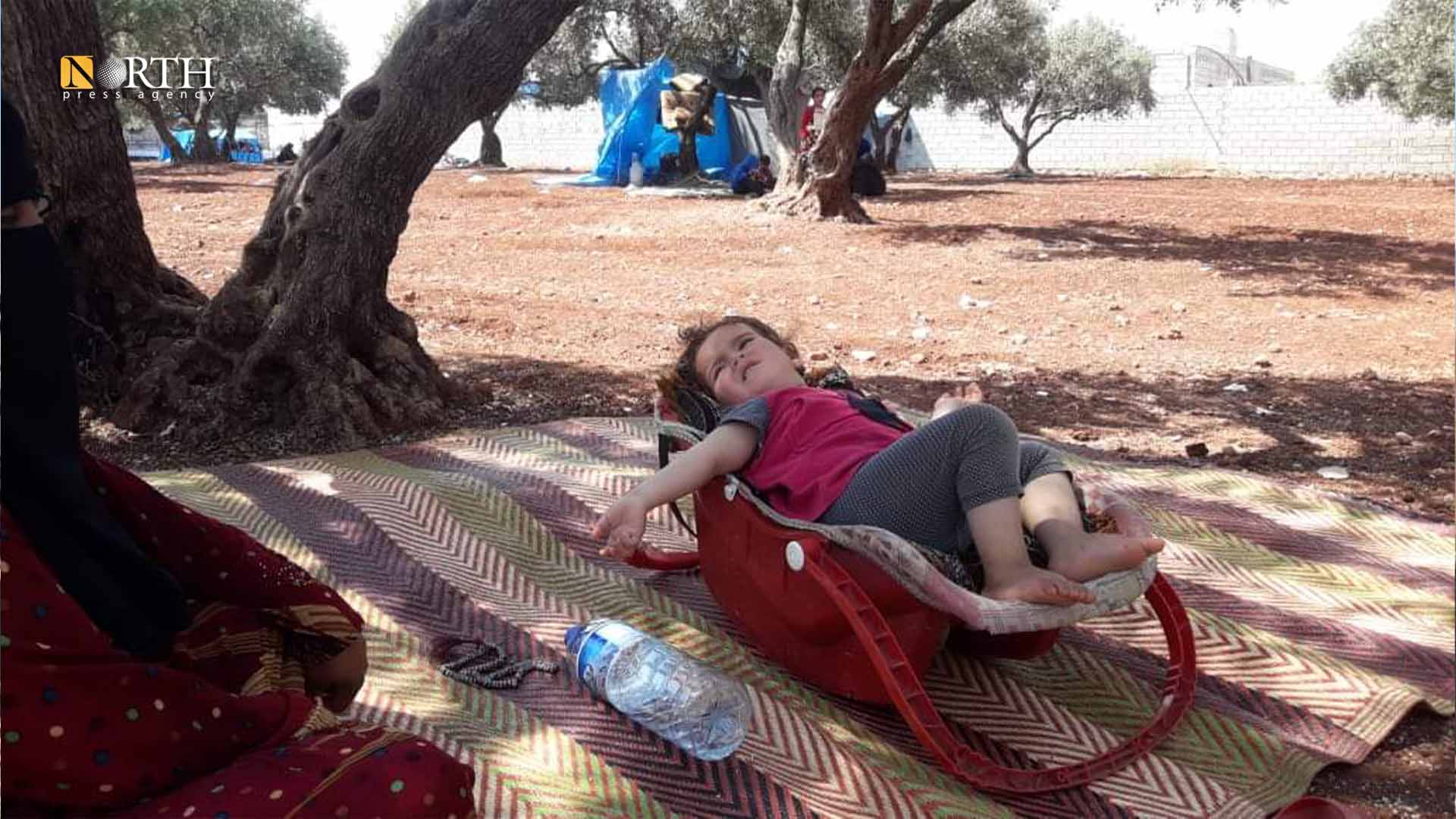
IDLIB, Syria (North Press) – Ahmed Haj Ismael, an IDP from the city of Saraqeb, east of Idlib, northwest Syria, resides in a camp in Kalli town in the northern countryside of Idlib. Ismael sits under the shade of an olive tree at noon, as the heat inside his nylon-made tent is “unbearable.”
However, the temperature outside his tent is no different from inside. Ismael sometimes wets his clothes, despite the shortage of water, and puts a wet cloth on his head and sits for hours under the trees.
The suffering of IDPs in the camps of Idlib on the Syrian-Turkish border increases with the increase in temperatures and the spread of snakes, scorpions, and insects in light of the difficulties they face in securing water.
Turkey and the pro-Turkish armed factions control the area, administer it politically and militarily, and oversee the situation of the IDPs in the camps.
For months, organizations working in northwest Syria have stopped supporting the projects to secure water for dozens of camps on the Syrian-Turkish border. This forced IDPs to buy water from tankers at prices they said are “high” in light of the deteriorating living condition.
More than 300 camps spread in the areas of Kalli, Ma’arat Misrin, Kafr Yahmoul, the vicinity of Idlib, Atma, Qah, and Deir Hassan suffer from cuts to drinking water, according to the Syria Response Coordinator Team working in the area.
IDPs resort to buying water despite its high prices, where the price of a water tanker of a capacity of 20 barrels is 50 Turkish lira (5.77 USD).
Internal medicine doctor Akram al-Salloum receives ten patients a day in his clinic in the city of Atma, including four patients with diseases caused by high temperatures.
Gastrointestinal illnesses that cause severe dehydration, heat stroke, diarrhea, fainting, syncope, and the emergence of microbial infections are among the most common diseases among IDPs, according to al-Salloum.
Marwa al-Abdeen’s one-year-old child suffered from dehydration and enteritis, and was forced to stay in an Idlib hospital for a week until she recovered from the severe heat.
Al-Abdeen, an IDP from the western countryside of Aleppo residing in the al-Karama camp in the city of Atma, sometimes fills a plastic washtub with water and puts her three children in it to cool them off.
She indicated that she has had to bear the costs of purchasing water, as “there are no alternative solutions to relieve the extreme heat.”
She also resorts to putting fabrics on the tent and buying ice blocks to cool the drinking water.
“At noon, we feel we are suffocating, as if we are sitting in an oven, and I fear my three children may suffer from heatstroke.”