
Rehabilitating water station in Syria’s Deir ez-Zor in proportion to Euphrates shortage
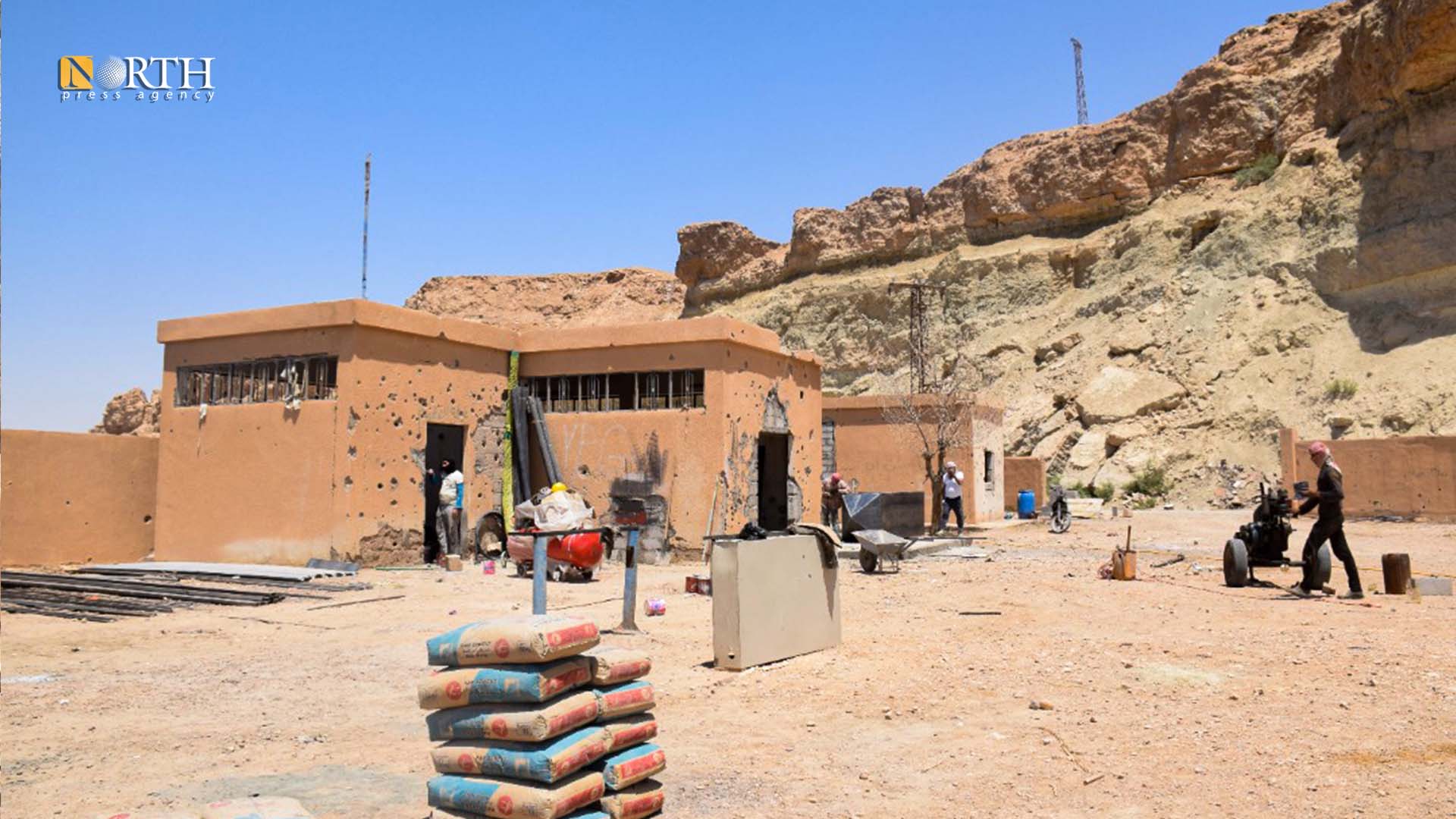
DEIR EZ-ZOR, Syria (North Press) – A local official in charge of drinking water service in Deir ez-Zor, eastern Syria, said that they have started restoring a station in the eastern countryside in proportion to the decrease of the water level of the Euphrates River after Turkey reduced the amount of flow into the Syrian territory.
Nour al-Din Saleh, director of the Baghouz water station, 130 km east of Deir ez-Zor, told North Press that the People’s Municipality in the town has begun to rehabilitate the first Baghouz water station in a manner consistent with the water shortage of the Euphrates River.
The works of the project, which will cost $250,000, began with the rehabilitation of the station’s outer wall, the rehabilitation of the purification place, the construction of filtration tanks, the maintenance of engines and the construction of rooms for them, according to Saleh.
Baghouz suffers from a weak service situation, and a lack of drinking water, as the matter was exacerbated by the significant decrease in the level of the Euphrates River and the pollution of its water.
Saleh added that the return of the Baghouz water station to service will ease the burdens on the population in providing drinking water.
Rehabilitation work in the station will continue for about 40 days, according to Saleh.
Turkey has been seizing the Euphrates water from Syria and Iraq since mid in February, amid regional and global warnings of a health and agricultural disaster in the region.
Turkey keeps water in six dams, the largest of which is Ataturk Dam and the second largest in the Middle East, with a storage capacity of 48 billion m³, violating by that the international agreement.
According to the agreement signed between Syria and Turkey in 1987 related to the Euphrates River, Syria’s share of water coming from Turkey, is 500 m³ per second.