
Opposition prepares Turkified school curriculum on Syrian revolution from Turkish perspective
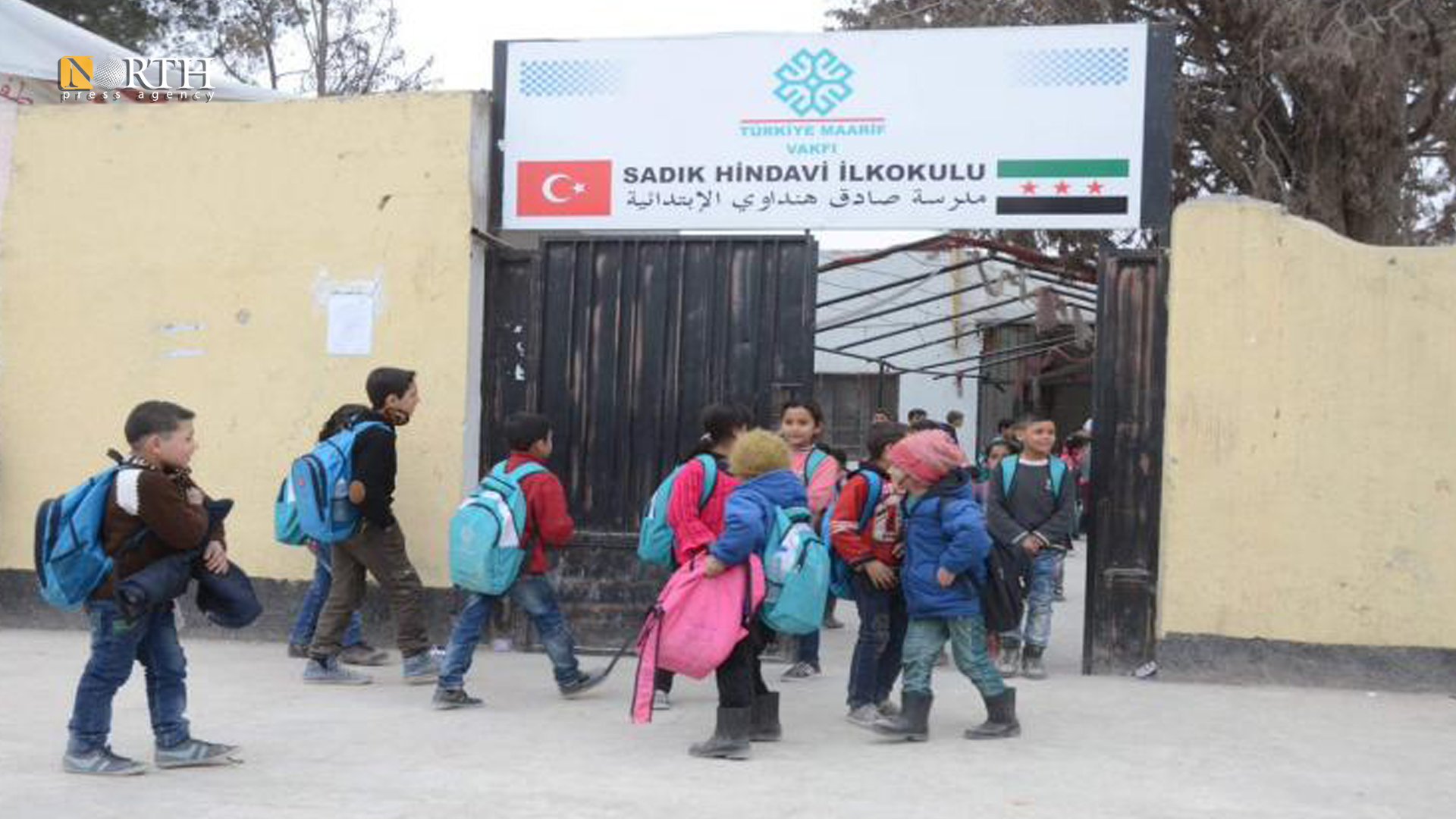
QAMISHLI, Syria (North Press) – On Monday, the Ministry of Education in the Syrian Interim Government (which is affiliated with the Istanbul-based Syrian National Coalition or SNC) decided to start preparing history books on the Syrian revolution to be added to the educational curricula of its schools in northwest of Syria.
Huda al-Absi, director of education in the Interim Government, said that the decision was issued by the SNC.
The decision comes as a step after a number of projects to politicize the education sector by Turkey, and to consecrate the policy of Turkification that it pursues in the areas it controls in northwest Syria.
In 2016, Turkey began changing the curriculum in areas under in north Syria, as the educational system became affiliated with Turkish schools and educational institutions.
One of the conditions for renewing the contracts of Syrian teachers was their proficiency in the Turkish language, because it has become a basic subject in the education curriculum in the Turkish areas of control.
The book will be added to the history course in the curriculum of the seventh and eighth grades of primary school and the first and second grades of secondary school, and will be taught starting from the 2021-2022 school year, according to the decision.
A committee in the Ministry of Education of the SNC will supervise the preparation of books, that are likely to be in accordance with the Turkish vision of the events of the Syrian war.
On February 24, Turkish officials opened a cultural center in the city of Jarablus in the eastern countryside of Aleppo.
This was preceded by the Turkish government’s opening of a medical college and a higher institute of health sciences in the city of al-Rai, north of Aleppo, by a decision bearing the signature of Turkish President Recep Tayyip Erdogan.
An official source in the Ministry of Foreign Affairs and Expatriates in the Syrian government commented on the decision to open the university, saying that “the Turkish decision is a flagrant violation of international law.”
Turkish forces and opposition groups affiliated with them raise the Turkish flag over many official headquarters and agencies in their areas of control, and the names of these departments are written in Turkish and Arabic.
This morning, specialists in the political affairs and history in the capital, Damascus, saw that Turkey has been seeking, since the beginning of the Syrian war in 2011, to establish its presence in Syria.
It has then begun to take effective actions to Turkify the areas that it controlled, as in Afrin, through its military points or its backed-opposition groups.