
SDF’s Abdi says progress made on Kurdish-language education in Damascus talks
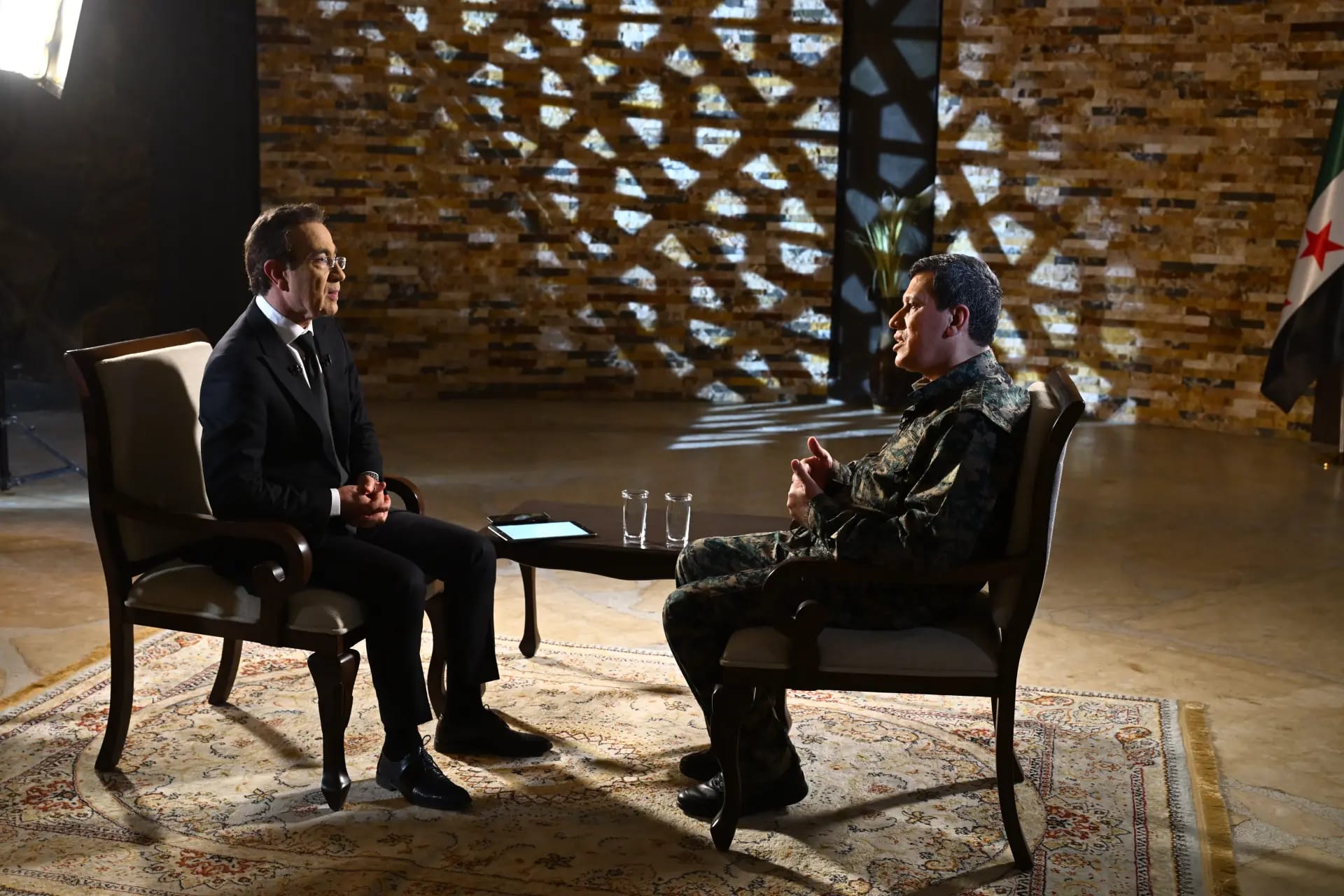
QAMISHLI, Syria (North Press) – Syrian Democratic Forces (SDF) Commander-in-Chief General Mazloum Abdi said on Saturday that talks with Damascus have made progress on the future of Kurdish-language education in northeastern Syria, while stressing that Kurdish must remain the language of instruction in Kurdish areas.
In an interview with Rudaw, Abdi said that the issue of language is his priority in negotiations with the Syrian government and one of the main issues still being discussed between the two sides.
Be added that he had rejected the implementation of Syria’s Presidential Decree No. 13 of 2026 as a sufficient solution for Kurdish language rights, arguing that the decree does not reflect the education system that has developed in northeastern Syria over the past 15 years.
“For 15 years in Rojava, Kurdish has been the language of education, and we have reached the university level,” Abdi said.
Decree No. 13, issued in January, recognizes Kurdish as a national language and allows it to be taught in public and private schools in areas with significant Kurdish populations, including as an elective subject. It does not recognize Kurdish as an official state language.
The SDF commander pointed out that the Kurdish side would not accept returning to a system in which Kurdish is taught only as an optional subject.
He indicated that the issue was discussed during his latest meeting with Syrian President Ahmad al-Sharaa in Damascus, where the Kurdish side presented proposals aimed at resolving the dispute.
“New progress was made,” Abdi said, adding that Damascus had formed a committee composed of officials with decision-making authority to address the issue.
According to Abdi, Damascus has proposed that Kurdish students learn both Kurdish and Arabic. He said the Kurdish side had no objection to students learning Arabic, but insisted that Kurdish remain the official language of instruction in Kurdish areas.
“We said: no problem. Alongside Kurdish, there should be Arabic,” Abdi said.
The remarks come as Damascus and the Kurdish-led administration continue implementing an agreement aimed at integrating northeastern Syria’s military, security and civilian institutions into the Syrian state.
Abdi stressed that the two sides had reached an understanding on forming a brigade of SDF fighters from Afrin to serve under Syria’s Defense Ministry and operate in or near Afrin, where Kurdish residents were displaced after Turkey and allied Syrian factions seized control of the region in 2018.
He further said that he planned to establish a political body to represent Kurdish interests following the integration of the SDF into Syrian state institutions.
Abdi added that preserving Kurdish gains would require continued political work, Kurdish unity and participation in Damascus to ensure those rights are reflected in Syria’s future constitution.